

 GMA Brandtalk
 Tracking
 Archives

China on alleged 'provocation' by some PH officials: Stop or pay the price
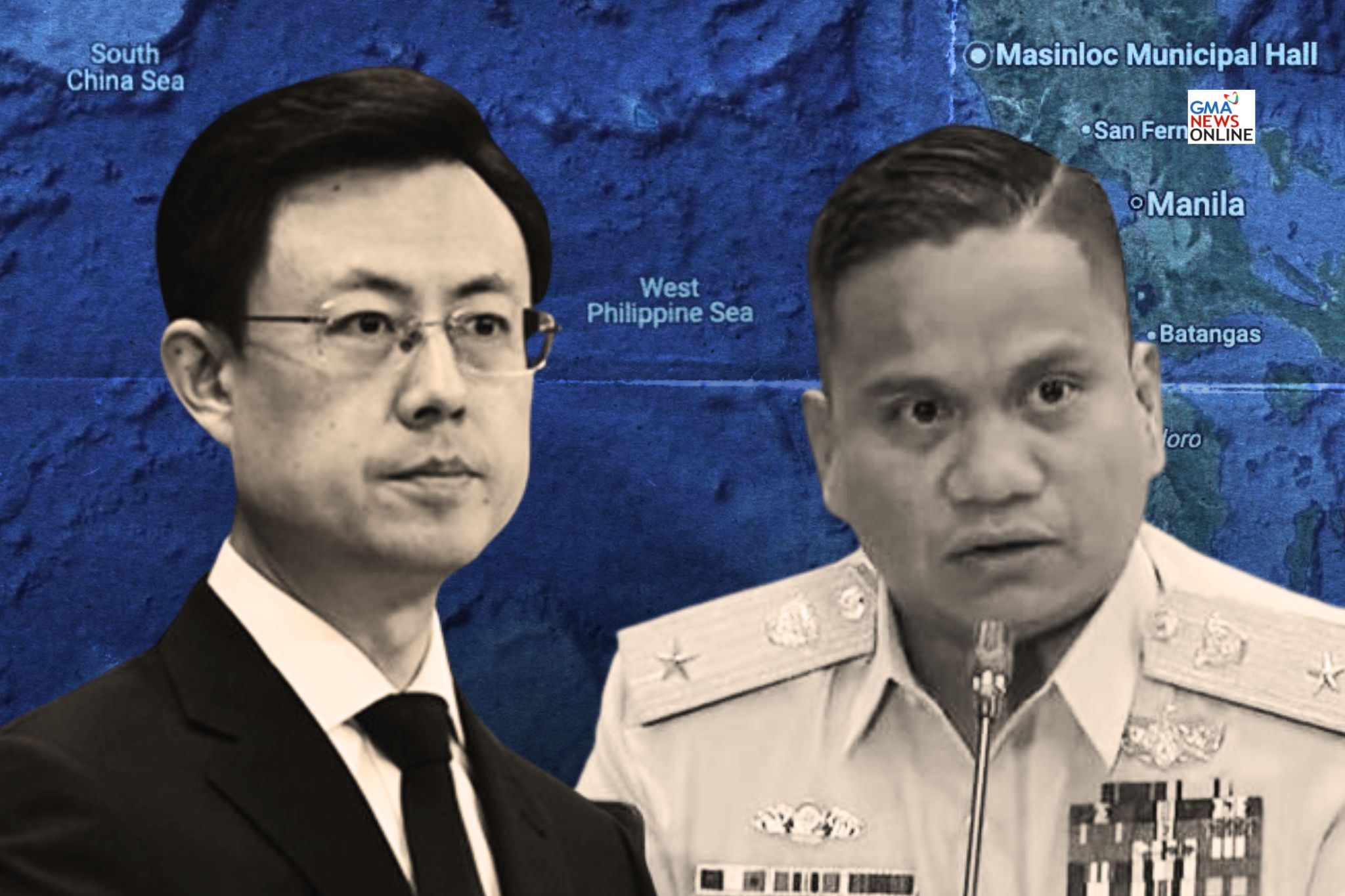
The Chinese Foreign Ministry warned "certain Philippine uniformed service members" supposedly spreading disinformation that they would "pay the price."
The Chinese Embassy in Manila, in a Facebook post on Tuesday, cited Chinese Foreign Ministry Spokesperson Guo Jiakun who called out the “spokesperson” of the Philippine Coast Guard that supposedly maliciously spread disinformation on China and "wantonly smeared China’s image."
"Certain Philippine uniformed service members, driven by personal political motives, have repeatedly made outrageous and absurd statements, in a habit of inciting confrontation. Such behavior is despicable," said the Chinese Foreign Ministry Spokesperson.
"A word of advice to relevant individuals in the Philippines: immediately stop making provocations and stop confusing right and wrong, or they would pay the price for what they did," he added.
Last week, China lodged diplomatic protests against Philippine Coast Guard (PCG) spokesperson for West Philippine Sea Commodore Jay Tarriela over social media posts against its leaders.
Tarriela, however, maintained that his statements were based on “factual accounts.”
“My role as Spokesperson for the WPS is to transparently communicate these realities to the Filipino people and the world, in full alignment with our government's commitment to rules-based order and international law,” Tarriela said.
“If the Chinese Embassy objects to images or expressions that highlight these violations—often through legitimate public discourse or even satire—it only underscores discomfort with the truth being exposed,” he added.
“There's no authority for the Chinese Embassy to ask us to explain… I don't think there's a need for me to apologize to the Chinese Embassy."
GMA News Online has reached out to Tarriela for comment on the latest statements of China, but he has yet to reply as of posting time.
Tensions continue as Beijing claims almost all of the South China Sea, a conduit for more than $3 trillion of annual shipborne commerce, including parts claimed by the Philippines, Vietnam, Indonesia, Malaysia, and Brunei.
Parts of the South China Sea that fall within Philippine territory have been renamed by the government as West Philippine Sea to reinforce the country’s claim. —VAL, GMA Integrated News

