

 GMA Brandtalk
 Tracking
 Archives

Traffic index: PH most congested in Asia
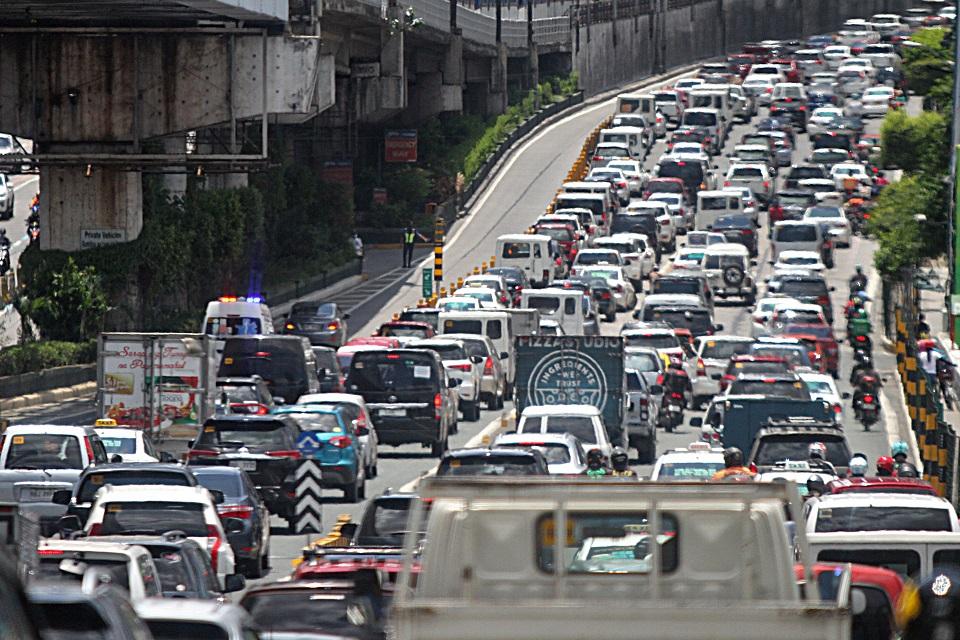
Motorists and commuters in the Philippines spend the most time in traffic in the whole of Asia, while those in Davao City spend the most time in traffic in the Philippines, according to a report by the TomTom Traffic Index for 2025.
The index reported that the Philippines was the most congested country in Asia, with a congestion level of 45%, followed by India and Singapore, which both logged a congestion level of 37%.
Davao City remains the most congested city in the Philippines, ranking 12th out of 482 cities around the globe. The report said Davao City’s average congestion level is at 66.2%, and it ranked fourth out of 75 Asian countries in terms of traffic congestion.
The report defined congestion level as the “average additional time (in percent) lost to traffic in 2025, compared to driving in free-flow conditions.”
In the 2024 TomTom Traffic Index, Davao City ranked third out of 500 cities with a congestion level of 49%.
The 2025 traffic index said the average distance driven within Davao City in 15 minutes is 4.4 kilometers, while the time lost due to rush hour traffic in Davao City is 168 hours, or seven days and 40 minutes.
The average travel time for a 10-kilometer drive is 34 minutes and 17 seconds, while the average speed during rush hour is 14 km/h.
Aside from Davao City, Manila also made it to the 2025 TomTom Traffic Index, ranking globally at 40th place and 12th in Asia in terms of traffic congestion. Manila’s average congestion level last year was at 57%.
This is a drop from its 27th place global ranking and congestion level of 42% in the previous traffic index.
In the 2025 traffic index, the average distance driven within Manila in 15 minutes is 4.4 kilometers, while time lost to rush hour traffic is 143 hours, or five days and 23 hours.
The average travel time for a 10-kilometer drive in Manila is 31 minutes and 45 seconds, while the average speed during rush hour is 15.2 km/h.
The TomTom Traffic Index measures congestion levels “by collecting all the travel times recorded by TomTom during a given period of time in a given area and comparing them with the lowest travel times from when traffic is in a totally free-flowing state.”
The report noted that having high congestion levels does not mean having the slowest average speed.
“The congestion level of a city is based on the dynamic factors that affect its traffic flow. As explained above, congestion is recognized as the difference between free-flow or optimal traffic conditions and actual travel time,” it said.
“Free-flow travel times are based on static factors in each city, making the score relevant to that city's infrastructure and environment. It does not take the same time to drive 10 km without traffic in Amsterdam, the Netherlands, as it does in New York, U.S.A., as they both have different speed limits, road layouts and infrastructure.” — JMA, GMA Integrated News

