

 GMA Brandtalk
 Tracking
 Archives

Duterte deemed fit by ICC for crimes against humanity pre-trial proceedings
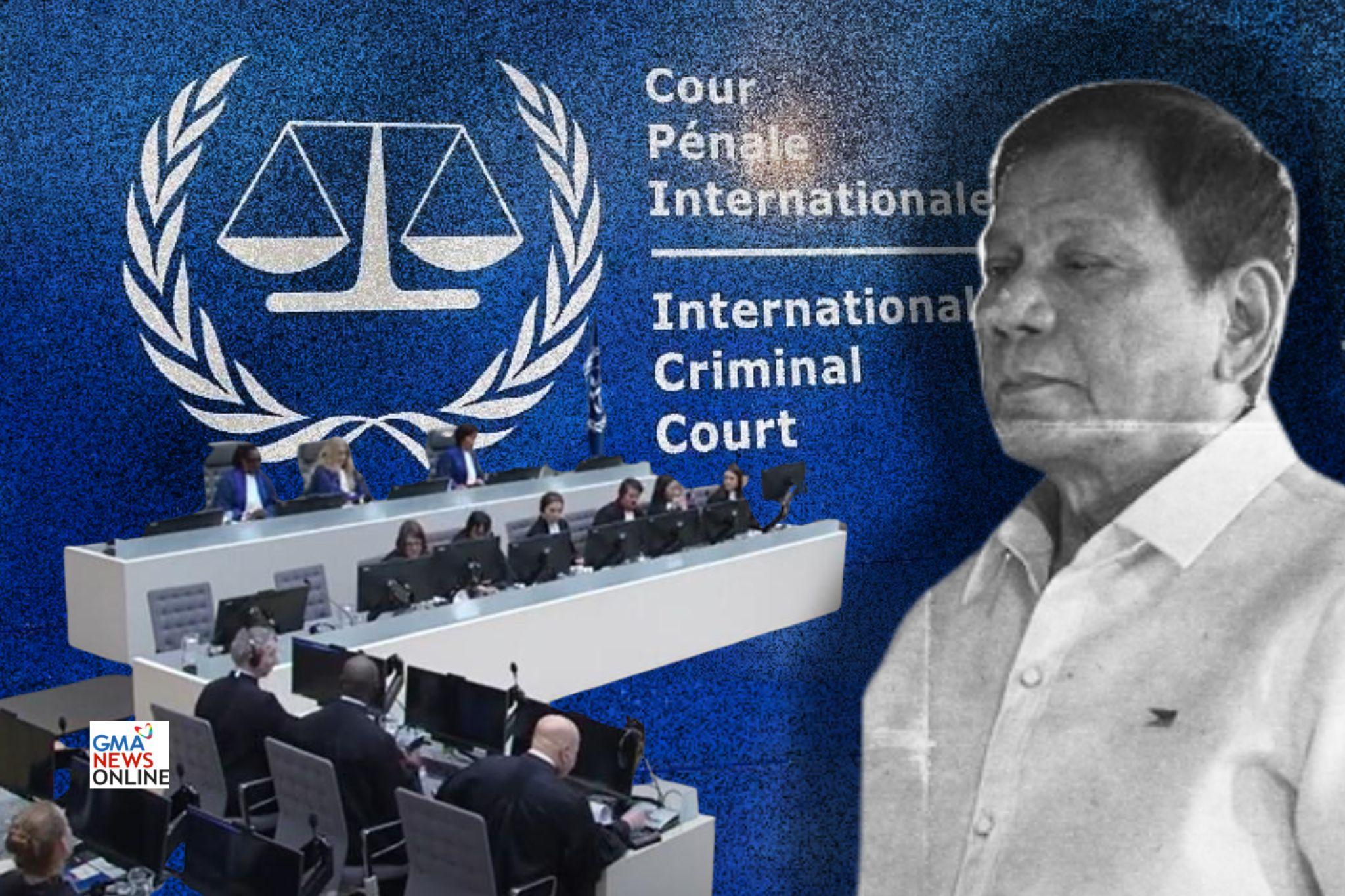
The International Criminal Court (ICC) Pre-Trial Chamber 1 has said that former President Rodrigo Duterte was fit to take part in the pre-trial proceedings in the crimes against humanity charges that he is facing over the deaths blamed on his war on drugs when he was President and mayor of Davao City.
In a 25-page decision, the ICC also denied Duterte’s request for indefinite adjournment.
“Read holistically, and in light of the cognitive abilities that Professor [REDACTED] is of the opinion that Mr. Duterte possesses, the Chamber is satisfied that Mr. Duterte does have the ability to understand the charges against him and is able to effectively exercise his procedural rights,” the ICC chamber said.
GMA News Online has reached out to Duterte’s lawyer, Nicholas Kaufman, for comment on the ICC’s decision and will publish it once available.
In a statement, Duterte’s lawyer, Nicholas Kaufman, said their camp is disappointed that they were denied the opportunity to present their own medical evidence regarding the former president.
“The Defence is disappointed that, contrary to accepted practice, it was denied the opportunity to present its own medical evidence and to question, in court, the contradictory findings of professionals selected by the judges. The Defence will seek leave to appeal this decision and argue that Mr Duterte was denied due process," Kaufman said.
The chamber scheduled the commencement of the confirmation of charges hearing on February 23, 2026.
To recall, Duterte’s camp requested an indefinite adjournment of the proceedings in August 2025, stating that he was "not fit to stand trial as a result of cognitive impairment.” The hearing was initially scheduled on September 23.
The former president’s team also sought an assessment of his fitness for trial through a panel of independent experts.
According to the ICC, the three-member panel was composed of an expert in forensic psychiatry, an expert in geriatric and behavioural neurology with experience in examining the elderly's fitness for trial, and an expert in neuropsychology.
It noted that each expert interviewed, examined, and assessed Duterte in person. The chamber also said that the experts considered Duterte’s personal and medical history, conducted mental state and physical examinations, and undertook cognitive testing.
The chamber said that two experts are unambiguous in their view that Duterte has the mental capacity to understand the charges, the evidence, the conduct, and the purpose of his pre-trial proceedings.
It noted that the relevant capacities of a suspect “are not required to be present at their notionally highest level or at the highest level that a particular suspect has ever enjoyed in respect of each capacity” and that what is only required is that the former president have a “broad understanding” of the proceedings.
“Having regard to the relevant legal principles, and to the medical assessment of the independent experts in light of all of the factors set out above, the Chamber is satisfied, in law, that Mr. Duterte is able effectively to exercise his procedural rights and is therefore fit to take part in the pre-trial proceedings,” the court said.
Meanwhile, the chamber said it is clear that one expert concluded that there is no reason why Duterte would lack functional mental capacity to understand the charges.
It noted that “Professor [REDACTED] 74 and Professor [REDACTED] are unambiguous that Mr. Duterte has the mental capacities to understand the charges, the evidence and the conduct, purpose and possible consequences of the pre-trial proceedings, and to instruct Counsel for the preparation of his defence at the pre-trial stage.”
Aside from this, the ICC chamber denied the argument of Duterte’s camp that the report of the panel could not be dispositive, as they contradicted each other.
It said that while the panel had varying opinions, an individual’s fitness to stand trial does not depend on whether he or she has a medical condition but on whether the suspect can exercise his or her rights.
The chamber noted that “in making submissions relating to Mr. Duterte’s memory, the Defence takes individual findings of members of the Panel out of context” and “relies upon certain results in tests undertaken by the experts to argue that he has a severely impaired memory.”
“Notwithstanding any difference of opinion that the three experts had about Mr. Duterte’s [REDACTED], their subsequent assessment of whether Mr. Duterte had the capacities necessary for the meaningful exercise of his procedural and fair trial rights is unanimous,” it said.
The ICC said that the chamber did not attribute Duterte’s “underperformance” on validity tests to his alleged condition.
It added: “They make clear that his underperformance is at odds with Mr. Duterte’s capacities as observed by them during their examinations of him. The Chamber finds persuasive the holistic approach adopted by the experts in their assessment of Mr. Duterte and accepts the resulting clear and unanimous conclusions which they draw in relation to his capacities to meaningfully exercise his procedural and fair trial rights.”
The 25-page decision also rejected the request of Duterte’s legal team to hold a hearing with the medical experts appointed by the ICC chamber as it saw no need to further clarify the conclusions or the methodology adopted by the experts.
This is because “the procedure adopted by the Chamber in order to resolve the issue of Mr. Duterte’s fitness has been abundantly fair and that there is a concurrent need to proceed as expeditiously as the demands of fairness require and allow,” the ICC said.
Meanwhile, the chamber said it would issue an order setting the schedule and the directions for the confirmation of charges hearing in due course.
It said the directions would include instructions on the taking of measures that the medical reports have recommended for Duterte.
The decision was signed by Presiding Judge Iulia Antoanella Motoc and Judges Reine Adélaïde Sophie Alapini-Gansou and María del Socorro Flores Liera.
The Duterte Panagutin Network Europe welcomed the ICC’s decision to proceed with the pre-trial proceedings against Duterte as a “significant step forward” to exact accountability.
“By setting the confirmation of charges hearing on February 23, the [ICC] is sending a clear message that justice cannot be indefinitely delayed,” Icai Enriquez, the convenor of the Duterte Panagutin Network Europe, told GMA News Online in a message.
“This development strengthens the hope of victims and their families that their voices will finally be heard in an impartial international court.”
Enriquez added their network expects “continued engagement” not meant for “spectacle, but to keep the public’s attention on the victims, countering disinformation, and reaffirming support for international justice and accountability.”
“This includes solidarity actions, public events, information sessions, and peaceful assemblies aimed at amplifying the voices of victims and reminding the international community why this case matters,” she added.
The ICC Prosecutor has charged the former president with 49 incidents of murder and attempted murder during his time as mayor of Davao City and as President of the Philippines, "although the actual scale of victimization during the charged period was significantly greater."
Based on government records, around 6,200 drug suspects were killed during the Duterte administration's anti-drug operations. Human rights organizations, however, say that the number may reach 30,000 due to the unreported related killings. — With reports from Andy Peñafuerte III and Jay-vee Marasigan Pangan/NB, GMA Integrated News

