

 GMA Brandtalk
 Tracking
 Archives

Erice: 'Realistic' anti-dynasty law must limit public office to two per family
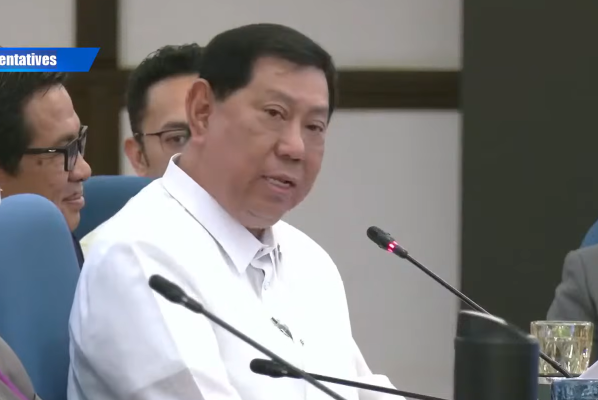
An anti-political dynasty law can only be enforced if it limits eligibility to two relatives up to the second degree of consanguinity or affinity running or holding public office at the same time, Senior Deputy Minority Leader Edgar Erice said Tuesday.
Erice, a Caloocan City representative, made the assertion during the first day of the House suffrage and electoral reforms panel hearing on the proposed anti-dynasty bills.
“Under my proposed bill, only two family members may hold public office simultaneously: one at the national level and one at the local level," he said.
"It only covers relatives up to the second degree of consanguinity, meaning it applies only to members of the same immediate household—parents and children, grandparents and grandchildren, siblings, and their spouses,” Erice said.
Under the Civil Code, a person’s family members under the first degree include:
- parents and children (consanguinity)
- spouse (affinity)
A person’s relatives under the second degree include:
- grandparents, brothers, sisters, and grandchildren (consanguinity)
- parents-in-law or sons/daughters-in-law (affinity)
The House panel is tackling about 20 separate anti–political dynasty bills as part of supposed efforts to fulfill the constitutional mandate to prohibit political dynasties, with versions varying in how they define and restrict familial office-holding.
Erice argued that his proposed measure, House Bill 2037, is easier to enforce as it supposedly covers only immediate family members.
“Beyond the household, enforceability becomes unrealistic and arbitrary. Hindi na makatwiran at hindi na epektibo kung pati magpipinsan at mas malayong kamag-anak ay babawalan,” Erice, who is serving his fifth term as Caloocan representative, added.
(It would already be unreasonable and ineffective to ban cousins and other distant relatives.)
Erice said the limit of two per family is reasonable because two is enough if family members are truly competent to serve the country.
“There are good dynasties, but they are exceptions, not the rule. If they are truly good, then only one or two of them should lead. The rest of the family can choose community work or business to help the country,” he said.
“This proposal is not an attack on families. It is a defense of democracy,” he added.
Erice also said his proposed measure also seeks to disqualify families who quarrel—or worse, kill each other—over public office.
“Kung ang immediate family ay hindi magkasundo at sabay-sabay kayong kakandidato, pareho kayong madi-disqualify. Simple lang ang katwiran: Kung ang sarili mong pamilya ay hindi mo kayang pagkaisahin, paano mo pamumunuan ang bayan?” Erice said.
(If your immediate family cannot agree and you all run at the same time, you will all be disqualified. The logic is simple: If you cannot unite your own family, how can you govern the nation?)
Erice said his proposal would help strengthen families and prevent political rivalries from tearing households apart.
“In this manner, pinapalakas natin ang pamilya, ang basic unit ng lipunan. Iniiwasan natin ang mga trahedya dulot ng politika—magkakapatid na nagbabangayan, maglolo na nag-aaway, mag-ama na nagbabastusan, at minsan nagpapatayan pa dahil sa kapangyarihan.
(That way, we strengthen families—the basic unit of society—and prevent tragedies caused by political contests.)
"Tama na. Sobra na. Ngayon na natin ipasa itong anti-political dynasty bill,” he added.
(Enough is enough. We should pass this bill now.)
House suffrage and electoral reforms panel chairperson Zia Adiong of Lanao del Sur and Speaker Faustino “Bojie” Dy III of Isabela—both members of entrenched political families—agreed that political dynasties must end.
“History and evidence show that when dynastic power is abused, it can undermine accountability, weaken competition, encourage corruption, and divert public resources toward private family interests instead of public welfare,” Adiong said.
“This bill is not an indictment of families. It is an affirmation of equal access, fair competition, accountability, renewal of leadership, and the idea that public office is a public trust—not a hereditary entitlement,” he added.
Dy said Congress passing an anti-political dynasty bill would be only the first step toward broader reforms.
“It has been nearly 40 years since our Constitution was ratified with a provision intended to guarantee equal access to opportunities for public service and prohibit political dynasties," he said.
"Panahon na pag-usapan ng husto ito para makapasa tayo ng panukalang katanggap-tanggap ng ating mga kababayan at kapwa lingkod-bayan,” Dy said.
(It is about time we take these measures seriously so we can pass a version acceptable to our people and fellow public servants.)
Dy said the anti-dynasty bill is only the first step toward broader reforms to strengthen democracy and restore public trust.
“Tandaan natin: simula pa lamang ito ng mas malawak na mga repormang layuning palakasin ang ating demokrasya, palawakin ang patas na pagkakataon sa paglilingkod-bayan, at ibalik ang tiwala ng taumbayan sa ating mga institusyon,” he added.
(This is just the first step toward broader reforms to strengthen our democracy, expand equal opportunities in public service, and restore public trust in our institutions.)—MCG, GMA Integrated News

