

 GMA Brandtalk
 Tracking
 Archives

ASEAN top diplomats hope for breakthrough to ease conflicts in SCS and Myanmar in Cebu meet
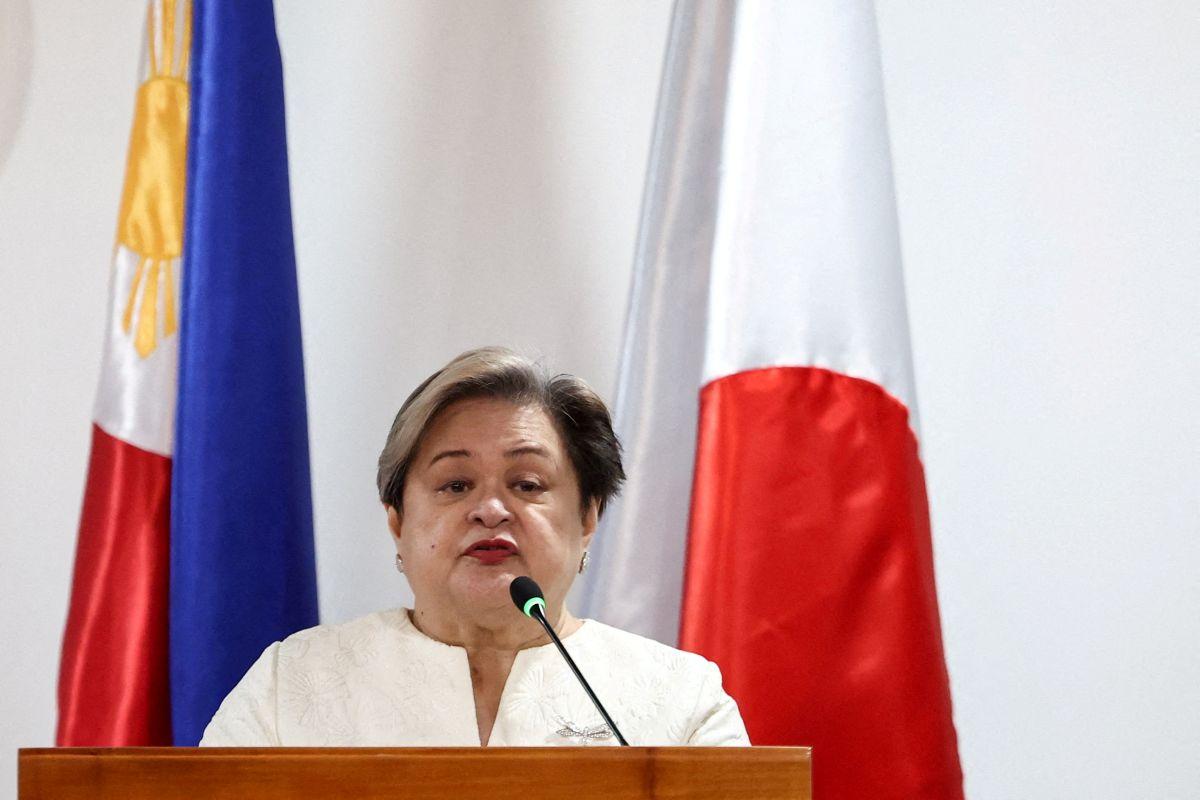
CEBU CITY - Southeast Asia’s top diplomats led by Philippine Foreign Secretary Theresa Lazaro will meet Wednesday in Cebu City in their first major gathering this year with a hope to find a breakthrough to ease long-unresolved conflicts in the South China Sea and Myanmar.
With the theme, “Navigating Our Future, Together,” the Association of Southeast Asian Nations (ASEAN) under the chairmanship of the Philippines aims to foster a stronger united front after two of its members, Thailand and Cambodia, got embroiled last year in a renewed deadly border war before forging a fragile ceasefire.
The complex security and economic issues facing ASEAN, now a bigger bloc of 11 countries with the entry of East Timor last October, are complicated by an increasingly unpredictable global environment and the continuing rivalry of the United States and China in Asia.
All these regional and global concerns are expected to be high in the agenda of the ASEAN foreign ministers when they hold their annual retreat under tight security in a picturesque seaside hotel in Cebu. A more informal set-up, the retreat allows any minister to raise any issue during the closed-door discussions.
'New strategy'
Ahead of the two-day Cebu meeting, Lazaro told GMA News Online in a one-on-one interview that she will discuss a "new strategy" with her ASEAN counterparts to increase the chances of advancing or concluding this year the long-delayed talks with Beijing on the code of conduct (COC) in the South China Sea.
The conclusion of the COC talks is a specially sensitive objective for the Philippines because of the spike in confrontations between the Chinese coast guard and navy and Philippine forces in recent years in the disputed waters. The long unresolved disputes also involve ASEAN members Vietnam, Malaysia and Brunei. Taiwan also has claims in the strategic waterway.
Dr. Fitriani, senior analyst at the Australian Strategic Policy Institute, expressed concern that negotiations for a code have dragged for so long “that it does not really matter…not having the COC.”
“It’s nice to have but how about the implementation?” she said. “I suspect there will be more mini-lateral maneuvering with more reliance on small-group security and coast guard cooperation among like-minded states, alongside deeper external partnerships.”
Jane Hardy, senior fellow at the University of Sydney’s US Studies Center, said China’s activities in the South China Sea “are a key focus for other claimant-nations and the international community – whether or not the Code of Conduct is concluded.”
She said what’s important is a “show of solidarity” against aggressive acts by China's PLA or Coast Guard through “an almost-continuous maritime presence in the South China Sea.”
Founded in 1967, the ASEAN groups Brunei, Cambodia, Laos, Philippines, Indonesia, Thailand, Malaysia, Singapore, Vietnam, Myanmar and Timor Leste. It has a principle of non-interference in domestic policies of its members and decides by consensus.
After the ministers’ discussions Thursday, China and ASEAN will hold four days of negotiations in Cebu from January 30 to February 2 on the proposed code – the first to be hosted in the Philippines since Manila assumed the bloc’s chairmanship this year.
“What's important is we will have some kind of movement as to the last agreements that we had in the previous meetings,” said Dax Imperial, Philippine spokesman for ASEAN.
The code aims to set some rules to prevent the intensifying disputes in the South China Sea from spinning out of control and worsening into a major armed conflict that could involve the United States, an ally of the Philippines and other Asian countries at odds with China. The negotiations, however, have suffered delays and have dragged on for more than a decade.
Three years ago, ASEAN foreign ministers said the bloc should aim to conclude the talks in three years, or this year, which fell under the Philippine chairmanship.
“We'll be able to at least endeavor to conclude the negotiations or the discussions within the timeline that was given under the guidelines which was set back in 2023.”
Lack of progress in Myanmar
A lack of progress in efforts to resolve the Myanmar crisis is among the most contentious issues being faced by the 11-nation ASEAN bloc, which the Philippines is leading as chair this year after assuming the role a year earlier from the crisis-plagued state.
On Thursday, Lazaro would report to her ASEAN counterparts the outcome of her recent visit to Myanmar, where she met military and civilian leaders, as the designated ASEAN special envoy.
The Cebu talks are being held days after Myanmar concluded its third and final round of elections in a monthlong general polls called by the ruling military junta since the army ousted the civilian government of Aung San Suu Kyi in February 2021. The military takeover sparked widespread opposition that led to a civil war.
Citing lack of transparency and fairness, Malaysia’s Foreign Minister Mohamad Hasan said ASEAN will not endorse the election results, with the United Nations and other critics calling the process a sham as the junta-backed political party appeared headed for a parliamentary majority.
“We cannot speculate how the foreign ministers will discuss the elections in Myanmar. We’ll have to wait how they will discuss the results of the elections,” said Imperial.
Myanmar was barred from assuming the ASEAN chairmanship this year as regularly scheduled due to the ruling junta's refusal to implement a peace plan, known as the Five-Point Consensus, agreed on by the bloc’s heads of state to stem the deadly civil strife in the country. ASEAN leaders made that decision when Indonesia led the bloc as chair.
ASEAN also excludes junta leaders from attending its meeting, but allows non-political officials to represent military-ruled Myanmar, which has not been recognized by the grouping, but remains as its member.
For this retreat, a senior diplomat with the rank of Permanent Secretary of Foreign Affairs of Myanmar is attending, said Imperial.
Hardy said “it is clearly in each ASEAN nation’s own national interests to have hard-hitting discussions with the Myanmar military leadership about these issues.”
“ASEAN leaders could collaborate to map out how - by the group or individually or both - they shape next steps with Myanmar,” she said.
‘Strong, calibrated’ ASEAN intervention in Thailand-Cambodia dispute
Renewed disputes between Thailand and Cambodia, two of the bloc's members locked in a violent border conflict that has escalated into a deadly armed conflict, has drawn international concern.
Fighting between the two sides have persisted despite an October 2025 ceasefire pact brokered by then ASEAN chair Malaysia and backed by US President Donald Trump, who threatened to impose more tariffs on the two countries unless they agreed to a truce. This was followed by a China-mediated meeting between Thai and Cambodian officials in the Chinese province of Yunnan, where both sides have committed to build mutual trust.
ASEAN would have to decide whether to confine the Thailand-Cambodia conflict as a bilateral matter with only a calibrated push for both sides to pursue a peaceful resolution.
Analysts believe an ASEAN-led consolidated response is vital to address the conflicts which threaten regional stability.
“It is much better to have strong but well calibrated ASEAN interventions, behind closed doors, with Thailand and Cambodia than have external major powers, including the US, try to find solutions,” said Hardy.
“Direct, unilateral, external interventions have historically not worked, or have generated unhelpful secondary effects,” she added.
To sustain the ceasefire, Dr. Fitriani said the current ASEAN chair or Secretary General can implement “quiet shuttle diplomacy” to encourage confidence-building steps, and monitoring the implementation of joint arrangements.
‘A very candid discussion among the Foreign Ministers’
Apart from issues within ASEAN, Philippine officials said the retreat is an important avenue to tackle global and regional concerns, from geopolitical tensions to Trump’s continuing threats to impose stiff tariffs on rival nations and Washington’s new security plan, such as its unilateral military action against Venezuela, that might impact Asia balance of power.
“When we talk about regional and global development, it’s actually very broad and there’s a reason why this retreat is called a retreat. It allows for a very candid discussion among the Foreign Ministers and when you have that kind of format then all the Foreign Ministers are actually free to raise whatever concern they have that is related to regional and global developments,” Imperial said.
“It would be interesting to find out what the Foreign Ministers will be talking about in the next two days regarding the developments affecting not only the region but the world.” —KG, GMA Integrated News

