

 GMA Brandtalk
 Tracking
 Archives

Philippines to push for more negotiations on SCS Code of Conduct
CEBU CITY – The Philippines is preparing to increase the frequency of talks for a Code of Conduct (COC) in the South China Sea, a Foreign Affairs official said Wednesday, as Southeast Asian nations and China enter a crucial phase to deliver the document within their 2026 target.
Dominic Xavier "Dax" Imperial, spokesman of the Department of Foreign Affairs (DFA) for the Association of Southeast Asian Nations (ASEAN), said all parties to the negotiations "remain politically committed to endeavor to finalize the negotiations of the COC this year," which includes "continuing the discussions on the milestone issues and the remaining paragraphs of the COC."
"The progress we have made so far gives us reason to be hopeful because every round of discussions brings us closer to a document that will have real meaning on the ground. The Philippines will look to facilitate dialogue and sustain momentum," Imperial told GMA News Online.
"As such, we are prepared to host additional meetings to contribute to the timely conclusion of an effective and substantive COC," Imperial added.
Efforts by past ASEAN chair countries, including Indonesia in 2024 and Malaysia last year, failed to yield any breakthrough.
Three years ago, ASEAN foreign ministers said the bloc should aim to conclude the talks in three years, or this year, which fell under the Philippine chairmanship.
Imperial said the Philippines will continue to work constructively with ASEAN members and China "so that the COC reflects our shared commitment to peace, stability, and prosperity."
However, he stressed that the finalization of the COC "will depend on continued political will, constructive engagement, and most importantly, consensus, among all parties."
"What is important for the Philippines is not simply concluding the negotiations, but ensuring that the outcome document is an effective and substantive COC," he said.
"We want a COC that genuinely promotes trust and confidence, prevents incidents, and upholds international law, particularly the 1982 UNCLOS."
UNCLOS stands for United Nations Convention on the Law of the Sea, regarded as the global constitution for the seas signed by 162 nations, including the Philippines and China.
Three Southeast Asian diplomats who spoke to GMA News Online said negotiations have advanced to the most contentious issues, called "milestones," including the scope of the disputed waters it will cover and whether the Code of Conduct should be legally binding or not. They spoke on condition of anonymity as they are not authorized to speak on the matter.
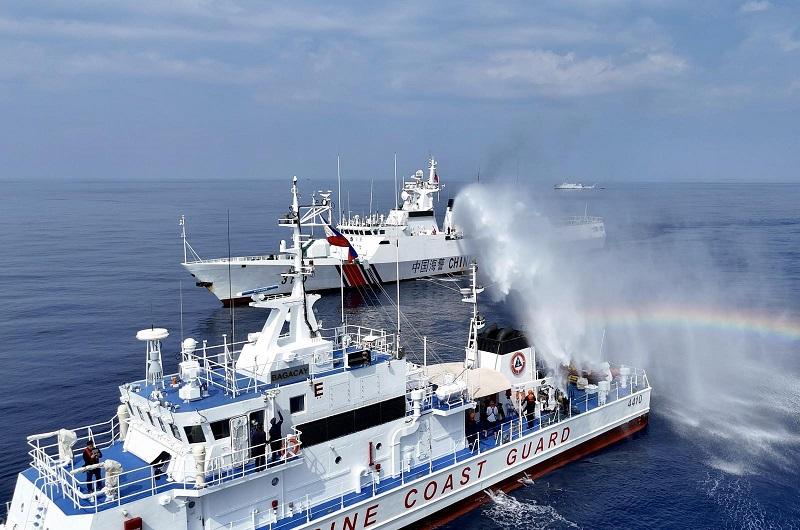
The proposed COC aims to set some rules to prevent the intensifying disputes in the South China Sea from spinning out of control and worsening into a major armed conflict that could involve the United States, an ally of the Philippines and other Asian countries at odds with China. The negotiations, however, have suffered delays and have dragged on for more than a decade.
Four ASEAN member states—Malaysia, the Philippines, Vietnam and Brunei—are involved in the long-unresolved territorial disputes. China and Taiwan have similar claims virtually in the entire sea body, which is an important passageway.
"Maritime security, including the negotiations of the Code of Conduct in the South China Sea, is a key priority during the Philippines’ ASEAN chairmanship," Imperial said.
"Our approach will be principled, measured, and ASEAN-led, focused on stability and deescalation," Imperial added. — VDV, GMA Integrated News

