

 GMA Brandtalk
 Tracking
 Archives

What is Nipah virus?
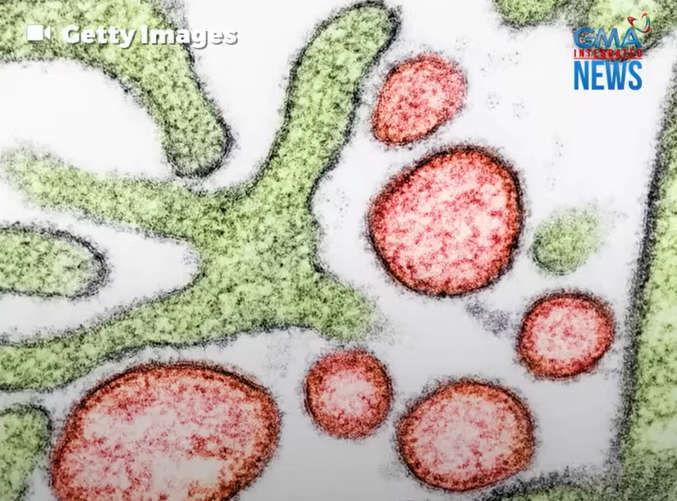
The outbreak of the fatal Nipah virus in West Bengal, India has triggered concerns among the public but the Department of Health made an assurance that the country is ready, saying the Philippines is not new to the disease.
Infectious disease expert Dr. Rontgene Solante also said that the Philippines remains at low risk for Nipah virus.
What is Nipah virus?
According to the World Health Organization, NiV is a zoonotic virus that can be transmitted from contaminated food or between people.
In the Philippines, WHO reported that some bat species were found to be at risk of NiV infection.
Other animals, such as pigs and horses, may also be infected with NiV.
First recognized in Malaysia in 1999 and Bangladesh in 2001, the virus can cause different types of illnesses from asymptomatic (subclinical) infection to acute respiratory illness and fatal encephalitis, as well as severe disease in animals.
Nearly annual outbreaks have been reported in Bangladesh since 2001, and it has also been periodically identified in eastern India.
“It infects a wide range of animals and causes severe disease and death in people, making it a public health concern,” WHO shared.
NiV is a fatal illness with a 40% to 75% mortality rate.
“This rate can vary by outbreak depending on local capabilities for epidemiological surveillance and clinical management,” WHO shared.
Transmission usually occurs with meat consumption or interaction with infected animals, as people-to-people transmissions were often rare.
Solante said those most at risk are travelers who have visited areas with ongoing outbreaks.
“You need a high load of the virus to be transmitted to an individual. So ang kadalasan yan, halimbawa may infected individual kasama ka, (So most of the time, if for example you have an infected individual with you,) it can be transmitted through droplet,” he said in a Super Radyo dzBB interview.
Symptoms
NiV incubates between four to 14 days, but may extend to 45 days.
It is difficult to diagnose as the initial symptoms are non-specific, and they are mostly diagnosed through laboratory testing and clinical history during the acute and convalescent phase of the disease.
Infected people may initially exhibit the following:
- Fever
- Headaches
- Myalgia (muscle pain)
- Vomiting
- Sore Throat.
- Dizziness
- Drowsiness
- Altered Consciousness
- Neurological Signs that indicate acute encephalitis
In severe cases, encephalitis and seizures may occur and lead to a coma within 24 to 48 hours.
Currently, no treatment is available for NiV.
“May mga experimental na mga antiviral, novel antivirals na ginagamit dito sa Nipah virus, but they're not yet at the level of standard of care… It's still experimental. Sa bakuna naman, so far wala pa tayong nabalitaan that there is already vaccine ongoing trials, but hopefully it will come soon,” Solante said.
(There are experimental antiviral, novel antivirals that are used against the Nipah virus, but they’re not yet at the level of standard of care… It's still experimental. For vaccines, so far we haven’t heard of anything regarding vaccine ongoing trials, but hopefully it will come soon.)
Protection against NiV
DOH released guidelines on responding to NiV in 2023, outlining extensive biosafety considerations on sample collection, testing, and diagnosis.
For the public, DOH spokesperson Assistant Secretary Albert Domingo said it is best to avoid bats and sick animals.
Domingo and Solante also emphasized the importance of being careful with consuming animal meat.
“It is best to eat meat approved by the National Meat Inspection Service or NMIS, and always cook food well,” Domingo said.
“You have to wash your hands, cook the meat properly and kung may mga sintomas, as usual you have to consult the doctor para naman masuri kung ano ang klaseng infection ang meron tayo, (to diagnose what kind of infection we have),” Solante shared. —AOL, GMA Integrated News

