

 GMA Brandtalk
 Tracking
 Archives

DFA's Lazaro warns of security challenges and erosion of rules-based order
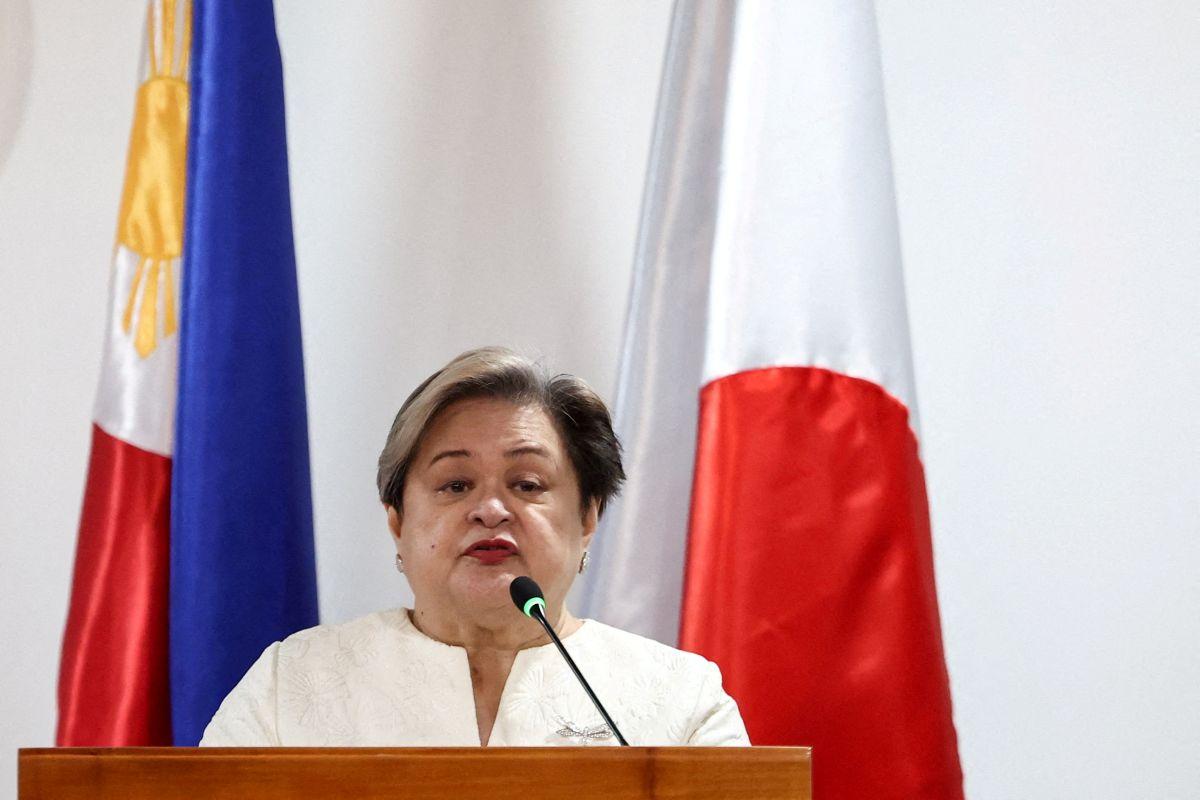
CEBU CITY — Foreign Secretary Theresa Lazaro on Thursday said Southeast Asia must brace for more “complex and evolving” security challenges as she warned that certain “unilateral actions” carry cross-regional implications that could “erode multilateral institutions” and “rules-based international order.”
“Security challenges facing ASEAN have not only grown, but have also evolved and diversified,” Lazaro told her counterparts as they gather at a seaside resort hotel here for the second day of their closed-door talks.
“The global geopolitical security environment is not only more challenging, but it has also become more complex and interconnected.”
Lazaro did not mention the US, but some ASEAN members, such as Singapore, Malaysia and the Philippines, earlier raised concerns on America’s operation in Venezuela after it took unilateral military action against the South American state and captured its leader Nicolás Maduro and his wife, Cilia Flores.
They have stressed that principles of international law and noninterference are crucial elements of regional peace.
In the South China Sea, China's increasingly aggressive actions prompted serious concerns and condemnations from several countries after its coast guard vessels have repeatedly blasted water cannons, used military-grade lasers, and blocked Philippine government ships from conducting patrols in the West Philippine Sea, that part of the South China Sea that is nearest to the Philippine archipelago, but being claimed by China as its own.
“Developments beyond Southeast Asia, including unilateral actions that carry cross-regional implications continue to affect regional stability and erode multilateral institutions and erode the rules-based international order,” said Lazaro.
Across the region, Lazaro said “tensions at sea, protracted internal conflicts, and then result in moderate dying concerns” have persisted.
“Taken together, these realities underscore the enduring importance of ASEAN's time-honored principles of restraint, dialogue, and adherence,” she said.
Southeast Asia’s top diplomats led by Lazaro are holding talks in Cebu City in their first major gathering this year to tackle pressing regional and global concerns in an informal style of meeting, called a retreat, as they seek to find a breakthrough to ease long-unresolved conflicts in the South China Sea and Myanmar.
With the theme, “Navigating Our Future, Together,” the Philippines is the current chair of the 11-member bloc, which includes Malaysia, Singapore, Indonesia, Thailand, Vietnam, Cambodia, Laos, Myanmar and Timor Leste.
Manila’s ASEAN chairship coincides with the 50th anniversary of the bloc’s non-aggression pact, called Treaty of Amity and Cooperation, signed by 58 states, including the US and China.
The TAC, according to Lazaro, "has provided foundations for peace, stability, and cooperation in our region by enshrining principles that remain just as relevant today: Respect for sovereignty, non-interference, peaceful settlement of disputes and the renunciation of force.”
She said the Philippines, under President Ferdinand Marcos Jr., is firmly committed to these principles.
“We continue to uphold international law, principles enshrined in the TAC and the UN Charter, and respect for ASEAN centrality as the foundations of our foreign policy,” she said.
Lazaro said these core principles are important to ASEAN as it has guided them through the years on how it pursues "peace and stability, economic resilience, and people-centered development.” —with Anna Felicia Bajo/RSJ/AOL, GMA Integrated News

