

 GMA Brandtalk
 Tracking
 Archives

House to revise impeachment rules after Supreme Court decision on Sara Duterte Case
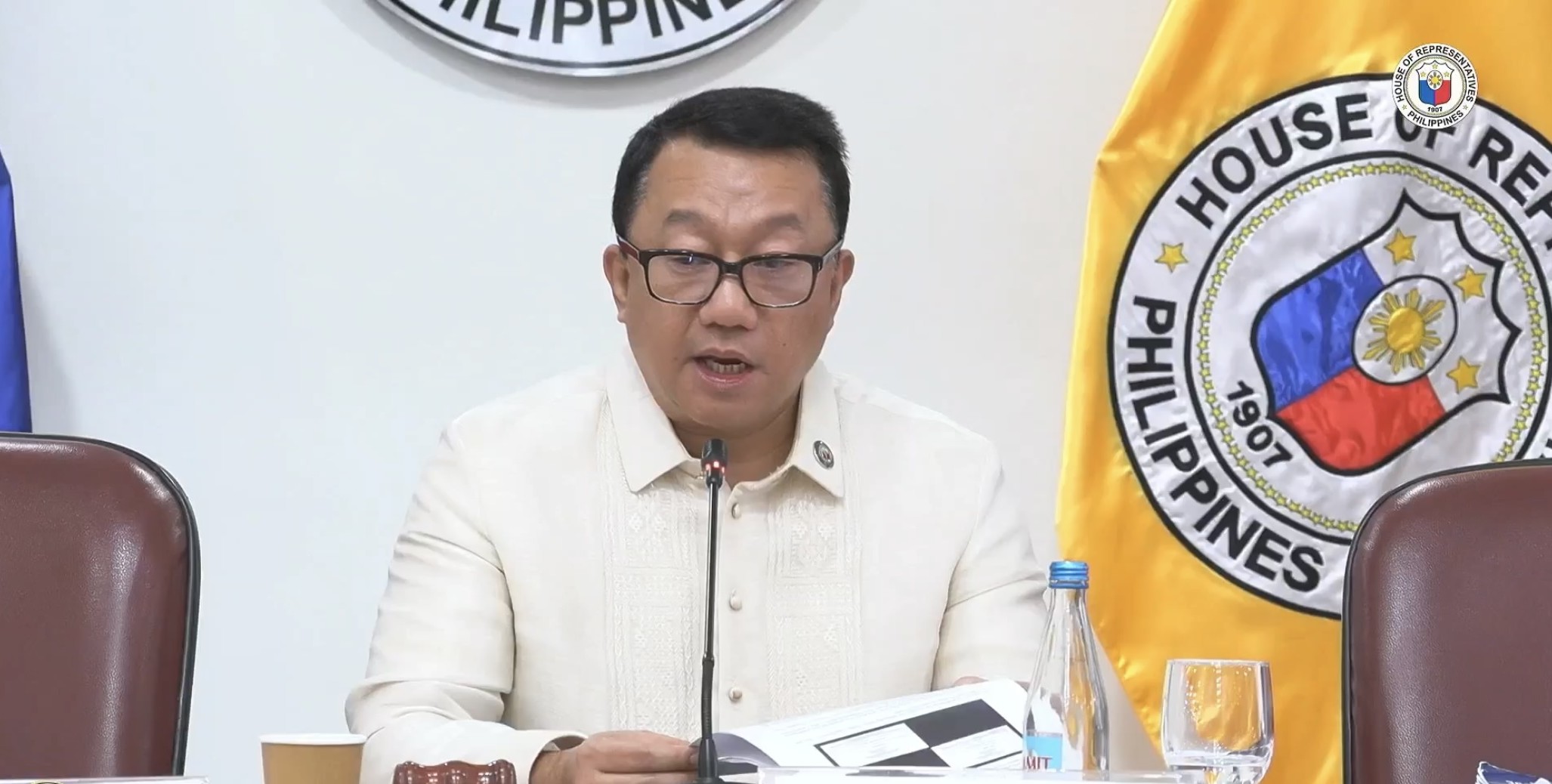
The House of Representatives will revise the Rules of Impeachment as provided under the House rules to comply with the Supreme Court decision declaring the impeachment case against Vice President Sara Duterte illegal, a House leader said Thursday.
Manila Rep. Joel Chua, chairman of the House Committee on Good Government and Public Accountability, issued the statement after the High Court’s January 29 decision affirmed its July 2025 ruling declaring the impeachment case against the Vice President on two grounds: violation of the one-year bar rule and violation of her right to due process.
“As a member of the House prosecution team and of the House Committee on Justice, I will confer with my colleagues on how best to revise the Rules on Impeachment as we deem fit and in ways that comply with the Supreme Court decision,” Chua said in a statement.
“We will receive inputs from the complainants, some of whom are now members of the House. It is also possible that the Prosecution team composition will have some changes,” he added.
The Supreme Court ruled that the impeachment case against the Vice President was unconstitutional for violating the one-year bar rule.
The House already archived the first three verified impeachment complaints filed when the majority of the House members voted to impeach the Vice President based on the fourth verified impeachment complaint filed.
The Supreme Court said archiving was in effect a referral, thus violating the constitutional limit of only referring one impeachment complaint per year against an impeachable official.
In its appeal, which was junked by the Court, the House argued that archiving was not a referral and thus, not a violation of the one-year bar rule.
The Supreme Court decision on the Sara Duterte impeachment case said the House violated the Vice President's right to due process because it did not comply with the following requirements:
- the Articles of Impeachment or Resolution must include evidence when shared with the House members, especially those who are considering its endorsement.
- the evidence should be sufficient to prove the charges in the Articles of Impeachment.
- the Articles of Impeachment and the supporting evidence should be available to all members of the House of Representatives, not only to those who are being considered to endorse.
- the respondent in the impeachment complaint should have been given a chance to be heard on the Articles of Impeachment and the supporting evidence to prove the charges prior to its transmittal to the Senate, despite the number of endorsements from House members.
- the House of Representatives must be given reasonable time to reach their independent decision of whether or not they will endorse an impeachment complaint. However, the Supreme Court has the power to review whether this period is sufficient. The petitioner who invokes the Supreme Court's power to review should prove that officials failed to perform their duties properly.
- the basis of any charge must be for impeachable acts or omissions committed in relation to their office and during the current term of the impeachable officer. For the President and Vice President, these acts must be sufficiently grave amounting to the crimes described in Article XI Section 2, or the Trail of Public Trust given by the majority of the electorate. For the other impeachable officers, the acts must be sufficiently grave that they undermine and outweigh the respect for their constitutional independence and autonomy.
- the House of Representatives is to provide a copy of the Articles of Impeachment and its accompanying evidence to the respondent to give him/her an opportunity to respond within a reasonable period to be determined by the House rule and to make the Articles of Impeachment, with its accompanying evidence and the comment of the respondent, available to all the members of the House of Representatives.
Chua, however, said he respected the High Court’s decision.
“While I do not agree with the Supreme Court decision, we will abide by it because as a lawyer, I am an officer of the court and swore to respect and uphold our system anchored on the rule of law,” Chua said.
“This statement reflects my personal view as a Member of the House, and not the collective position of the entire House of Representatives or the panel of prosecutors,” he added.
The non-existent, if not questionable, names of recipients of millions of confidential funds of the Vice President were revealed during the inquiry conducted by the Chua-led House panel in 2024.
No easy task
Speaker Faustino “Bojie” Dy III said the SC decision makes clear that the impeachment process is no easy task.
“The House recognizes the Supreme Court decision on the Articles of Impeachment against Vice President Sara Duterte. The impeachment is a clear-cut process provided for by the Constitution with clear grounds,” Dy said.
“It is very important to be cautious when it comes to the impeachment process, given that it is a mechanism that is part of our mandate in serving the people,” Dy added.
Bukidnon 2nd District Rep. Jonathan Flores said the new House Rules on Impeachment must be carefully worded.
“I fully understand the intent of the Supreme Court to infuse due process into the impeachment process. We will read the decision and separate opinions in their minute details,” he said.
“We will then work out the precise statutory construction necessary to revise the impeachment rules,” he added.
Technicality
ML party-list Rep. Leila De Lima, a House Deputy Minority Leader, said the Supreme Court decision only concerns a technicality, not the merits of the impeachment case against the Vice President.
"The SC's (Supreme Court) ruling rests on a technicality. Magagamit ito sa susunod na filing," De Lima said.
(The decision will be considered in the refiling.)
"It is still not a vindication. Wala pa ring nalinis na pangalan," he added.
(No name has been cleared here.)
First complaint is dead
House Committee on Justice chairperson and Batangas 2nd district Rep. Gerville Luistro said the SC ruling on the MR means the "impeachment complaint is indeed dead already."
"The upholding of the original decision, which means the denial of the motion for reconsideration, it only means that the first impeachment complaint is indeed dead already," Luistro said in an online interview.
Luistro was elected one of the House impeachment prosecutors in the VP Duterte impeachment trial, which did not proceed in the Senate Impeachment Court.
"We were of honest belief that we followed the rules as provided under the Constitution and under the Rules on Impeachment of the House of Representatives. Nevertheless, this is what the rule of law means. Let us remind the people that the Supreme Court, the Honorable Supreme Court is the final arbiter of all the controversies pertaining to the implementation and interpretation of our laws. So whatever the Supreme Court says, we are bound to follow," she explained.
The one-year bar on the initiation of more than one impeachment proceeding against VP Duterte will end next month, and Luistro said the SC ruling means there will be more requirements in case another impeachment complaint is filed against the vice president, with at least one-third of the members of the House signing the complaint.
"It only means that if ever there will be a second impeachment complaint against the VP, we will have to follow the rules provided in the decision of the Supreme Court, which to our interpretation, provided additional requirements in as far as the second mode is concerned," Luistro said.
"It means that even if the impeachment complaint is supported by at least one-third, magkakaroon na doon ng notice to file an answer for the respondent substantially," she added.
Abandonment of restrictive due process
In a separate statement, committee on public accounts chairperson Terry Ridon said the SC ruling "effectively abandoned the most restrictive due process requirements" in the original decision.
Ridon explained that in the SC's original ruling, it required that the respondent be furnished copies of the draft Articles of Impeachment and be allowed to respond as part of the House's internal proceedings.
It does, however, require the draft Articles of Impeachment and supporting documents to be furnished to the members of the House; the evidence to meet “required quantum of proof” to establish the charges; and, for the evidence to be available to all House members.
“This MR ruling restores clarity to the House’s constitutional role in impeachment. It recognizes that impeachment is a political and constitutional process entrusted to the legislature, and that the House must be allowed to evaluate complaints based on the evidence available to Members, consistent with internal rules and the requirements set by the Constitution,” he said.
“The House remains fully committed to ensuring that impeachment proceedings—when warranted—are grounded on facts, evidence, and constitutional principles,” he added.
Not in the public interest
ACT Teachers Rep. Antonio Tinio, Gabriela Women's Party Rep. Sarah Jane Elago and Kabataan Rep. Renee Louise Co said their colleagues at the Makabayan bloc are prepared to refile the impeachment complaint against the Vice President "because it is necessary and in the interest of the Filipino people."
"The Vice President must be held accountable for her actions and omissions that have violated the public trust,” they said
“Despite this adverse ruling, we believe that the issues raised in the impeachment complaint against Vice President Duterte—including her alleged culpable violation of the Constitution, betrayal of public trust, and other high crimes—remain valid and must be addressed through the proper constitutional process. The confidential funds scandal, the misuse of public resources, and the pattern of abuse of authority cannot be swept under the rug simply because of procedural technicalities,” the opposition lawmakers added.
Bagong Alyansang Makabayan president Renato Reyes agreed, saying that the SC ruling
is reflective of “the system protecting those in power.”
“The modes of accountability for top government officials should be in favor of the people, not the impeachable officials. Holding the corrupt accountable should be made accessible and realizable, not impossible,” Reyes said in a separate statement.–With Tina Panganiban-Perez and Jiselle Anne Casucian/NB, GMA Integrated News

