

 GMA Brandtalk
 Tracking
 Archives

ASEAN concerned with reclamations, serious incidents in SCS
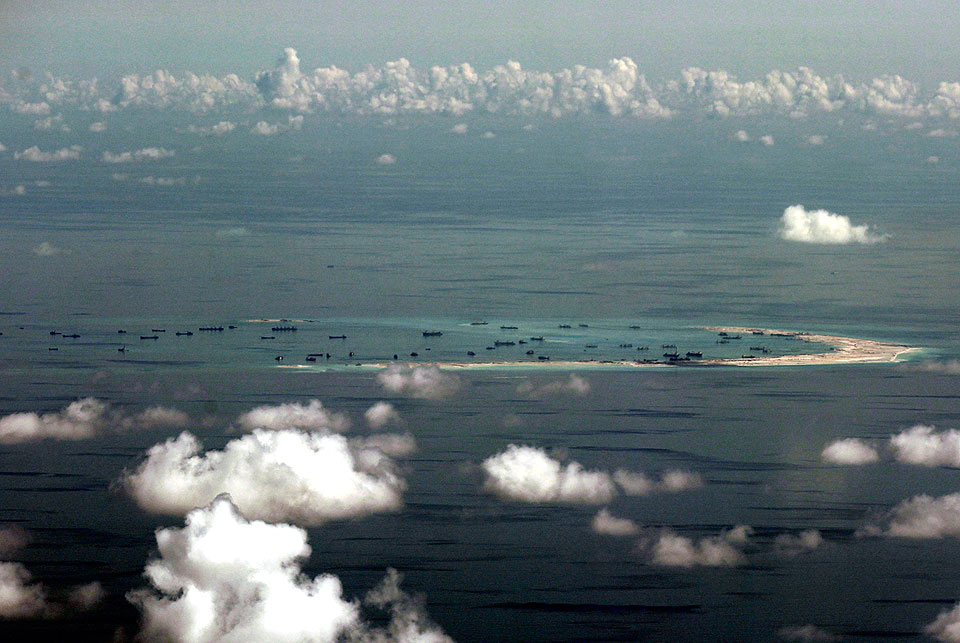
MANDAUE CITY —The ASEAN member states viewed with concern incidents, including land reclamations, in the South China Sea, noting that these undermine peace and stability in the region.
In a press statement, Foreign Affairs Secretary Ma.Theresa Lazaro, who chairs the ASEAN Foreign Ministers' Retreat, said the incidents in the South China Sea have been part of their discussions.
Lazaro said they agreed on the need to observe self-restraint to prevent the escalation of tension and dispute in the region.
''We discussed the situation in the South China Sea, during which concerns were expressed on land reclamations, activities, serious incidents in the area, including actions that put the safety of all persons at risk, damage to the marine environment, which have eroded trust and confidence, increased tensions, and may undermine peace, security, and stability in the region,'' Lazaro said.
''We reaffirmed the need to enhance mutual trust and confidence, exercise self-restraint in the conduct of activities that would complicate or escalate disputes and affect peace and stability and avoid actions that may further complicate the situation,'' she added.
She said they all reaffirmed the need to pursue peaceful resolution of disputes, in accordance with international law, particularly the 1982 UNCLOS.
''We emphasized the importance of self-restraint in the conduct of all activities by claimants and all other states, including those mentioned in the 2002 Declaration on the Conduct of Parties in the South China Sea (DOC) that could further complicate the situation and escalate tensions in the South China Sea,'' she said.
Tensions have increased in the region, mostly because of China's continued atrocities there.
Lazaro earlier said monthly meetings would be held for the negotiations on the Code of Conduct (COC) in the South China Sea.
The proposed COC aims to set some rules to prevent the intensifying disputes in the South China Sea from spinning out of control and worsening into a major armed conflict that could involve the United States, an ally of the Philippines and other Asian countries at odds with China.
The negotiations, however, have suffered delays and have dragged on for more than a decade.
Meanwhile, the regional bloc also reaffirmed its strong commitment to upholding regionalism and multilateralism, as well as ASEAN Centrality in the evolving regional architecture.
Member states also viewed with importance the shared values and norms enshrined in the UN Charter, the Declaration on Zone of Peace, Freedom and Neutrality (ZOPFAN), the Treaty of Amity and Cooperation in Southeast Asia (TAC), the 1982 United Nations Convention on the Law of the Sea (UNCLOS), the Treaty on the Southeast Asia Nuclear Weapon-Free Zone (SEANWFZ Treaty), the 2011 Declaration on the East Asia Summit on the Principles for Mutually Beneficial Relations and the ASEAN Outlook on the Indo-Pacific (AOIP). —LDF, GMA Integrated News

