

 GMA Brandtalk
 Tracking
 Archives

PH, China hold talks on SCS issues in Cebu
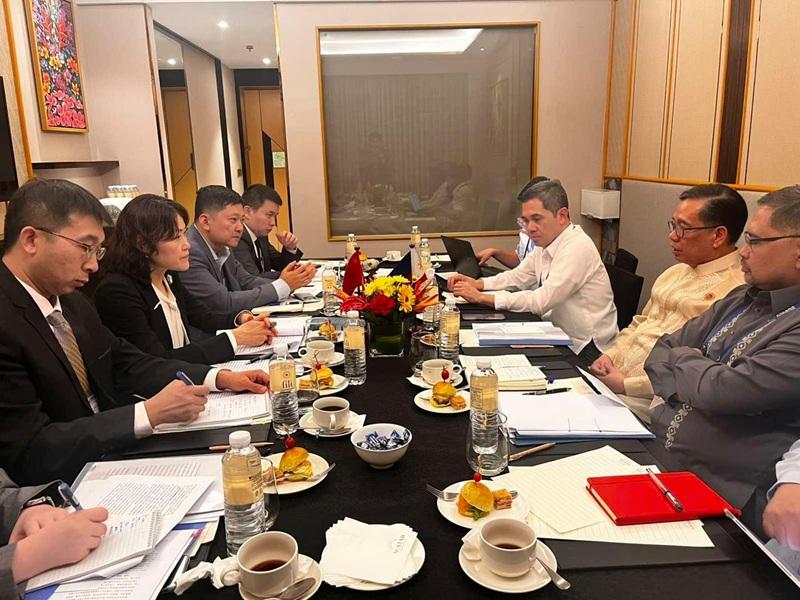
CEBU CITY - Senior diplomats from the Philippines and China on Thursday held bilateral talks on the disputed South China Sea, where hostilities and tensions between the two countries have alarmingly escalated in recent years.
Held at the sidelines of a two-day ministerial meeting of top diplomats from the Association of South East Asian Nations (ASEAN) in Cebu, Philippine Department Undersecretary for Policy Leo Herrera-Lim met with Hou Yanqi, China's Director-General of the Department of Boundary and Ocean Affairs on maritime-related matters, including the implementation of an existing non-binding code between the ASEAN and China.
A 2002 agreement between ASEAN and China calls on all claimants to exercise restraint and stop new occupation of territories in the South China Sea. However, it lacks the power to sanction states that will violate its provisions. Both sides are trying to conclude negotiations for a legally-binding code this year.
"Both sides had a candid exchange of views on bilateral relations, maritime-related matters, and regional and international issues of mutual interest," according to statement by the Department of Foreign Affairs (DFA).
The Philippines last week said it is alarmed over heated exchanges between Filipino officials and Chinese diplomats in Manila over their long-standing territorial rifts in the South China Sea.
In Beijing, China's Ministry of Foreign Affairs summoned Philippine Ambassador Jaime FlorCruz to protest statements by Philippine Coast Guard spokesperson Commodore Jay Tarriela, who has openly criticized China's increasingly aggressive actions in waters.
Without elaborating, the DFA said it “made firm representations to the Chinese ambassador and the Chinese Embassy conveying serious concerns with the escalation of public exchanges.”
The DFA warned that the word war could “unnecessarily derail the diplomatic space needed to manage the tensions in the maritime domain."
At the same time, the agency expressed support to Philippine officials, including some lawmakers, who have issued remarks in defense of the country’s sovereignty in the waters.
At the Cebu meeting, the DFA said Philippine and Chinese officials "underscored the importance of sustained diplomatic dialogue and continued cooperation across all sectors."
China insists ownership of almost 90 percent of the South China Sea, including areas that overlap with the Philippines’ and other Asian nations’ territorial waters.
The Philippines, Vietnam, Malaysia, Brunei, China and Taiwan all have overlapping claims over the waters – a major trade route teeming with rich marine life and said to be harboring vast oil and mineral deposits.
The Philippines challenged the validity of China's sprawling territorial claims in the South China Sea and sought to clarify the territorial entitlements of certain Chinese-occupied features under the United Nations Convention on the Law of the Seas, or UNCLOS. Manila won the case against China, which refused to recognize the ruling. — BAP, GMA Integrated News

