

 GMA Brandtalk
 Tracking
 Archives

Angara: Learners to take active role as DepEd ramps up reforms
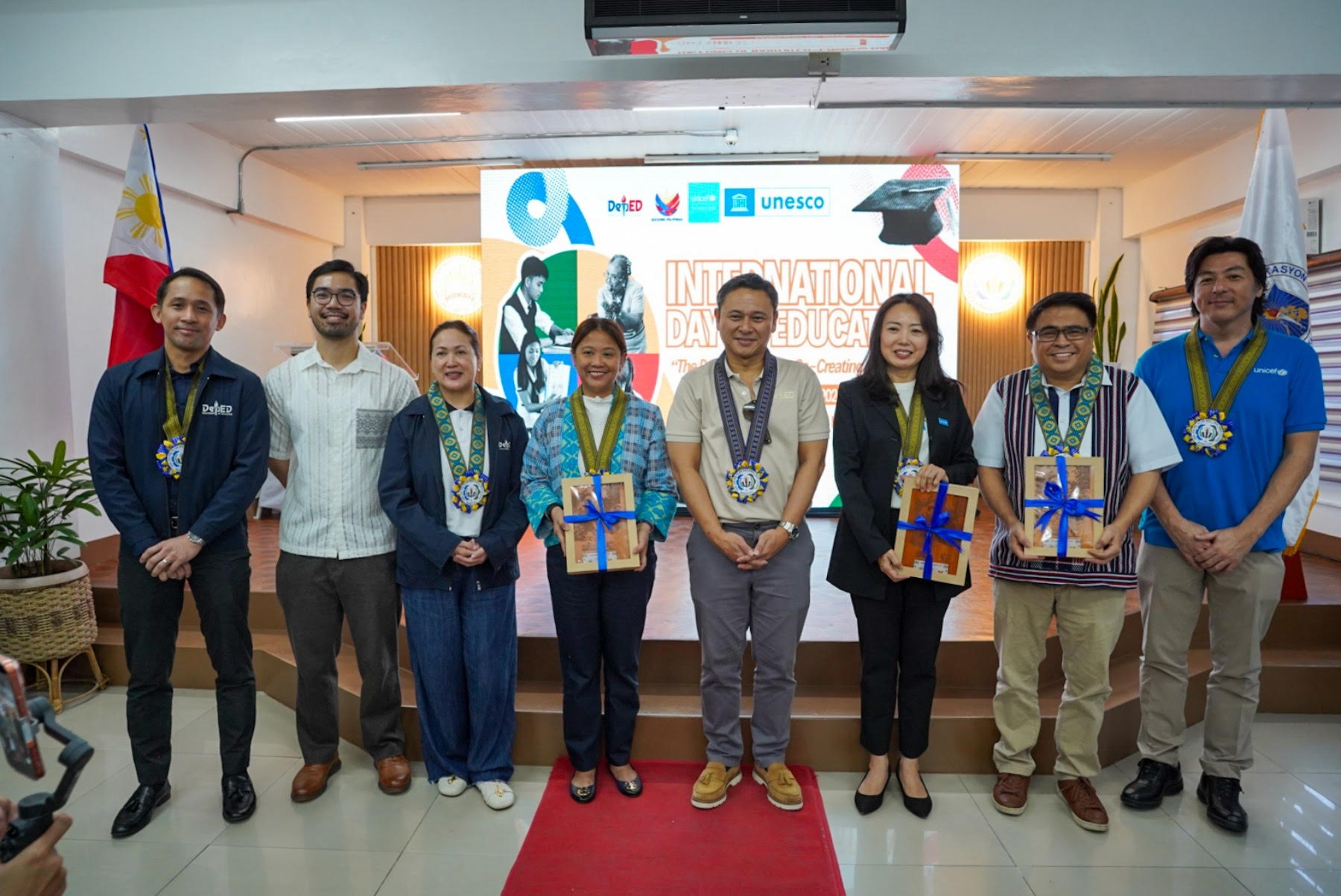
Secretary Sonny Angara on Monday highlighted how the Department of Education (DepEd) is accelerating reforms to strengthen foundational learning and modernize teaching and assessment, with learners playing an increasingly active role in shaping education policy.
Speaking during the International Day of Education celebration at Gen. Pio del Pilar National High School in Makati City, Angara said DepEd’s reform agenda is becoming more learner-centered, particularly in kindergarten and Grade 1, where learning foundations are built.
Angara said the cornerstone of this initiative is the planned universalization of the School-Based Feeding Program, covering all public kindergarten and Grade 1 learners for the full 180-day school year.
He said the expansion marks a first in Philippine education, supported by a budget nearly ten times larger than previous allocations.
“We will have universal feeding for all public schools in the Philippines for kindergarten and Grade 1, all for 180 days for the full school cycle—for the first time in Philippine history,” Angara said, stressing that readiness to learn begins with proper nutrition.
He added that international experience shows strong education systems prioritize early learning, noting that outcomes depend not only on classroom instruction but also on support from families and communities.
Beyond nutrition, Angara urged schools to fully utilize digital and instructional tools provided by DepEd to make learning more engaging.
These include platforms such as Khan Academy Philippines, Canva, Google, and Microsoft.
“We really want to make things more fun, more engaging,” he said, describing education as a system co-created by teachers, learners, and families.
Education partners echoed the importance of youth participation in shaping reforms.
Ivan Anthony Henares, secretary general of the UNESCO National Commission of the Philippines, said young people are not just beneficiaries of education but active contributors.
“As lifelong learners, volunteers, peer educators, innovators, advocates, and future leaders, youth are not just participants in education. They are its driving force,” he said.
UNICEF Philippines Country Representative Kyungsun Kim likewise underscored how learner engagement improves policy relevance.
“Your voice, your creativity, your courage, and your power help shape the future of education in the Philippines, and the future of the country,” Kim said.
The event, themed “The Power of Youth in Co-Creating Education,” brought together student leaders, youth advisers, teachers, and DepEd officials from across the National Capital Region.
It highlighted how learner feedback is being translated into concrete policy—from nutrition and early learning to digital innovation in classrooms.—MCG, GMA Integrated News

