

 GMA Brandtalk
 Tracking
 Archives

Marcos impeachment complaints’ authenticity included in determining substance
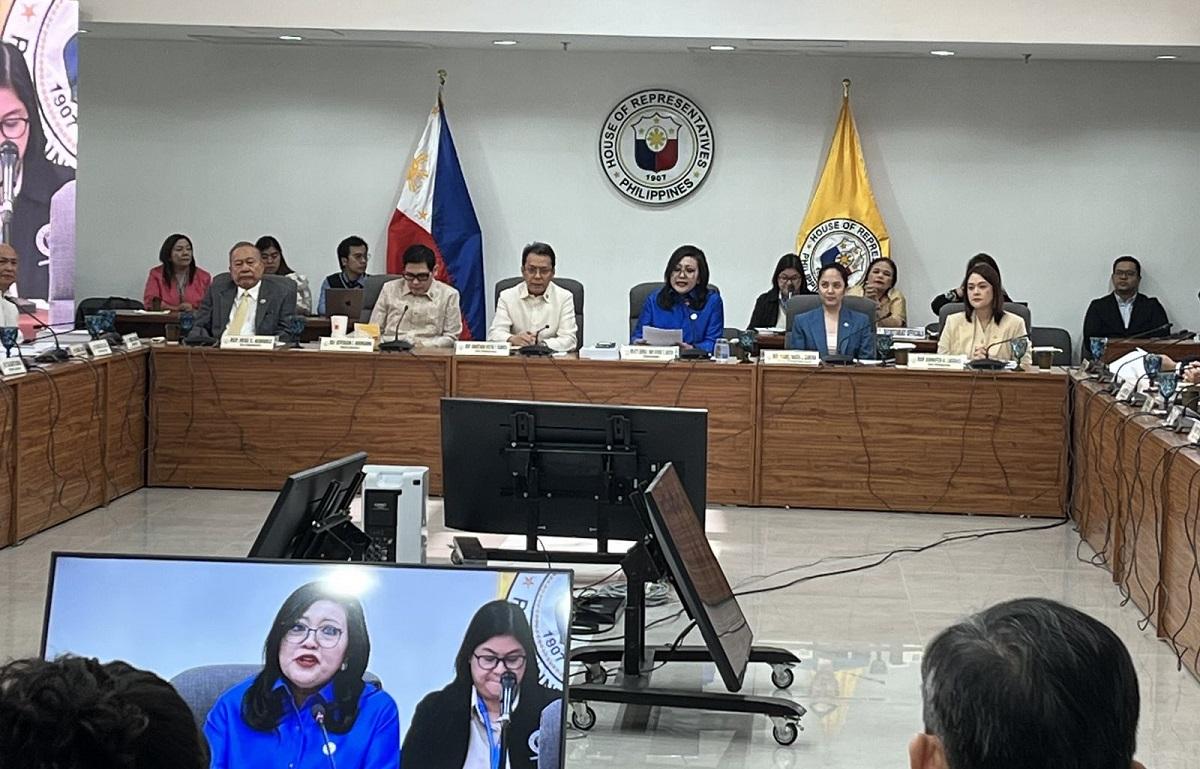
The House justice panel will consider the authenticity of supporting documents and annexes in determining the sufficiency in substance of two impeachment complaints filed against President Ferdinand "Bongbong" Marcos, Jr.
This developed after the House justice panel, via a 24 to 21 vote, voted to reject the motion to exclude the authenticity of the attachments of the attachments for the purpose of the determination of sufficiency in substance.
This means that the House justice panel members will have to consider the authenticity of the annexes and records attached to the complaints while assessing whether the allegations are supported by facts.
House Senior Deputy Majority Leader and Iloilo Representative Lorenz Defensor argued that the House justice panel’s decision is anchored on the House Rules on impeachment proceedings.
“If we look at the heading of Section 5 of our Rules of Impeachment, it says determination of sufficiency of substance. It’s not acceptance of a recital [of facts],” he said.
“The word 'determination' bears emphasizing that it is upon the responsibility of this committee not simply to accept a recital in an impeachment campaign. We have the duty to determine [the substance of the complaint with diligence, and it is not done by mere acceptance of the allegations,” Defensor added.
The two impeachment complaints filed against the President are:
- the complaint filed by lawyer Andre De Jesus, which accuses the President of betrayal of public trust and culpable violation of the Constitution for ordering and enabling the kidnapping and surrender of ex-President Rodrigo Duterte to the International Criminal Court (ICC), and accuses him as well of being a drug addict whose condition impairs his judgment and leadership and failing to veto unprogrammed appropriations and other unconstitutional provisions of the national budget for 2023, 2024, 2025, and 2026, among others; and
- the complaint filed by the Makabayan coalition, alleging that the President committed betrayal of public trust over the adoption of the Baselined-Balanced-Managed (BBM) Parametric Formula in allocating infrastructure projects that allegedly led to "ghost," substandard, and overpriced flood management projects, among others.
Bicol Saro party-list Representative Terry Ridon, who is a member of the House justice panel in his capacity as a House public accounts panel chairperson, backed Defensor’s position that authentic documents and personal knowledge are indispensable.
“We need authentic documents and personal knowledge. There are complaints terminated at the stage of determination on sufficiency in form because of lack of personal knowledge. We cannot dismiss unauthenticated submissions and lack of personal knowledge as immaterial in determination of sufficiency in substance because this has real impact, not just on this impeachment proceeding, but on all impeachment proceedings moving forward,” Ridon said in a separate press conference.
“People should not be allowed to make up a document and file the same [to constitute an impeachment complaint],” Ridon, a lawyer like Defensor, added.
House justice committee chairperson Gerville Luistro, for her part, says passing the standard for sufficiency in substance is not an easy task given the limited grounds for impeachment.
“The fact that you are guilty of an act or omission punishable by law does not necessarily mean that you are guilty of an impeachable offense. Let us be mindful that the impeachment proceedings provide for very restrictive grounds, and we cannot go beyond that,” she said.
The grounds for impeachment as provided for by the Constitution include: culpable violation of the Constitution, treason, bribery, graft and corruption, other high crimes, or betrayal of public trust.
“The offense being alleged should constitute at least a ground for impeachment. If you cannot mount evidence to meet a ground for impeachment, then this will fail. You should be able to connect the offense alleged to the ground for impeachment. For example, included in the allegations [stated in the impeachment complaints against the President] are graft and corruption, citing the kickbacks and the flood control controversies question. Do they constitute graft and corruption as one of the grounds for impeachment? That is the question that the members of the House justice committee have to answer when we vote on the sufficiency in substance of the two complaints tomorrow,” Luistro added. — BM, GMA Integrated News

