

 GMA Brandtalk
 Tracking
 Archives

Angara flags grading practices, backs tutoring push
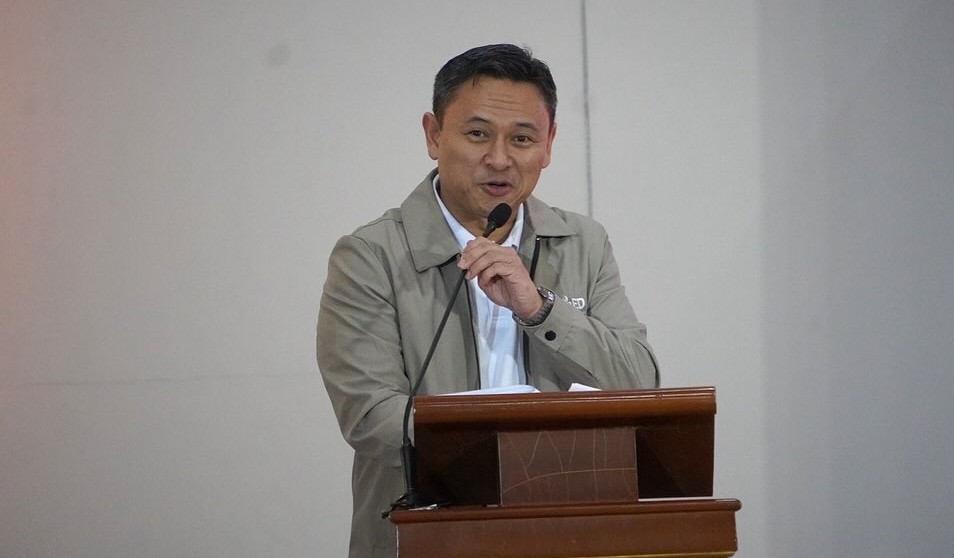
Education Secretary Sonny Angara said Tuesday that the Department of Education (DepEd) is reviewing grading practices that may inadvertently encourage mass promotion, as the government works to balance learning recovery with efforts to ensure no learner is left behind.
Angara made the remarks in an ambush interview on the sidelines of the 42nd National Social Action General Assembly of Caritas Philippines in Tagaytay City, amid discussions on the findings of the Second Congressional Commission on Education (EDCOM 2) on student promotion and learning outcomes.
“Bagama’t wala namang polisiya sa mass promotion, may mga hindi sinasadyang polisiya na nagkakaroon ng ganitong epekto—tulad ng parehong guro ang magtu-tutor sa bata kapag binagsak niya.
"Siyempre, dahil sa human nature, maaaring mag-atubili ang guro na ibagsak ang bata,” Angara said.
Angara also flagged the practice of grade transmutation as among the policies under review, noting that it allows failing marks to be adjusted upward.
“Tapos yung transmutation ng grades, siguro titignan namin. Sa transmutation, kapag 60 ang grado, ginagawang 75 (We will also likely review grade transmutation. Under transmutation, a grade of 60 is raised to 75),” he said.,” he said.
Angara noted that such practices do not apply in international assessments and college entrance examinations, underscoring the need for consistency across the education system.
“Pagdating sa international assessments at college entrance exams, wala namang transmutation. Siguro dapat maging consistent tayo sa buong education system pagdating sa grading policy,” he said.
(When it comes to international assessments and college entrance exams, there is no transmutation. We should probably be consistent throughout the education system when it comes to grading policies.)
Angara cited the Academic Recovery and Accessible Learning (ARAL) Program as one intervention that seeks to ensure that "no learner is left behind."
“Dapat walang maiiwan na bata. Iyan talaga ang intensyon ng ARAL program. Yung mga nahihirapan, bibigyan ng karagdagang atensyon at tutoring,” he said.
(No child should be left behind. That is truly the intention of the ARAL program. Those who are struggling will be given additional attention and tutoring,)” he said.
He said the approach mirrors long-standing practices in private schools and is now being expanded to benefit public school learners nationwide.
On possible curriculum changes, Angara said DepEd is taking a gradual reform approach rather than implementing sweeping overhauls.
“Hindi naman overall, kasi kapag binago mo ang curriculum, babaguhin mo lahat—mga libro, training—hindi madali iyon at puwedeng umabot ng kalahating dekada,” he said.
(It's not an overall change, because if you change the curriculum, you have to revise everything—books, training—that’s not easy and could take up to half a decade.)
Instead, he said incremental reforms would allow improvements without disrupting the education system.
“Mas maganda na pakonti-konti ang reporma,” Angara added.
Earlier, DepEd reiterated that it has no policy allowing the mass promotion of students to the next grade level despite a lack of mastery of required competencies.
“Walang polisiya ang DepEd na nagsasabing ang mga bata ay dapat automatic na mapo-promote. Wala po tayong ganitong polisiya,” DepEd Undersecretary for Learning Systems Strand Carmela Oracion said in an interview on Super Radyo dzBB.
The statement came amid renewed discussion on mass promotion following the release of the National Education and Workforce Development Plan (NatPlan) 2026–2035, which called for an end to the practice and set a goal of ensuring that every child becomes a reader by Grade 3.—MCG, GMA Integrated News

