

 GMA Brandtalk
 Tracking
 Archives

Senate open to talk with Chinese Embassy, DFA to arrange meeting —Erwin Tulfo
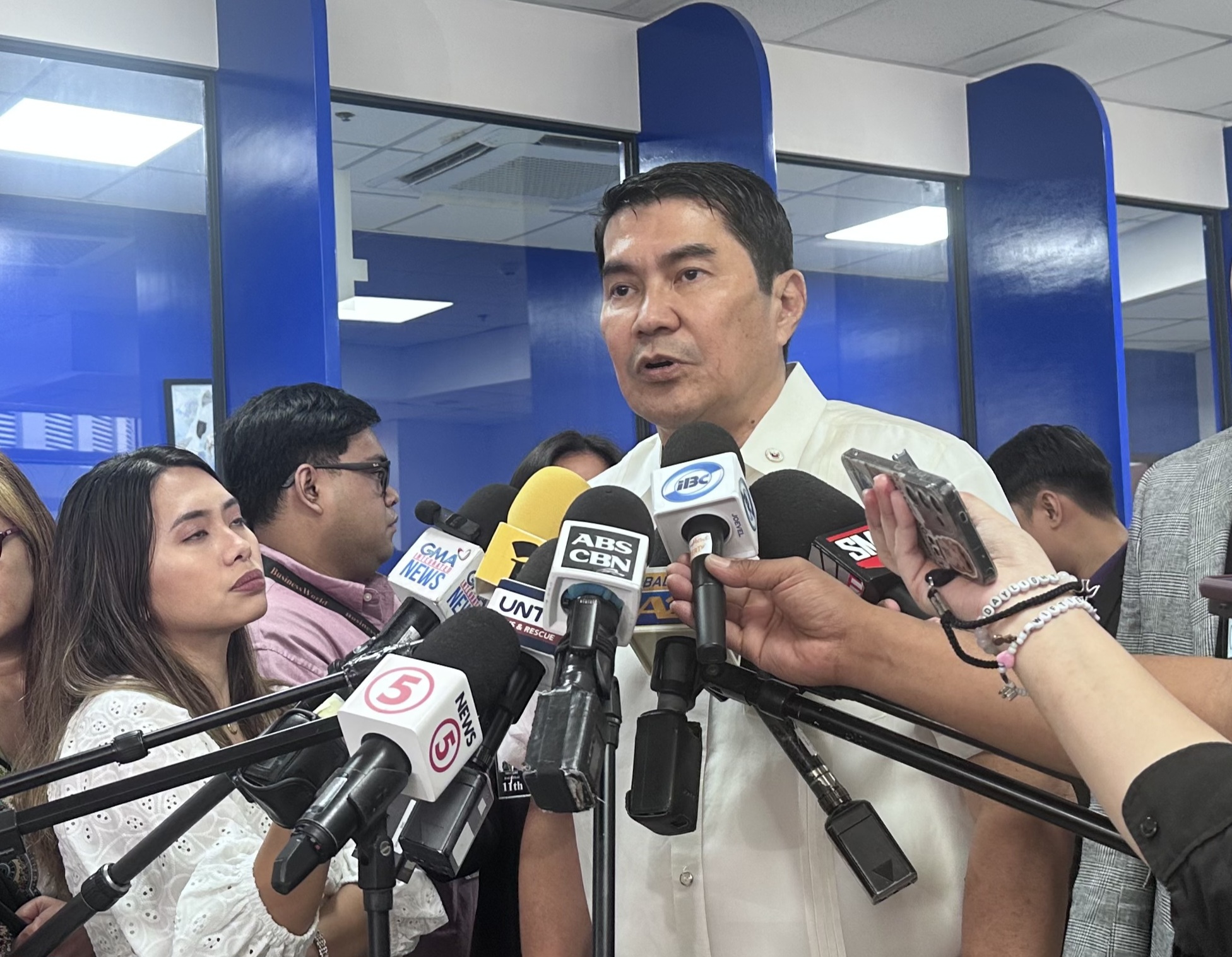
Senate foreign relations committee chairman Erwin Tulfo on Wednesday said the upper chamber is open to dialogue with the Chinese Embassy in Manila amid the ongoing word war between China’s diplomats and Filipino lawmakers and government officials.
Tulfo, the new head of one of the major committees in the Senate, met Foreign Affairs Secretary Theresa Lazaro at the Department of Foreign Affairs, where they had frank and candid discussions on relevant issues facing the agency, including Manila’s bilateral relations with Beijing and the South China Sea disputes.
He said he was informed by Lazaro that the Chinese ambassador has expressed willingness to discuss the matter with the Senate – a move welcomed by the senator.
“There is no schedule yet. The Secretary said we will arrange a meeting between you and the Chinese ambassador. Secretary Lazaro told me that the ambassador is willing to talk to us,” he told reporters after his meeting with Lazaro.
Tulfo also said he is appealing to fellow senators to avoid “personal attacks” against China and to focus on issues related to the country’s sovereignty and claims in the West Philippine Sea so as not to exacerbate tensions with Beijing.
While he stressed to Lazaro that lawmakers have the right to free speech and expression under the Constitution, Tulfo said he is also of the view that “personal and demeaning” attacks against China and its leaders must be avoided as Manila and Beijing and other members of the Association of Southeast Asian Nations (ASEAN) are seeking to conclude a crucial code of conduct that aims to manage tensions in disputed waters, which overlaps with Philippine territory.
China, he said, is a key party to the talks on South China Sea code.
“I am not saying that we will scale down our statements. What I’m saying is let’s not add more fuel to the tensions,” Tulfo said.
“I understand the position of the DFA. It’s hard when you negotiate when you hear provocative statements. We all have to focus on our fishermen and our coast guard and ensure that they will be safe, they will not be hurt and will have access to our waters.”
The Philippines, through the DFA, said it is alarmed over heated exchanges between Filipino officials and some senators and Chinese diplomats in Manila over their long-standing territorial rifts in the South China Sea.
“I cannot stop it. That is our opinion. I don’t see anything wrong about It,” said Tulfo, referring to the remarks of his colleagues, such as Sen. Risa Hontiveros and Sen. Kiko Pangilinan, who have been very vocal in expressing serious concern over China’s increasingly aggressive and coercive actions in the South China Sea.
“We keep on saying that is ours because we have a claim. We cannot stay silent on this issue,” he added.
However, Tulfo said he still intends to sit down with Hontiveros, Pangilinan, and other senators to brief them on the result of his meeting with Lazaro. He will also meet with the National Security Council next week.
In Beijing, China's Ministry of Foreign Affairs earlier summoned Philippine Ambassador Jaime FlorCruz to protest statements by Philippine coast guard spokesperson Commodore Jay Tarriela, who has openly criticized China's increasingly aggressive actions in waters.
Without elaborating, the DFA said it “made firm representations to the Chinese ambassador and the Chinese Embassy conveying serious concerns with the escalation of public exchanges.”
It warned that the word war could “unnecessarily derail the diplomatic space needed to manage the tensions in the maritime domain."
The agency likewise expressed support to Philippine officials, including some lawmakers, who have issued remarks in defense of the country’s sovereignty in the waters.
China insists ownership of almost 90% of the South China Sea, including areas that overlap with the Philippines’ and other Asian nations’ territorial waters.
The Philippines, Vietnam, Malaysia, Brunei, China, and Taiwan all have overlapping claims over the waters – a major trade route teeming with rich marine life and said to be harboring vast oil and mineral deposits.
The Philippines challenged the validity of China's sprawling territorial claims in the South China Sea and sought to clarify the territorial entitlements of certain Chinese-occupied features under the United Nations Convention on the Law of the Seas, or UNCLOS.
Manila won the case against China, which refused to recognize the ruling. —AOL, GMA Integrated News

