

 GMA Brandtalk
 Tracking
 Archives

Marcos touts energy upgrades to stabilize power, lower costs
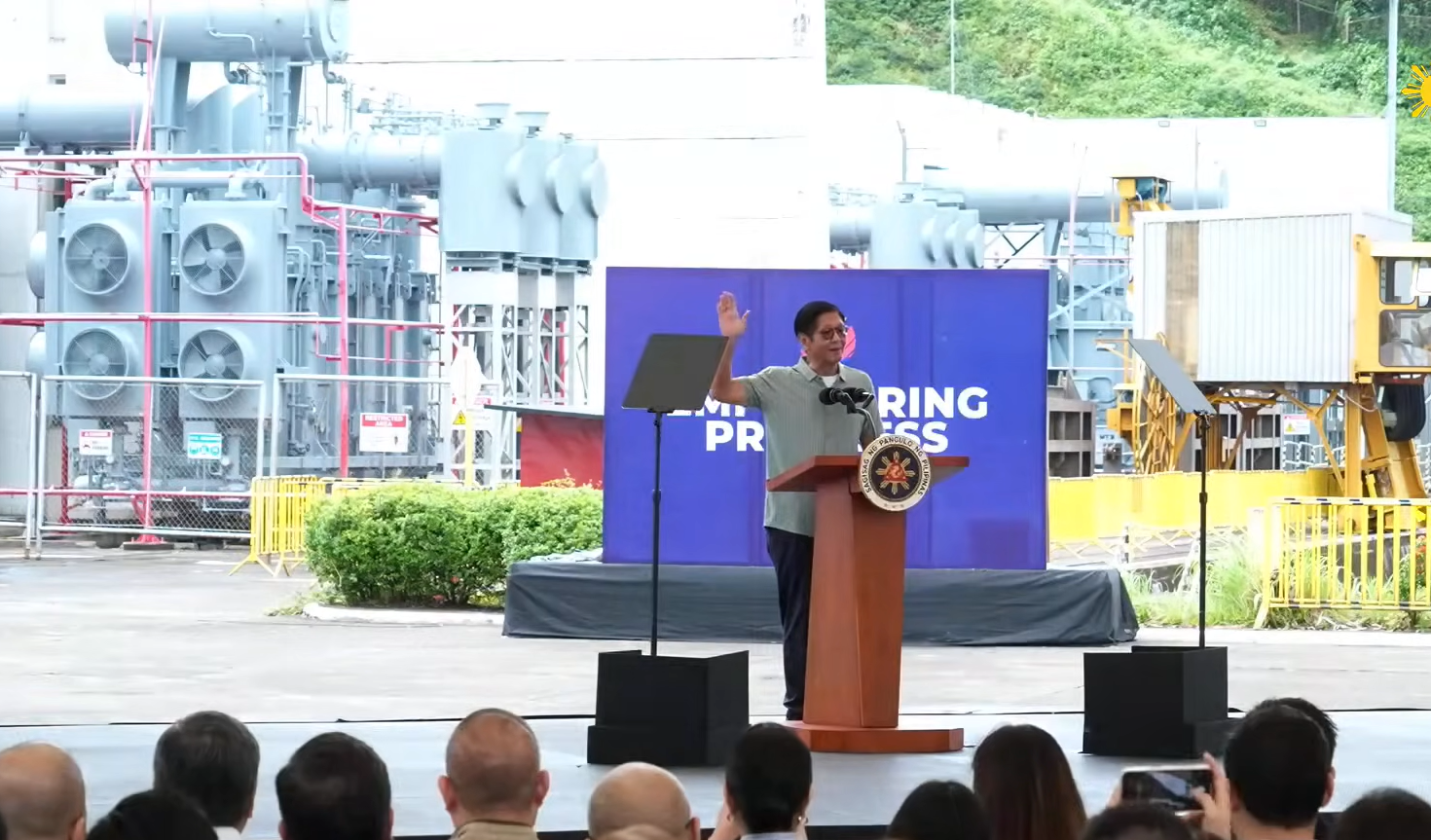
President Ferdinand Marcos Jr. on Monday cited the steps the government is taking to strengthen the country’s energy sector, aiming to ensure reliable and affordable power for Filipinos.
Speaking at the turnover ceremony of the Caliraya-Botocan-Kalayaan Hydroelectric Power Plants (CBK HEPP) in Kalayaan, Laguna, Marcos highlighted the government’s ongoing efforts to improve policies, streamline processes, and foster public-private partnerships in the energy industry.
“We continue to reinforce the systems in our energy sector, promoting reliability and affordability in the long term,” Marcos said.
“Through collaboration between public and private sectors, we aim to protect public interest while upholding transparency and accountability,” he added.
The CBK was turned over by the Power Sector Assets and Liabilities Management (PSALM), in line with the government’s privatization efforts.
“(T)he turnover reflects a transparent and competitive privatization process that maximized asset value for the government while ensuring continuity of operations and long-term sustainability of the facilities,” PSALM said in a statement.
According to the President, the CBK facilities operate by pumping water to an upper reservoir during off-peak hours and releasing it to generate electricity when demand peaks.
This system supposedly helps balance supply and demand while supporting cleaner, more efficient energy production at scale.
Marcos noted that modernizing these facilities will not only strengthen the grid but also benefit daily life—reducing power interruptions for households, minimizing service disruptions in hospitals and schools, and boosting productivity and economic opportunities for workers and entrepreneurs.
He added that the turnover of the CBK HEPP to the Thunder Consortium—comprising Aboitiz Renewables Inc., Japan-based Sumitomo Corporation, and J-Power—represents a deliberate step toward a smarter, more resilient energy system.
“This plant is more than a power facility. It’s really a very, very strategic asset. It provides flexibility, stability, and resilience in a rapidly changing energy system,” Aboitiz Power chair Sabin Aboitiz said.
“It allows us to manage peaks in demand, support reserves, and integrate more renewable energy into the grid without compromising reliability,” he added.
The CBK complex is among Luzon’s largest hydropower facilities, with a total capacity of 797 megawatts. Its three plants serve complementary roles: Caliraya operates as an impounded water system, Botocan functions as a run-of-river facility, and Kalayaan serves as a pumped-storage plant.
For decades, the CBK HEPP has been a key contributor to stabilizing the Luzon grid, ensuring energy supply meets the needs of millions of Filipinos, according to the Presidential Communications Office.—with Jon Viktor D. Cabuenas/MCG/RSJ, GMA Integrated News

