

 GMA Brandtalk
 Tracking
 Archives

Majority of Pinoys trust admin in resolving nat'l issues —OCTA
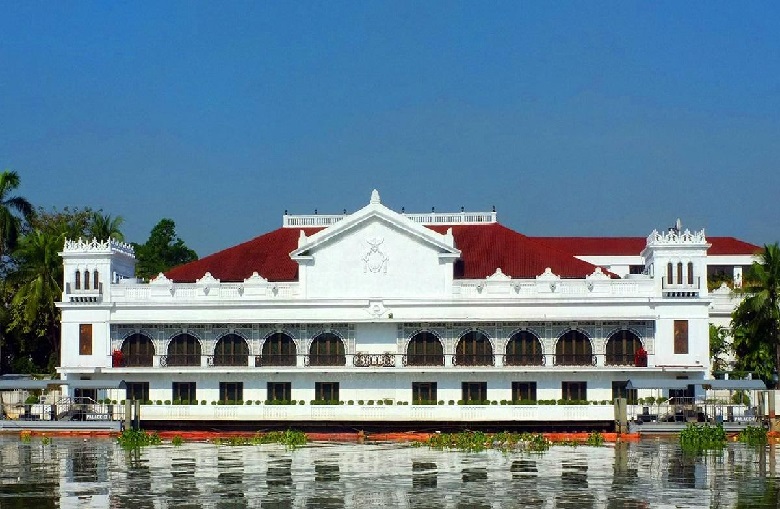
Majority, or 55%, of adult Filipinos trust the national government to effectively address the country’s problems, results of OCTA Research’s 4th Quarter 2025 Tugon ng Masa survey released Monday showed.
The survey, conducted from December 3 to 11, 2025, found that 55% of respondents expressed trust in the administration’s ability to resolve national issues, indicating that public confidence remains at majority level.
At least 20% expressed distrust, while 25% remained undecided. Trust levels varied across regions and socioeconomic classes, with the highest level recorded in the Visayas at 68% and the lowest in Metro Manila and Balance Luzon, both at 49%.
"Lower trust in more urban and politically dense areas may reflect closer exposure to policy debates, implementation constraints, and service delivery challenges," OCTA Research said.
"Greater access to information and heightened political engagement in these areas may produce more critical evaluations of government effectiveness, even when national initiatives are visible," it added.
Across socioeconomic groups, trust levels remained relatively consistent, ranging from 53% to 56%. The survey noted, however, that respondents from higher-income groups tend to apply stricter standards when evaluating institutional performance due to greater economic security and access to information.
"These patterns suggest that trust in the national government is largely grounded in perceptions of institutional effectiveness and responsiveness," OCTA said.
"Trust appears to be conditional and performance-based rather than rooted in deep institutional attachment, particularly among urban and more politically attentive segments of the population," it added.
The survey results also revealed that the trajectory of public trust may depend on perceptions of consistency, transparency, and governance effectiveness.
"Sustained policy delivery, responsiveness to emerging concerns, and visible improvements in public service provision may contribute to reinforcing institutional credibility over time," it said.
Elected officials
Meanwhile, the survey found that a majority, or 61%, of Filipinos believe elected officials do not value the views of ordinary citizens.
At least 31% said they believe elected officials consider public opinion.
"This perception cuts across all socioeconomic classes. Although belief that officials value citizens’ views is highest among Class E respondents (41%), majorities in every class—including Class ABC—express the view that elected officials do not value people like them," OCTA said.
"Lower positive perceptions in the NCR further suggest heightened skepticism in politically dense and information-rich environments, where exposure to media scrutiny and policy debate may produce more critical assessments of representation," it further said.
"The contrast between relatively positive assessments of national government effectiveness and more negative views of elected officials highlights an important dynamic in contemporary public opinion," it added.
"Citizens may acknowledge the state’s capacity to act while simultaneously feeling excluded from decision-making processes. In this sense, governance is often perceived as something done on behalf of citizens, rather than in partnership with them," it added.
The survey was conducted via face-to-face interviews with 1,200 male and female respondents aged 18 and above.
Margin of error of the survey is ±3% at a 95% confidence level.
"Subnational estimates for the geographic areas covered in the survey have the following margins of error at a 95% confidence level: ±6% for Metro Manila, Balance Luzon, Visayas, and Mindanao," OCTA Research said. —KG, GMA Integrated News

