

 GMA Brandtalk
 Tracking
 Archives

LIST: 21 priority measures of Marcos admin
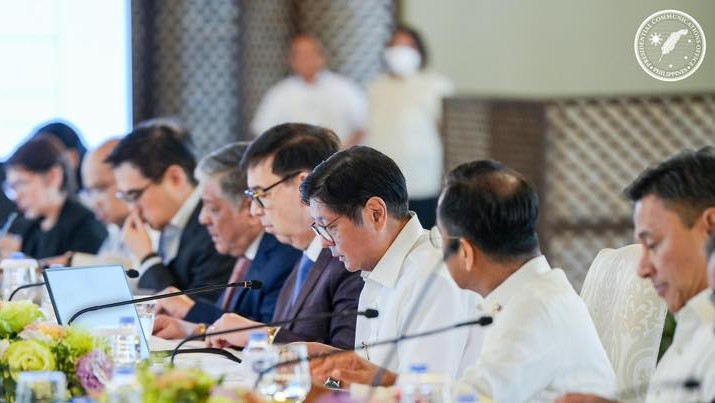
President Ferdinand ''Bongbong'' Marcos Jr. on Tuesday approved 21 priority measures during the third Legislative-Executive Development Advisory Council (LEDAC) full meeting.
The Department of Economy, Planning, and Development (DEPDev) released a list of the measures, which the President wants to prioritize and be passed in June of this year.
1. Anti-Political Dynasty Law
2. Party-list System Reform Act
3. Citizen Access and Disclosure of Expenditures for National Accountability (CADENA) Act
4. Independent People’s Commission Act
5. Amendments to the Bank Deposits Secrecy Law / Banking Reform for Integrity, Good Governance, Honesty, and Transparency (BRIGHT) Act
6. Right to Information Act
7. Amendments to the Coconut Farmers and Industry Trust Fund Act
8. Amendments to the Pantawid Pamilyang Pilipino Program (4Ps) Act
9. Amendments to the Masustansyang Pagkain Para sa Batang Pilipino Act
10. Amendments to the Government Assistance to Students and Teachers in Private Education (GASTPE) Act
11. Classroom-Building Acceleration Program (CAP) Act
12. Amendments to the Anti-Online Sexual Abuse or Exploitation of Children (OSAEC) and Anti-Child Sexual Abuse or Exploitation Materials (CSAEM) Act
13. National Center for Geriatric Health Act
14. Waste-to-Energy Bill / Waste Treatment Technology Act
15. Amendments to the Electric Power Industry Reform Act (EPIRA) – Energy Regulatory Commission (ERC) Strengthening Bill
16. Amendments to the Rice Tariffication Law / Rice Industry and Consumer Empowerment (RICE) Act
17. Department of Water Resources Bill
18. Estate Tax Amnesty
19. Travel Tax Abolition
20. Anti-Fake News and Disinformation Act
21. Resetting the First Regular Elections in the Bangsamoro Autonomous Region in Muslim Mindanao (BARMM)
Meanwhile, the remaining common legislative agenda bills include the following:
1. National Land Use Act
2. Excise Tax on Single-Use Plastics
3. Blue Economy Act
4. Progressive Budgeting for Better and Modernized Governance Act
5. Amendments to the Anti-Money Laundering Act
6. Philippine Civil Registration and Vital Statistics Act
7. Amendments to the Universal Health Care (UHC) Act
8. Assistance to Individuals in Crisis Situations (AICS) Act
9. Amendments to the Universal Access to Quality Tertiary Education Act
10. Amendments to the Teachers Professionalization Act
11. Amendments to the Local Government Code (LGC)
12. General Tax Amnesty
13. Amendments to the Fisheries Code
14. Amendments to the Downstream Oil Industry Deregulation Law
15. Amendments to the Biofuels Act
16. Cybersecurity Act
17. Amendments to the National Building Code
18. Amendments to the Magna Carta for Micro, Small, and Medium Enterprises (MSMEs) 19. National Reintegration Bill
20. Reprogramming of Seal of Good Local Governance (SGLG)
21. Digital Payments Act
22. Masterplan for Infrastructure and National Development (MIND)
23. Requiring Civil Servants to Waive Bank Secrecy
24. Law on Online Gambling
25. Disaster Risk Financing Insurance
26. Strengthening the Bases Conversion and Development Authority (BCDA)
27. Presidential Merit Scholarship Program
28. Disqualifying Relatives of Officials (4th degree) in Government Contracts
29. Fair Use of Social Media, AI and Internet Technology in Elections
30. Modernizing the Bureau of Immigration
31. Magna Carta for Barangays
According to DEPDev Secretary Arsenio Balisacan, the LEDAC continues to support policies that will enhance the delivery of basic social services, essential to human capital development, particularly education, health, and social protection.
“Looking ahead, we see 2026 as our rally point. To regain our stride, we must act decisively to restore public trust through better governance and stronger public service delivery—improvements that Filipinos can see and feel in their daily lives,” Balisacan said. —RF, GMA Integrated News

