

 GMA Brandtalk
 Tracking
 Archives

Palace ensures unified messaging on maritime issues
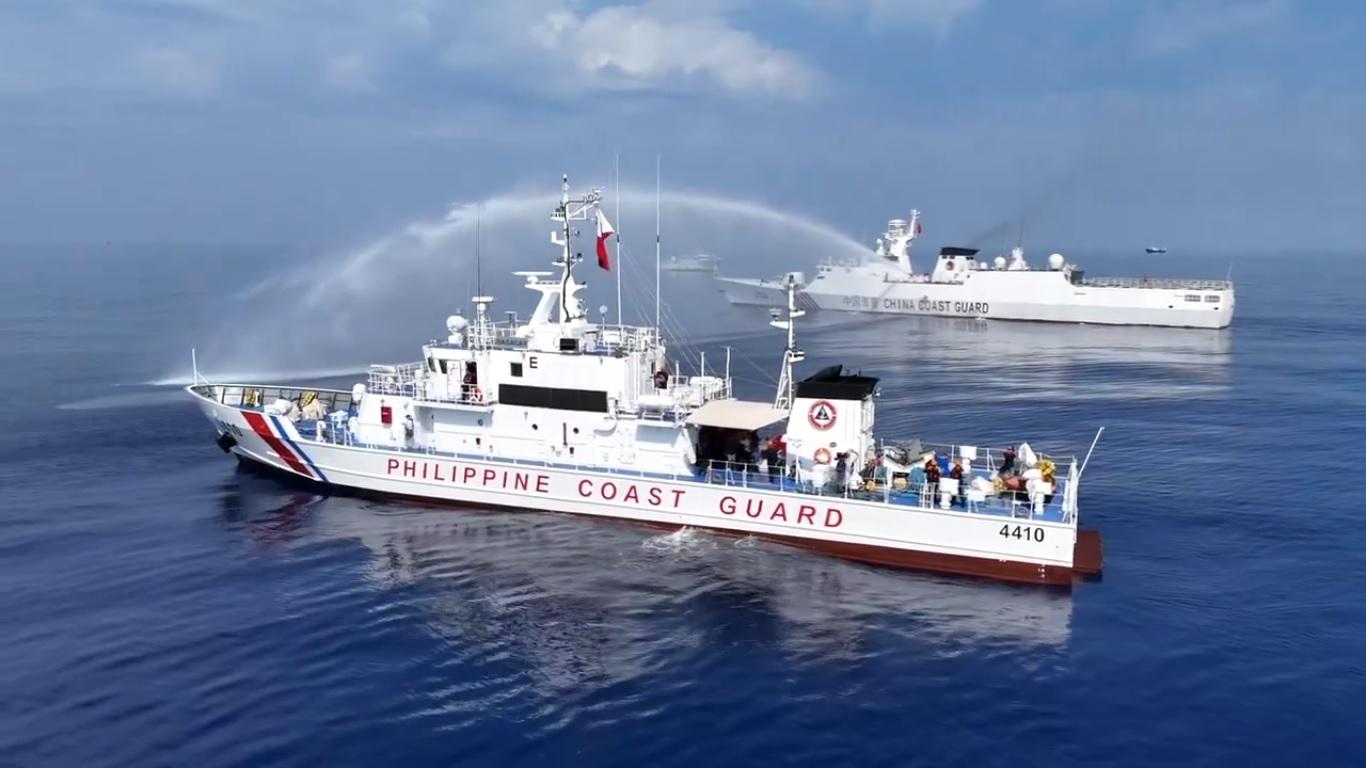
Malacañang on Tuesday ensured a unified diplomatic messaging on maritime affairs following the appointment of a former naval and Coast Guard officer as the Department of Foreign Affairs' new spokesperson on maritime issues.
''Iba-iba po kasi ang kanilang goal, iba-iba po ang kanilang pagiging spokesperson, iba-iba iyong kanilang topic. Pagdating po sa DFA it’s more on the policy. Pagdating po let’s say sa Philippine Coast Guard, sa operations sila. So, magkaiba po kasi ang magiging mensahe ng Philippine Coast Guard as compared sa DFA,'' Palace Press Officer Undersecretary Claire Castro said in a briefing.
(They have different goals, they have different topics. When it comes to DFA, it's more on policy while with the Philippine Coast Guard, it's about operations. Their message is different.)
''So, nagkakaisa naman po, aligned naman kung ano ang gusto ng Pangulo—firm pero diplomatic. So, hindi naman po nagkakaiba-iba,'' she added.
(Their messaging is aligned with what the President wants—firm but diplomatic. So it doesn't change.)
To recall, DFA deputy Assistant Secretary Rogelio Villanueva, a career diplomat, was officially named as the department's spokesperson on maritime affairs.
Villanueva’s appointment came amid the ongoing word war between China’s diplomats and Filipino lawmakers and government officials. This included the Senate's Resolution 256, which condemned recent statements issued by the Chinese Embassy on Filipino officials who criticized Beijing’s aggressive actions in the West Philippine Sea.
The Philippines, through the DFA, expressed alarm over the heated exchanges between Filipino officials and some senators and Chinese diplomats in Manila over the ongoing territorial rift in the strategically important South China Sea.
In January, China's Ministry of Foreign Affairs summoned Philippine Ambassador Jaime FlorCruz to protest statements by Philippine Coast Guard spokesperson for the West Philippine Sea Commodore Jay Tarriela, who has openly criticized China's increasingly aggressive actions in waters.
The DFA said it “made firm representations to the Chinese ambassador and the Chinese Embassy conveying serious concerns with the escalation of public exchanges.”
While the DFA expressed support to Philippine officials, including some lawmakers, who have issued remarks in defense of the country’s sovereignty in the waters, the agency warned that the word war could “unnecessarily derail the diplomatic space needed to manage the tensions in the maritime domain."
Chinese Embassy slams Senate resolution
Meanwhile, the Chinese Embassy blasted the Senate resolution, calling it “anti-China.”
In a statement on Tuesday, Embassy spokesperson Ji Lingpeng said that Philippine legislators had been twisting and misleading the public with facts and threats towards Chinese diplomats.
Among the Senate’s discussions regarding the resolution were declaring some key figures as persona non grata in the country and requesting replacement for Chinese Ambassador to the Philippines Jing Quan.
The Chinese embassy rejected the resolution.
“Put it this way: if a foreign official spokesperson were to insult or attack the Philippine head of state, national heroes, or religious leaders, would they stay silent and pretend nothing happened? The said Senate resolution is nothing but a political stunt,” Ji said.
“They know little about how diplomacy works, yet they dare to undermine the efforts to improve China–Philippines relations by stirring up hatred and confrontation. What they’ve done is for their own political interest. Such behavior only disgraces themselves. However, the price of their hypocrisy, ignorance, and recklessness, is paid by the ordinary people,” he added.
Ji said that there were two ways to deal with the issue, which was outright rejection and the continuous advancement of China–Philippines cooperation and exchanges.
“We choose both… No matter how many anti-China resolutions these people introduce, whether it’s 10 or even 100, it will not in the slightest weaken the Chinese embassy’s resolve to fight the malicious moves against China to the very end. Not a chance,” he said.
In a message to GMA News Online, Senator Francis “Kiko” Pangilinan said that China’s response to the resolution violated the Vienna Convention, and only proved that they were bullies.
“We rest our case and reiterate our call for the DFA, the Department of Foreign Affairs to take the necessary diplomatic measures to uphold the dignity of the Republic of the Philippines and to ensure that relations with other States are conducted in accordance with international law and established principles of State relations,” he said.
Pangilinan was among the senators who had claimed that the Chinese Embassy had crossed the line “from legitimate expression of a foreign state’s views into interference in our domestic democratic debate.”
China claims
China insist ownership of almost 90% of the South China Sea, including areas that overlap with the Philippines’ and other Asian nations’ territorial waters.
The Philippines, Vietnam, Malaysia, Brunei, China and Taiwan all have overlapping claims over the waters—a major trade route teeming with rich marine life and said to be harboring vast oil, gas and mineral deposits.
The Philippines challenged the validity of China's sprawling territorial claims in the South China Sea and sought to clarify the territorial entitlements of certain Chinese-occupied features under the United Nations Convention on the Law of the Seas, or UNCLOS.
Manila won the case against China, however, the latter has refused to recognize the ruling. —with Jiselle Anne C. Casucian/RF/BM, GMA Integrated News

