

 GMA Brandtalk
 Tracking
 Archives

SC Justice Leonen: Ending corruption needs more than Charter change alone
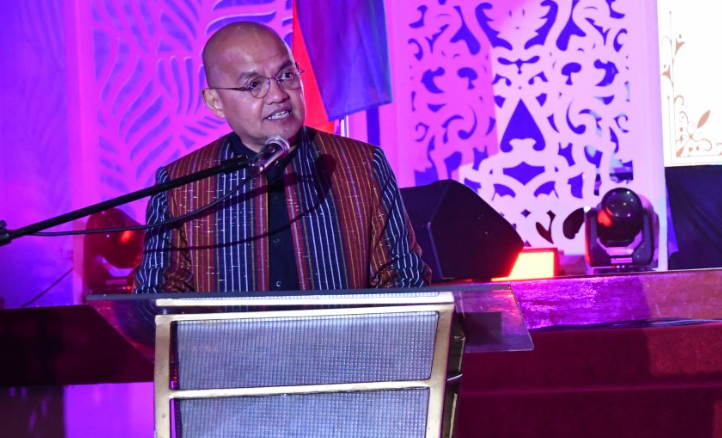
CAMP JOHN HAY, Baguio City — Supreme Court Senior Associate Justice Marvic Leonen said Tuesday that changing the 1987 Constitution won’t be enough for the country to break free from corruption.
Leonen made the address to Ombudsman prosecutors during the Ombudsman’s strategic planning session here where he served as one of the keynote speakers.
”At present, the idea of Charter change is being floated in response to corruption. However, this is not the full solution. In fact, for corruption, it is tangential. I say for corruption, Charter change is tangential. We must remember that even if Charter change occurs, or whatever form of government our country chooses to adopt, we must anchor ourselves in the role of demanding accountability and going after corruption in any situation,” Leonen said.
“No matter what political system we evolve into, it will always have a criminal justice system. Breaking out of these corrupt habits will require more than just regime or Charter change. We must strike at the root of the problem,” Leonen added.
He also underscored that corruption starts from the top, meaning the country’s leaders, not below, so the Ombudsman must stick with its mandate of prosecuting the big fish first.
“We can arrest the ordinary traffic police asking for GCash. Yes, GCash na daw ngayon. Ordinary employees will not be able to do what they are doing if their leaders follow the straight and narrow path. If their leaders say this, then therefore they are going to follow it,” Leonen said.
“In fact, in your Charter, there is even a provision there which says you prioritize high-level officers over all the rest. Because once the highest officers follow the law and have integrity and do it right, no matter how difficult, everyone below will follow,” Leonen added.
Evidence
Leonen likewise reminded prosecutors that publicized evidence does not always make the best evidence and as such, they should be able to secure the evidence that will stand in court.
“Sometimes there is a sacrifice between premature announcement, not by the Ombudsman, but premature announcement outside as to investigations being done and the actual effort that we all need to do in order to get evidence, discover it, maintain it, preserve it, and maintain the chain of custody. It is easy to accuse…someone will have 10 seconds of fame, you will be in newspapers, you’ll say you have this list, and all people will go after that list,” Leonen said.
“Later on, months after, when your prosecutors are now presenting the evidence, they (defense) can now say that the computer already changed hands so many times. How sure are we that it was not modified? You see how difficult it is? And can you imagine the difficulty of a trial court judge when the evidence presented before them are inadmissible in evidence. The ones making announcements get fame but at the end of the day, true accountability is if we are able to truly convict beyond reasonable doubt,” he added.
Leonen said that doing a good job starts with loyalty with the people, not the appointing authority.
“The Office of the Ombudsman and the Judiciary are responsible for bringing to justice those who violate the law, ensuring vigilance against abuse of power. We should not be thinking whether we should favor this political faction over that political faction. Our principals are the people who are powerless, who face the government on a daily basis, and who see corruption daily,” he said.
“Appointed officers might become beholden to their appointers, fostering a sense of obligation. This impairs their judgments. I will always say, after you are appointed by a president, after you are appointed by the person that appointed you, your duty now is no longer to the appointing officer, it is to our people,” Leonen added. — RSJ, GMA Integrated News

