

 GMA Brandtalk
 Tracking
 Archives

PH welcomes US-China efforts to reset ties, Manila-Washington alliance solid
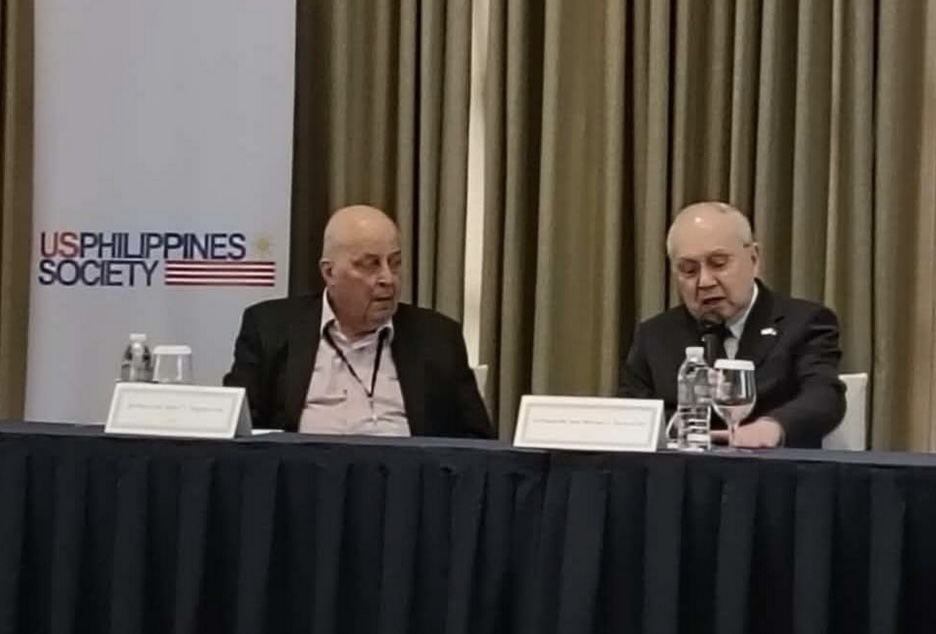
The Philippines’ top diplomat to the United States on Tuesday welcomed efforts by its treaty ally, the US, and China to reset their ties, even as Manila is locked in territorial rifts with Beijing.
Philippine Ambassador Jose Manuel Romualdez said the alliance between the Philippines and Washington remains “strong” and “solid,” citing the recent $2.5-billion worth of security package allocated by the US Congress to Manila over the next five years.
US President Donald Trump and Chinese leader Xi Jinping had a phone call last week and both leaders agreed to meet in Beijing in April. Trump described the conversation as “excellent,” “long” and “thorough.”
“Is there going to be a deal where we're going to be thrown under the bus? The assurances are being made to us that that’s absolutely not true,” Romualdez said at a press conference on the sidelines of a security forum in Manila.
“In fact, I can tell you that everything that we have been doing with the United States, especially in the area of our defense treaty, is continuing. It's in fact increasing even more now,” he said.
Romualdez said he is scheduled to meet with the US Indo-Pacific Command officials at its headquarters in Hawaii in April “to solidify” and “continue” defense activities that will be funded by the new US allocation - the biggest security aid to date by Washington to its oldest treaty ally in Asia.
“I'm comfortable with the fact that there will be no change, no matter what conversation will be between President Xi and President Trump,” Romualdez said.
While describing the Trump-Xi conversation as “positive,” former US Ambassador to the Philippines John Negroponte said one phone call “should not in any way undercut the bonds of friendship that we are seeking to strengthen with allied countries, like the Philippines.”
“It's not just because you have a bilateral meeting and all of a sudden, we let down our defenses. No, we're not going to do that. We're going to keep working with the countries like yours…and further strengthen an important partnership in the Indo-Pacific region,” Negroponte said.
Like the US, Romualdez believes the Philippines should also take steps to improve its economic ties with China amid lingering conflicts in the South China Sea.
“If you remember, when President Marcos went to the Oval Office last July, President Trump actually encouraged President Marcos to do our own conversations with China in having more economic activities,” he said.
Romualdez said it would be beneficial for the country to allow its relations with Beijing to “cool down a little bit” as it takes on the leadership role of the Association of South East Asian Nations (ASEAN) this year.
“We want to make sure that we have an opportunity to try to isolate that and make our relationship with China do much better than it has been,” he said. “Who knows, we might have an opportunity to have President Xi come here to the Philippines during the ASEAN summit, and also President Trump.”
Both China and the US are dialogue partners of the 11-member bloc and attend its annual meetings.
The Philippines, under President Ferdinand Marcos Jr., has sought to upgrade its defense capabilities as it confronts an increasingly aggressive China in the resource-rich South China Sea, which has flared in recent years.
The years-long disputes also involve Vietnam, Malaysia, Brunei, and Taiwan.
China's vast territorial claims in the waters have sparked tensions and violent confrontations with smaller claimants, like the Philippines and Vietnam.
The Philippines largely won a landmark case against China's massive claim in the South China Sea before an arbitration tribunal in The Hague, Netherlands, in 2016, but Beijing refused to recognize the ruling.
China's assertive behavior in the South China Sea prompted serious concerns and condemnations from several countries after its coast guard vessels repeatedly blasted water cannons, used military-grade lasers, and blocked Philippine government ships from conducting patrols in the West Philippine Sea, that part of the South China Sea that is nearest to the Philippine archipelago, but being claimed by China as its own.
While it has no territorial claims in the resource-rich waters, Washington has patrolled the area for decades and has repeatedly warned China it’s obligated to defend its ally if Filipino forces come under an armed attack, including in the South China Sea. –NB, GMA Integrated News

