

 GMA Brandtalk
 Tracking
 Archives

SWS says 27% of Filipinos experienced cheating, 43% believed in trust rebuilding
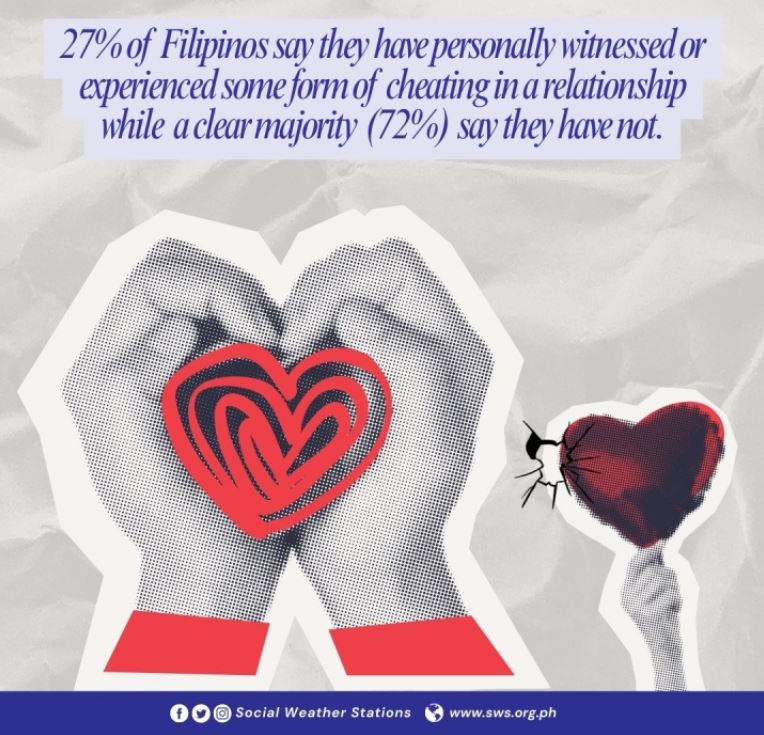
About one in four adult Filipinos have witnessed or personally experienced cheating in a relationship, according to the Fourth Quarter 2025 Social Weather Survey released by Social Weather Stations (SWS).
The survey found that 27% of Filipinos reported encountering some form of infidelity, while 72% said they have not.
Among those who said they witnessed or experienced cheating, the most commonly cited forms were physical cheating and emotional cheating, both at 11%. Respondents were allowed to provide multiple answers.
Physical cheating was defined in the survey as engaging in sexual or intimate activities, or dating someone other than one’s partner. Emotional cheating refers to sharing personal problems with someone else instead of one’s partner or developing romantic feelings for another person, even without a physical relationship.
Other forms identified include:
- Cybercheating (such as maintaining a secret social media account or secretly chatting with others) - 6%
- Object cheating (such as giving excessive attention to games, cellphones, or other material objects to the point of neglecting a partner) - 6%
- Financial cheating (such as hiding luxury purchases or debts from a partner) - 5%
- Micro-cheating (such as using affectionate terms like “baby” or “love” with someone else or hiding one’s relationship status) - 4%
Additionally, 8% of respondents said they experienced two or more types of cheating, categorized as combined cheating.
Despite the prevalence of reported experiences, public opinion remains divided on whether relationships can recover from betrayal. The survey found that 43% of Filipinos believe trust can still be restored after cheating, while 36% said it cannot. Another 19% were undecided.
The survey was conducted from November 24 to 30, 2025, through face-to-face interviews with 1,200 adults aged 18 and above, with 300 respondents each from Metro Manila, Balance Luzon, the Visayas, and Mindanao.
Applying census weights, 13% of respondents were from Metro Manila, 45% from Balance Luzon, 19% from the Visayas, and 23% from Mindanao. Half were from urban areas and half from rural areas, with male and female respondents equally represented.
The survey has a ±3% sampling error margin for national percentages and ±6% for area-level estimates. SWS said the items were non-commissioned and undertaken on its own initiative as a public service. —LDF, GMA Integrated News

