

 GMA Brandtalk
 Tracking
 Archives

Australia-PH cooperation 'the biggest it has ever been' – envoy
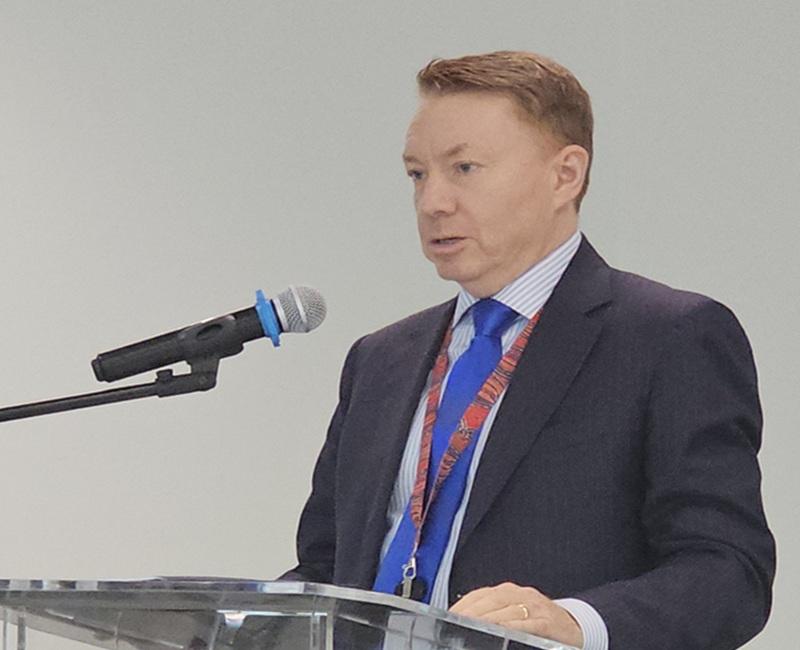
Australia's defense partnership with the Philippines has advanced to “exciting levels” and its bilateral development program for Manila, specifically on maritime security cooperation, are now at “the biggest level it has ever been,” Canberra’s top diplomat to the country said.
The United States and the Philippines, meanwhile, would engage in about 500 defense activities this year despite US preoccupation in other global security hotspots, said Philippine Navy spokesman Rear Adm. Roy Trinidad.
Australian Ambassador Marc Innes-Brown and Trinidad separately spoke to Southeast Asian journalists, including GMA News Online, who are participating in an ongoing maritime reporting program in Manila that is organized by the Australian government.
In his talks with journalists, Trinidad explained that Manila-Washington alliance “is stronger than ever” amid continuing Chinese aggression in the West Philippines Sea – that part of the disputed South China Sea that is nearest the Philippine archipelago.
“We are not concerned,” Trinidad said when asked if Trump’s focus in the Middle East and in the Western Hemisphere would affect Washington’s commitment to the Philippines, its oldest treaty ally in Asia.
Innes-Brown said Australia-Philippines relationship, on the other hand, has moved from “strength to strength, especially after the two countries elevated their ties to a strategic partnership two years ago.
“Over time our defense relationship has expanded significantly. We’re doing more. Our bilateral development program is the biggest it has ever been,” he said.
Australia, Innes-Brown added, is “working hard to deliver equipment and capacity building initiatives” to bolster the Philippines efforts in guarding the West Philippine Sea, which is being claimed by China as its own.
Manila also received AUD$23 million from Australia’s AUD$64-million regional maritime program, he said.
On the defense side, the envoy said the two countries are taking their cooperation to “new and exciting levels,” highlighted by the Philippines’ participation last year in the largest-ever multi-country war drills in Australia, called Talisman Sabre.
“We all have a responsibility to shape the region,” Innes-Brown said. “We will work together to promote regional stability and international law.”
The Philippines, under President Ferdinand Marcos Jr. has sought to expand its alliances and upgrade its defense capabilities in the face of Chinese aggression in the waters. The years-long dispute also involve Vietnam, Malaysia, Brunei and Taiwan.
As hostilities between Philippine and Chinese forces flared in the past two years in the waters, Manila has adopted a strategy of publicly releasing videos and photos of Chinese harassment in the West Philippine Sea.
The transparency initiative by the Philippines has gained international attention, prompting many countries to denounce Beijing's assertive actions.
Australia’s commitment to peace, international law and security also extends to Southeast Asia.
Its ambassador to the Association of South East Asian Nations Tiffany McDonald, who also briefed the journalists, said Australia closely engages ASEAN to reduce the risk of conflict in the region.
In 2025, she said ASEAN and Australia signed a landmark accord at the leaders’ level on conflict prevention and crisis management.
“ASEAN and Australia consistently reiterate our shared vision for a peaceful and stable and prosperous region,” McDonald said, but stressed that “this doesn’t just require saying so, it requires working together to continue to shape that.” — BAP, GMA Integrated News

