

 GMA Brandtalk
 Tracking
 Archives

SP Sotto brushes off indirect contempt case as 'mere publicity stunt'
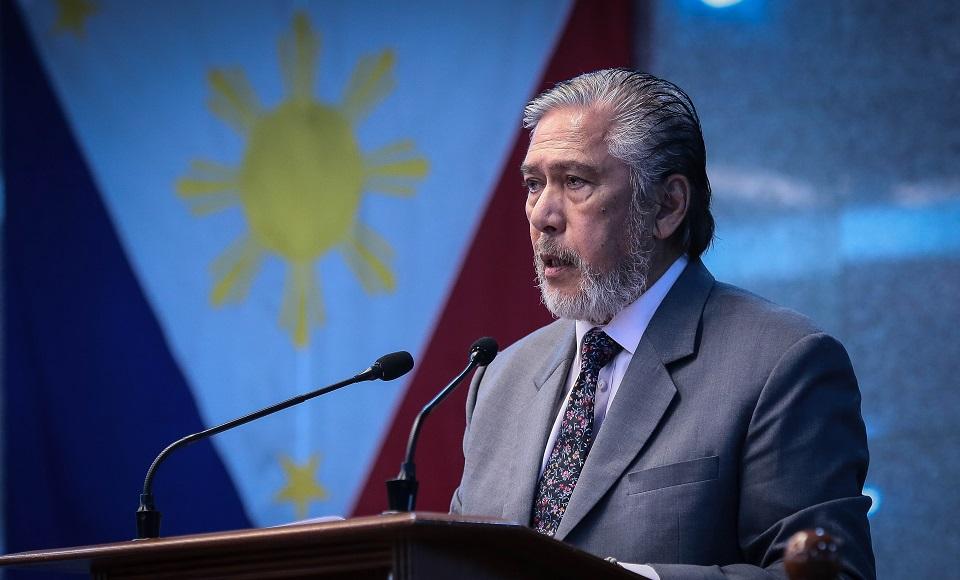
Senate President Vicente "Tito" Sotto III brushed aside the indirect contempt case filed against him by several lawyers, including Atty. Ferdinand Topacio, before the Supreme Court (SC).
"The recent petition for indirect contempt filed against me by Atty. Topacio is a nuisance suit. It has no legal or factual basis. It is a mere publicity stunt," Sotto said in a statement.
"Simply expressing a disagreement or the mere act of criticizing the decision of the courts cannot constitute indirect contempt. As a lawyer, Atty. Topacio should know this. He has a long record of publicly criticizing court decisions that are unfavorable to his clients," the Senate chief said.
On Friday, Topacio, along with other lawyers, filed a petition asking the high tribunal to cite Sotto in indirect contempt over the senator's criticisms of the SC ruling regarding the Articles of Impeachment filed against Vice President Sara Duterte.
Sotto previously claimed that the 1987 Constitution was "amended unconstitutionally" through the SC's alleged overreach. He said it would take decades to correct the "misinterpretation."
This came after the SC En Banc "denied with finality" the motion for reconsideration filed by the House, which sought to reverse the decision that declared the Articles of Impeachment against Duterte unconstitutional.
Topacio said the petition was not meant to silence Sotto, noting that "he's free to say what he wants as long as it does not violate the Rules on Contempt and what is permissible to say."
The Senate chief, however, said that under Rule 71 of the Rules of Court, indirect contempt pertains to conduct committed outside the court that actually tends to impede, obstruct, or degrade the administration of justice.
"I did not do any of those acts. I simply expressed a disagreement with the court decision. That is protected speech under Article III, Section 4 of the 1987 Constitution," Sotto said.
"In the early case of In re: Kelly, the Supreme Court ruled that criticism of judicial acts is punishable only when it poses a clear and present danger to the administration of justice," the senator said.
Sotto also cited the case of "Estrada v. Desierto," in which the Supreme Court ruled that courts are not immune from criticism and are expected to withstand dissent in a democratic system.
"I will formally respond to the petition once I am asked to do so by the Supreme Court," the Senate chief said. — VDV, GMA Integrated News

