

 GMA Brandtalk
 Tracking
 Archives

Imported stocks not enough to drag down red onion prices, says DA’s Tiu Laurel
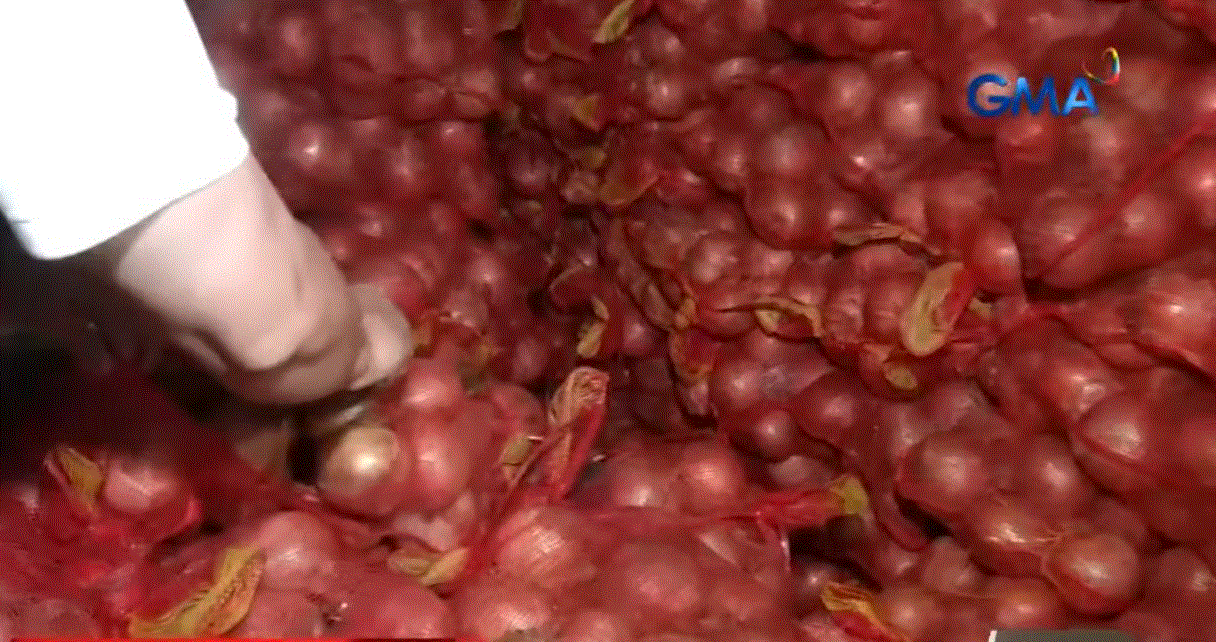
The Department of Agriculture (DA) said Sunday that imported stocks are not enough to bring down the prices of red onions amid concerns raised by farmers.
“The numbers show that current stocks from imports are not overwhelming the market but merely plugging a supply gap,” said DA Secretary Francisco Tiu Laurel Jr. in a statement.
“That said, we are taking a closer look at why onion prices are falling at this time of the year, as claimed by farmers.”
The DA statement came as a response to the concern raised by farmers in Nueva Ecija on alleged plunging red onion prices. The department said it has received a complaint claiming that imported onions were piling up in cold storage facilities in Central Luzon, hence affecting farmgate prices.
Upon verification by DA’s Bureau of Plant Industry (BPI), 82% of cold storage warehouses showed 4,454.09 metric tons (MT) of red onions and 5,271.15 MT of yellow onions as of February 13, mostly from abroad. However, DA noted that imported red onions will arrive before the peak of local harvests.
“According to the Department of Agriculture’s National Plant Quarantine Services Division, about 8,000 MT of red onions are covered by sanitary and phytosanitary import clearances valid until February 15 and must arrive before local harvest peaks up,” said the DA.
“Assumptions made by BPI shows that even if all remaining shipments arrive within the month, imported red onion stocks would likely last only until March 6, just as harvest starts to peak. However, old stocks held by private cold storages must also be accounted for, if any.”
Further, the DA said estimated local production from onion-producing municipalities shows that red onion production from January to March is at just 9,325.14 MT. On the other hand, DA projected only 1,645.25 MT for yellow onions.
The DA also urged farmers “to maximize available cold storages provided by the department to store their harvested onions to prolong shelf-life and better time their releases when market prices have improved to avoid flooding supply channels.” —Vince Angelo Ferreras/RF, GMA Integrated News

