

 GMA Brandtalk
 Tracking
 Archives

Day in Court: Making sense of the redactions in Duterte’s ICC case files
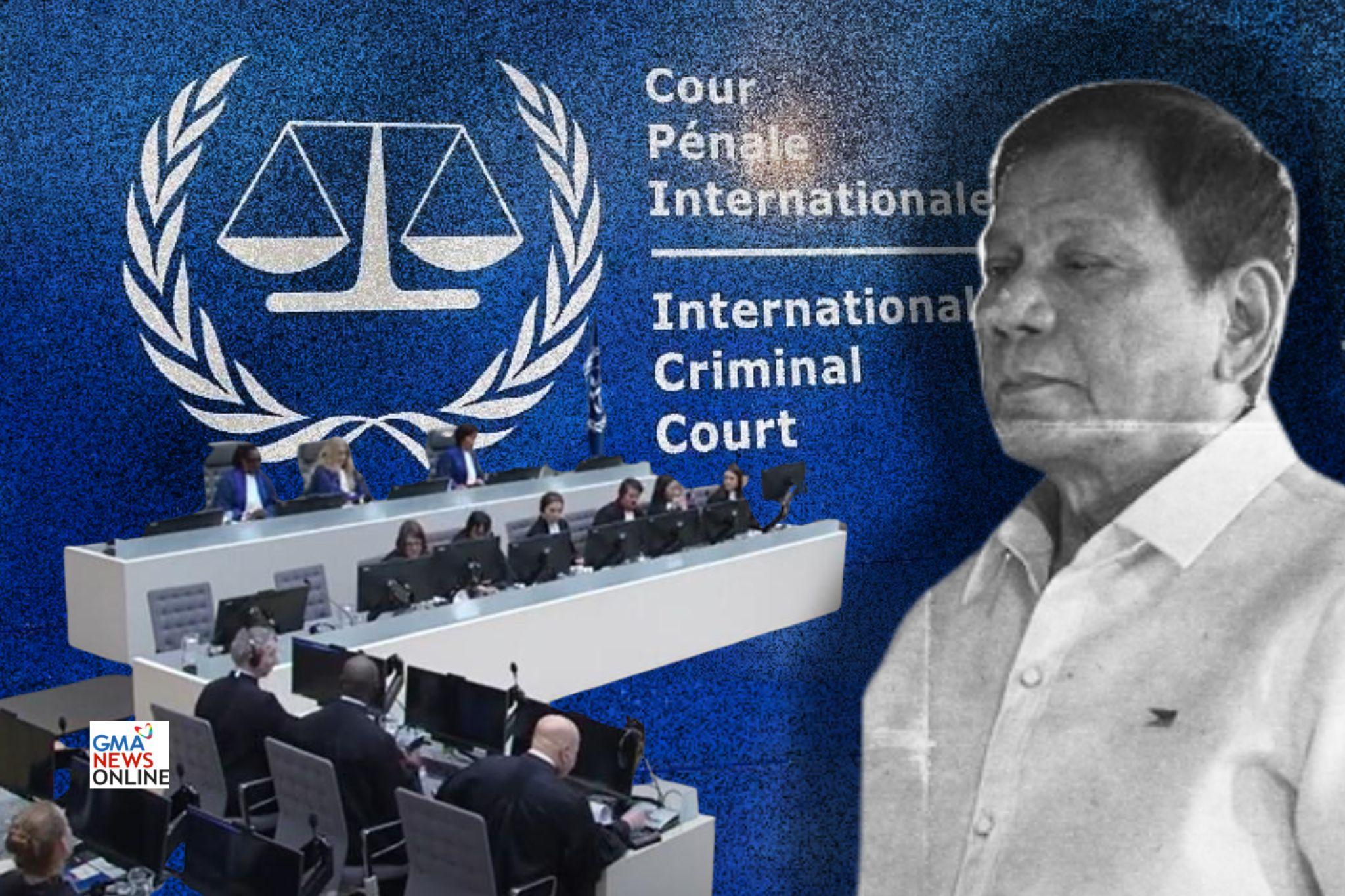
Most, if not all, of the files published by the International Criminal Court (ICC) Registry related to the crimes against humanity case against former President Rodrigo Duterte have been heavily redacted.
The classified data in the documents, submissions, observations, and other material often reveals a complex tug-of-war between the fundamental right to a public trial and the urgent need to protect sensitive information.
GMA Integrated News has parsed case documents from March 2025 to February 2026 to assess the scale of secrecy and what this reveals to the public about the realities of the case.
How much is still sealed?
The vast majority of the case’s evidentiary foundation remains completely invisible to the public and the media.
The Document Containing the Charges (DCC)
Even the DCC’s “Public Lesser Redacted Version,” released on February 13, 2026, remains heavily blacked out. The public can see the dates and cities of the killings, but the details are hidden.
On February 16, the Defense complained that the 49 incidents described in the redacted DCC are “unintelligible to the public” and forced them to challenge evidence in closed session.
In its February 20 decision, the Pre-Trial Chamber said it was “not persuaded” by the Defense’s argument, noting that the redacted DCC and Pre-Confirmation Brief (PCB) contain “sufficient information” to allow for the public to contextualize the proceedings, and that the redactions remain necessary to protect witnesses and victims.
The trove of evidence
As of February 2026, the Prosecution has disclosed directly to the Defense over 5,145 items of evidence, through highly restricted, confidential packages classified as “INCRIM” or incriminating material.
This includes 1,303 items disclosed between July and December 2025, and over 1,200 more by early 2026.
Victim identities
The 227 “Group A” applications transmitted by the Registry’s Victims Participation and Reparations Section (VPRS) to the Pre-Trial Chamber in February 2026 were sent as “confidential ex parte” annexes, meaning their contents and the identities of the victims participating are entirely sealed and only available to the Registry and the Common Legal Representatives of the Victims (CLRV).
What categories are redacted?
The blacked-out texts in public redacted versions of filings fall into several highly sensitive categories:
- Names of key insiders and witnesses, who provided the insider accounts of the Davao Death Squad (DDS) and the “covert reward system.” They are identified only by alphanumeric codes.
- Names of victims and their families in the 49 incidents. They are routinely listed as “[REDACTED]” or “FNU LNU” (First Name Unknown, Last Name Unknown) in the public charges to prevent retaliation.
- State actors and police handlers: While alleged co-perpetrators have been disclosed in the DCC, the specific mid-level police officers, precinct commanders, and “handlers” who directly received kill orders or distributed the bounty money (up to P 1,000,000) remain blacked out.
- Operational methodology: Details of the “covert financial reward system” and the specific communications between high-level handlers and hitmen are routinely hidden.
- The interim release country: Mr. Duterte’s legal team secured an agreement from a specific sovereign nation willing to host him under house arrest. In every single public document, the name of this country is shielded as [REDACTED].
- Details of medical condition: While the public knows Duterte suffers from what the Defense has described as “deteriorating cognitive condition” and “cognitive impairment,” the specific neuro-cognitive diagnoses, exact scores on memory tests, and specific medications are heavily redacted. Also, the specific names of the experts appointed to the medical panel (including the neuropsychologist who was disqualified due to a professional suspension) are completely blacked out in public records.
What do the redactions tell the public about the realities of the case?
The extensive redactions highlight a profound ideological split among the Prosecution, Victims’ Counsel, and Defense over the reality of the trial and the security environment.
The Pre-Trial Chamber has noted that the right to a public trial does not override the Court’s duty “to protect the safety, physical, psychological well-being, dignity and privacy of victims and witnesses”.
For the Prosecution, the threat is immediate and systemic, noting that Duterte has a vast network of supporters in security and law enforcement across the Philippines, “many of whom are armed and trained in the use of weapons.” The Prosecution has successfully argued that the immediate disclosure of witness identities “would give rise to an objective risk to their safety.” Also, the Common Legal Representatives of Victims (CLRV) and the OPCV assert that the victims already face real threats of stigmatization or violence, and that victims have expressed deep fears about the safety of their families and the “possible increase of violence in the neighborhoods in which they live.”
The Defense views the redactions applied to the charges as overly censored, making the case “unintelligible” and forcing the proceedings into private, closed-door sessions. At the same time, the Defense accuses the Registry of using confidentiality as “bureaucratic red tape” to hide medical findings, arguing that it “is entitled to know the precise information and instructions that were transmitted to the experts.” It adds that the “absence of clarity,” if “allowed to happen at a later stage,” would result in another similar request for intervention in the appeals court.
The Court justifies the redactions by pointing to Duterte’s track record. The Appeals Chamber noted Duterte’s “propensity to interfere with investigations against him.” The Pre-Trial Chamber relied on intelligence showing that Duterte’s “close associates” previously instructed witnesses to remain “loyal” to him and to deny allegations during Senate inquiries into the Davao Death Squad. The filings also reference his history of “threatening and taking retaliatory actions against individuals opposed to him.” —AOL, GMA Integrated News

