

 GMA Brandtalk
 Tracking
 Archives

Digital access for students, workers must be prioritized, Marcos says
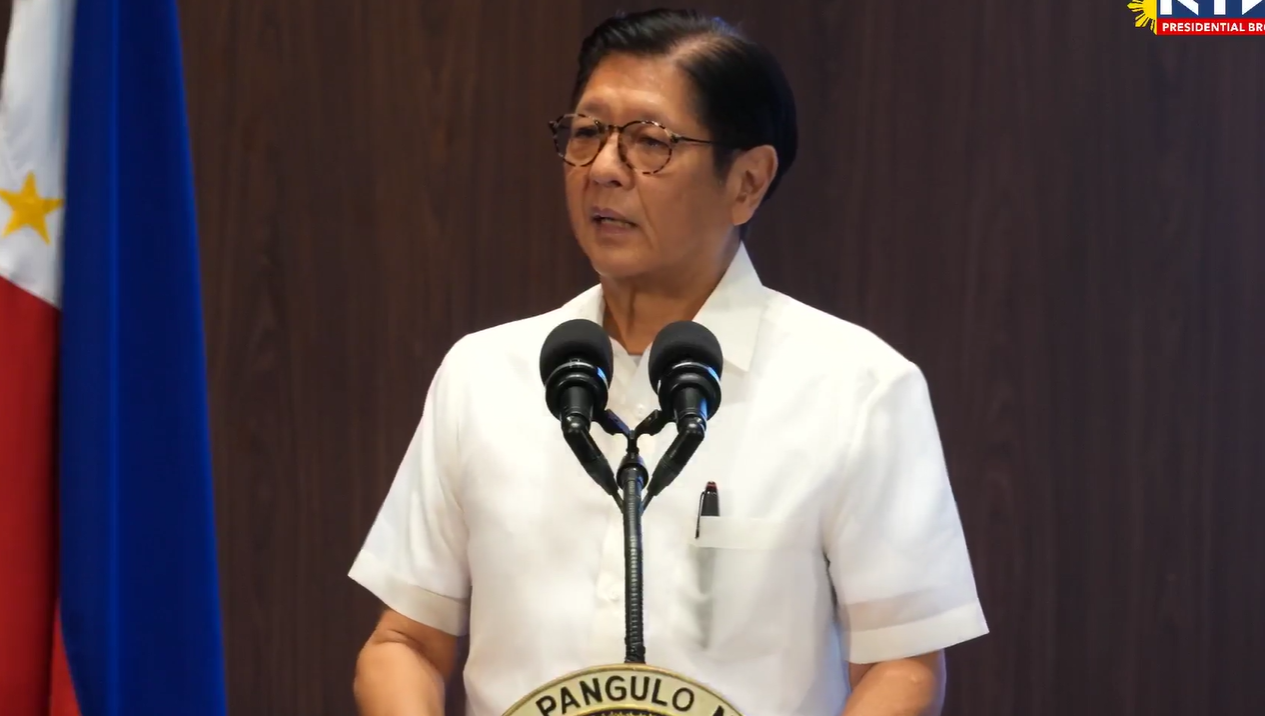
Digital access must translate into real opportunities for students, workers, families, and communities across the country, President Ferdinand "Bongbong" Marcos Jr. said as he stressed that progress is not measured by internet speed alone but by the lives of Filipinos that improved through connectivity.
Marcos said that while broadband and mobile internet speeds have improved in recent years, the true measure of success lies in students in remote areas attending online classes, families accessing health and financial services digitally, and citizens connecting to information and government programs that uplift their lives.
“In today’s age, connectivity is a right, a necessity, and a lifeline,” Marcos said at the recent Telco Summit 2026, reaffirming his administration’s commitment to ensure that every Filipino, wherever they may be, has the opportunity to connect, learn, work, and move forward.
He noted that the country’s telecom sector, now valued at over US$6 billion, reflects sustained investment and progressive reform anchored on the belief that digital access can drive national development.
He also cited key advancements, including the rollout of 5G networks, expanded fiber optic deployment, stronger mobile broadband services, and the rise of digital platforms.
By the third quarter of 2025, telecommunications providers are expected to have laid more than 1.8 million cable kilometers nationwide, connecting tens of millions of homes.
However, he acknowledged that significant challenges remain. While urban centers reportedly enjoy high-speed and reliable services, many rural and remote areas, coastal communities, mountainous regions, and smaller islands continue to experience unstable signals and limited broadband access.
He said delays in permits, right-of-way restrictions, fiber cuts, and power interruptions further widen connectivity gaps affecting education access, constraining economic opportunity, and slowing national progress.
Marcos called for stronger collaboration among government, the private sector, and local communities, stressing that no single sector can address these issues alone.
Working closely with the Department of Information and Communications Technology, the administration is advancing reforms to accelerate infrastructure rollout and lower internet costs while expanding coverage nationwide.
Among the key reforms is the Konektadong Pinoy Act, which removed the requirement for a congressional franchise to construct, install, or operate data transmission networks.
The law also mandates infrastructure sharing and co-location among providers to reduce duplication, cut costs, and maximize public resources.
The President also highlighted the completion of Phases 1, 2, and 3 of the National Broadband Fiber Backbone Project. Phase 1 connected 360 government agencies and benefited more than 10 million transacting citizens, while subsequent phases expanded connectivity to around 690 agencies, serving nearly 17 million members of the public.
Under the Free Public Internet Access Program, over 9,500 active free Wi-Fi access points have been established in 5,057 public sites nationwide, bringing connectivity closer to communities.
To promote inclusion, the government also launched the Bayanihan SIM Card Project, distributing more than 89,400 subsidized SIM cards with monthly data allocations to public school students, teachers, and indigent communities.
Marcos concluded by urging continued partnership among stakeholders in building a “Bagong Pilipinas” where fast, reliable, and inclusive connectivity forms the foundation for growth, opportunity, and national unity. —AOL, GMA Integrated News

