

 GMA Brandtalk
 Tracking
 Archives

Confirmation of charges hearings for Duterte's benefit, says former ICC judge
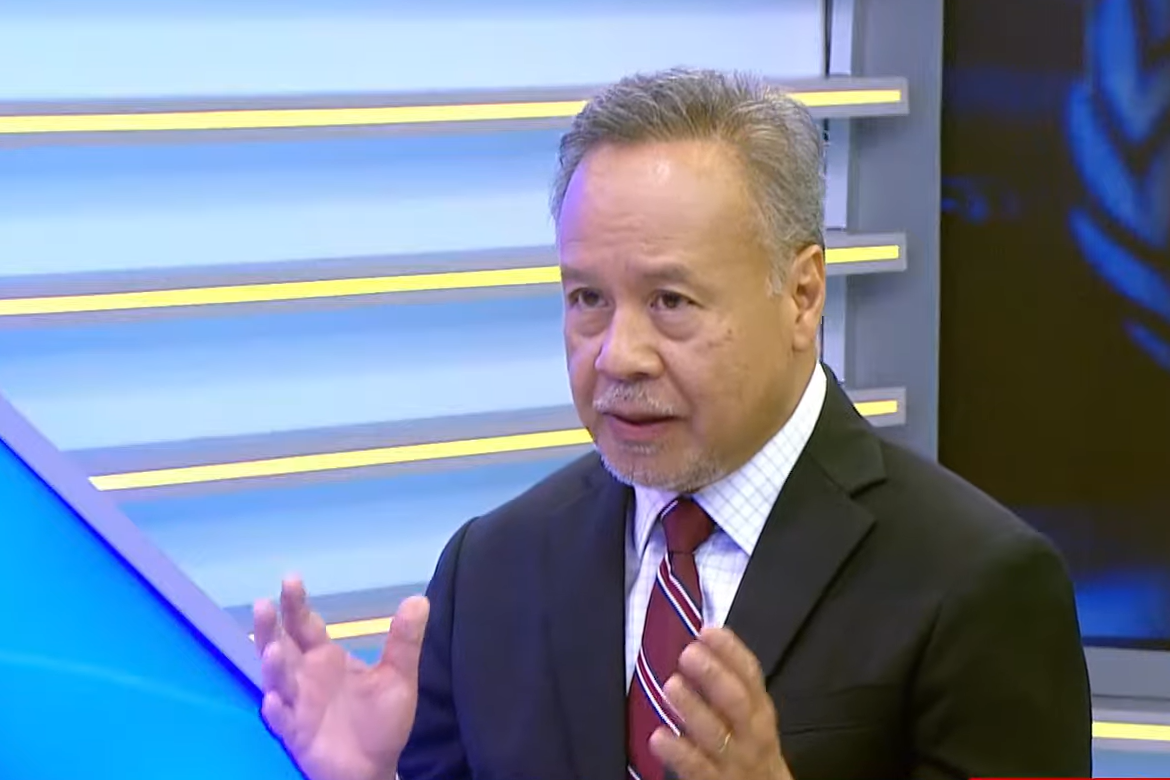
The confirmation of charges hearings at the International Criminal Court (ICC) pre-trial chamber, comparable to a Philippine preliminary investigation, include safeguards designed to protect the accused, former ICC judge Raul Pangalangan said Monday.
“Yes, it is parallel to that (preliminary investigation) except that it is a judicial approval of the charges. Sa atin (For us), the filing of information is done by the prosecution. In the ICC, there is an additional safeguard for the benefit of the accused,” he told GMA Integrated News in an interview.
“So this is for the benefit of Rodrigo Duterte, that the charges will have to be approved by a judicial authority—the pre-trial chamber consisting of three judges. So it is beneficial to the accused,” Pangalangan added.
Pangalangan made the statement just before the ICC pre-trial chamber began the confirmation of charges hearings in The Hague on the crimes against humanity case against the former President.
Explaining the ICC procedure, Pangalangan said the pre-trial chamber will examine the Document Containing the Charges (DCC), which is equivalent to the “information” in the Philippine judicial system or the “indictment” in other jurisdictions.
“And the function of the proceeding is for the pre-trial chamber to look at what is called the document containing the charges. That is the equivalent of information in the Philippines, or in other jurisdictions, the indictment,” Pangalangan said.
The four-day confirmation of charges hearing at the ICC begins Monday, February 23, with subsequent hearings scheduled on February 24, 26, and 27.
During the hearings, the Prosecution, the Defence, and lawyers representing the victims will present their arguments to the judges.
Pangalangan also noted that the Prosecution must establish not only the crimes but also attribution.
“Sa akin, if you look at the DCC, ayun kasi yung kailangan ma-satisfy ng prosecution (In my view, if you look at the DCC, what the prosecution needs to satisfy is this): it is basically that the fact, the charge is murder, the killings were committed, and that there was a common plan that was part of the charge," he said.
"To establish not just the crime, but the theory of attribution, and Duterte is charged as indirect co-perpetrator," Pangalangan added.
He explained that the prosecution must prove not only that murders were committed under a "common plan," but also the theory of attribution, with Duterte facing charges as an indirect co-perpetrator.
"The fact that the charge is murder, that the killings were committed, and that there was a common plan involved as part of the charge. It’s not just about proving the crime itself, but also the theory of attribution, and Duterte is charged as an indirect co-perpetrator,” he said.
“It’s a big debate: he’s not the hitman, he’s not the gunman. So who’s more guilty—the gunman or the mastermind?” Pangalangan added.
‘No effect’
Pangalangan, however, believes that Duterte’s absence from the hearings will not affect his trial.
“I don’t think it will have any effect. This is completely anticipated in the rules. There’s a specific rule on the requirement for him to attend; there is a specific rule for pre-trial saying that it is not necessary; and a separate rule on his waiver of his appearance before the court. So no effect, if that’s the question,” he said.
ICC spokesperson Oriane Maillet earlier clarified that trials cannot proceed in the absence of the accused once the charges are confirmed.
Although Pre-Trial Chamber I granted Duterte’s request to waive his right to attend the confirmation of charges, Maillet noted that “the suspect's absence next week is based on the waiver of the suspect, not on reasons related to health.”—MCG, GMA Integrated News

