

 GMA Brandtalk
 Tracking
 Archives

EJK victims begged for their lives in Duterte anti-drug ops, says victims’ counsel
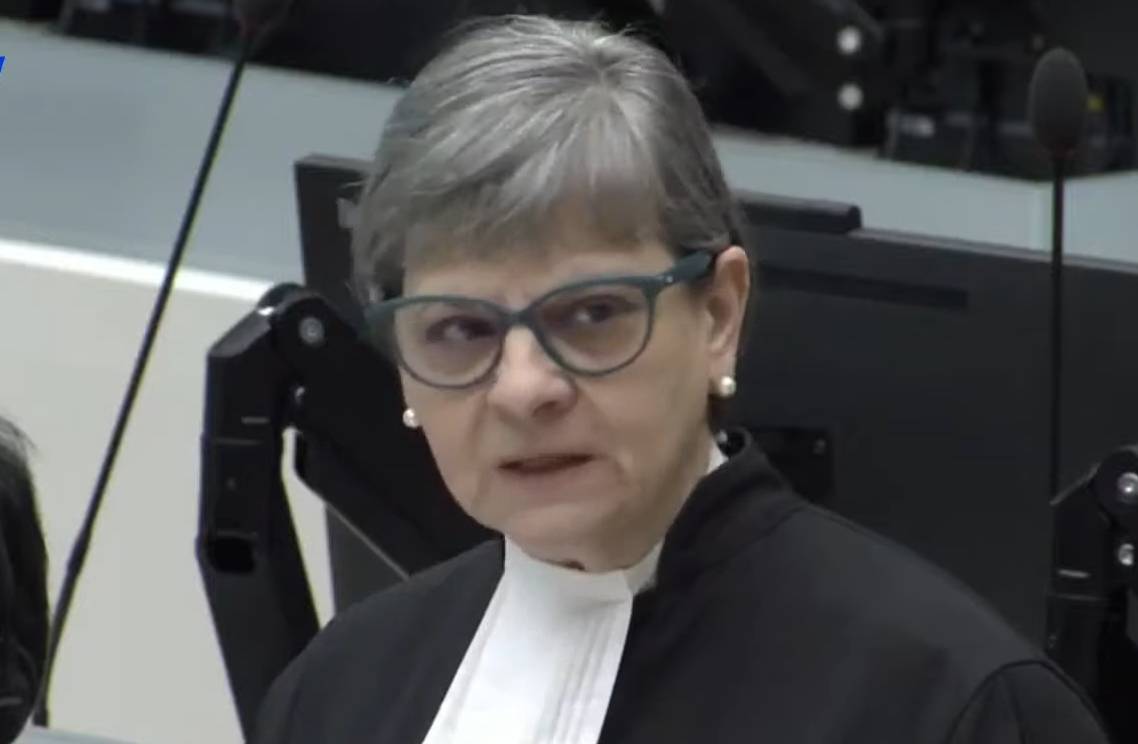
Families of victims of the Duterte administration’s bloody drug war recalled pleading for the lives of their loved ones during anti-illegal drug operations, the principal counsel of the Office of the Public Counsel for Victims at the International Criminal Court (ICC) said.
During the continuation of the Confirmation of Charges hearing on Tuesday, Principal Counsel Paolina Massidda cited witness accounts on the anti-narcotics operations, which she described as “systematic, well-planned, and well-executed following a standard modus operandi.”
“In many cases, it began with an individual receiving a visit or a phone call from a local barangay official informing them that they were on a drug watch list drawn up by barangay officials and the police," Massidda told ICC Pre-Trial Chamber I.
"In practice, these visits functioned less as warnings and more as a means of confirming the identity and whereabouts of the intended target,” Massidda added.
Citing an account from a victim’s spouse, Massidda said the victim was told to surrender to police despite having stopped using drugs months earlier.
“Barangay officials told my husband to surrender to the police because he was on the watchlist as a drug user. Yet he had given up drug use months earlier,” she quoted, adding that the victim did not surrender.
Two weeks later, three armed masked men wearing bulletproof vests supposedly arrived at the victim's home in Manila and handcuffed him.
"I could hear my husband begging for his life from outside the room. We were crying and the other armed men threatened to kill us as well. Moments later, my husband was shot dead,” she added, quoting a witness.
In another account, Massidda said armed men raided a house and shot the victim in front of his wife.
“On June 6, 2017 at about 9:45 in the evening, I was at home with my husband and our children were sleeping upstairs," Massidda said.
Four unidentified men wearing helmets and bonnets barged into the victim's home by breaking down the front door as they looked for the husband.
“I started begging them to spare my husband’s life. The men pushed me away. My husband was shot in the chest and fell face down… While lying face down, he was shot five more times in the nape and head," she said.
"The children woke up terrified because of the gunshots,” Massidda added.
The counsel noted that many of those killed had little or no criminal history and were often accused of minor drug-related offenses.
“In fact, the actual scale of victimization extends well beyond the 49 incidents affecting 78 victims presented by the prosecution. The prosecution itself referred to thousands of civilians murdered,” she said.
Citing 2022 data from Human Rights Watch, Massidda said police admitted killing more than 6,200 people in drug raids nationwide since 2016.
She also cited a 2020 report by the United Nations Office of the High Commissioner for Human Rights, which documented 8,663 deaths linked to the drug war.
However, she noted that Philippine human rights groups estimate the actual number of deaths could be two to three times higher than the United Nations figures.
“We speak for families who cannot be here: mothers who buried their sons; children who lost their parents; spouses who now raise families alone; and communities that have lived for years under fear and silence and continue to bear the consequences of violence that swept through their neighborhoods like a storm,” Massidda said.
“The Duterte administration framed the issue as a criminal one, focusing on punitive enforcement over social responses,” she added.—MCG, GMA Integrated News

