

 GMA Brandtalk
 Tracking
 Archives

Human Rights Watch: ‘Powerful’ to have rights reports cited in ICC hearings
THE HAGUE – Human Rights Watch Asia Director Elaine Pearson said it was “very powerful” to have their findings cited on the second day of the International Criminal Court’s (ICC) confirmation of charges hearings against former President Rodrigo Duterte.
“It’s very powerful to know that our Human Rights Watch report is being quoted authoritatively by the Victims Counsel,” Pearson said in an interview, noting that the report referenced official police statistics that more than 6,000 drug war killings were recorded since 2016.
She added that Human Rights Watch has documented alleged killings linked to Duterte long before he became the President, including during his term as mayor of Davao City.
“Human Rights Watch has issued many reports documenting the killings under Duterte’s time as mayor of Davao City and also his time as President,” Pearson said.
She recalled that as early as 2009, Human Rights Watch released a report documenting a pattern of killings involving street children, alleged drug suspects, and criminals in Davao City.
“The first report in 2009 documented the pattern of killings of street children, alleged drug suspects and criminals in Davao City,” Pearson said, referring to “You Can Die Anytime”, which she said quoted Duterte as warning that criminals were “legitimate target[s] for assassination.”
She also cited the 2017 report “License to Kill,” which detailed alleged abuses during the nationwide war on drugs.
“’License to Kill’ documented how the police were fabricating evidence, planting evidence during the campaign of killing during the war on drugs when Duterte was president of the Philippines,” Pearson said.
‘Backbone’ for accountability
Asked about the impact of these findings on the ongoing ICC proceedings, Pearson said she hoped that the reports will help support accountability for the alleged abuses.
“I hope that our reports will be the backbone eventually for some kind of form of accountability to hold the perpetrators to account for these very serious abuses and the many thousands of killings that occurred during Duterte’s time both as mayor and the president,” she said.
“So I have to say it’s incredibly powerful and moving to be here and to be here with the victims, the survivors, lawyers and civil society from the Philippines,” she said.
Impact of Duterte’s ICC hearing “larger back home” than previous cases
For Justice Info lead correspondent Janet Anderson, who has covered international tribunals for 25 years, the reverberations of the confirmation of charges hearing against former President Rodrigo Duterte are “likely much larger back home” than in previous ICC cases.
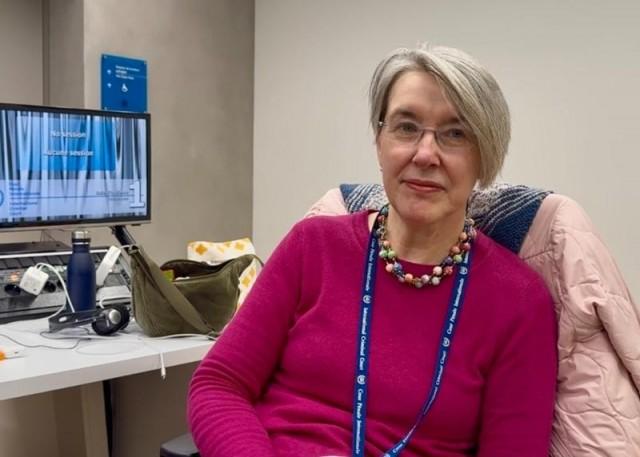
She told GMA Integrated News that social media, and the debates that come with it, make the Duterte case specific.
“Your social media landscape is heavy, difficult for everybody to deal with, but the ICC is much more aware of that and what they can and cannot control. I think the reverberations of what’s going on in this [case] are much bigger back in the Philippines, probably than some other trials because of your social media landscape.”
While the proceedings inside the courtroom are strictly judicial, Anderson believes the Duterte case hearing itself acts as an extension of Philippine politics on the global stage.
She referenced similar ICC investigations into former heads of state from the Ivory Coast (2010-2011) and Kenya (2010) cases, where domestic supporters and critics traveled to The Hague to protest.
At the time, Anderson noted that the ICC had struggled to handle social media chatter.
“What it emphasizes for me is how, in fact, political these processes are. Inside the courtroom, it’s judicial. But on the bigger stage, this is actually part of Philippine politics [the same way that] it was part of Ivory Coast politics. It plays in political terms. And because of that, you do get large numbers of people coming to demonstrate because it’s actually part of domestic political discourse, and the arguments between supporters and critics also happen here in The Hague.”
Duterte’s defense team is scheduled to submit their merits on the case on Thursday (February 26). — JMA/BAP, GMA Integrated News

