

 GMA Brandtalk
 Tracking
 Archives

Victims' families seek justice at Duterte ICC pre-trial amidst grief and hope
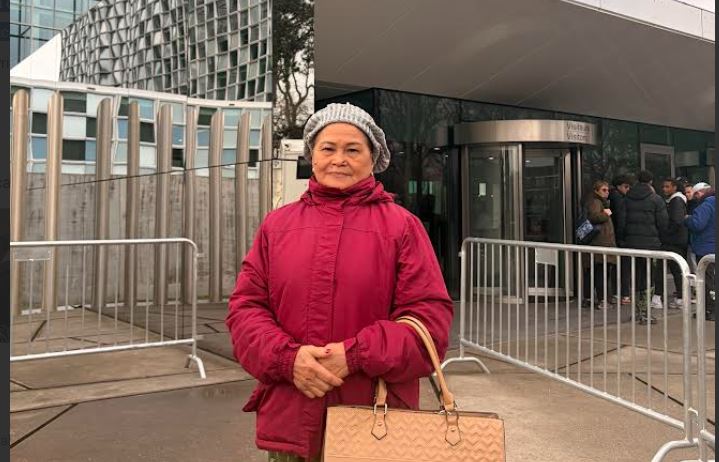
On the second day of the pre-trial hearing for the confirmation of charges for crimes against humanity against former President Rodrigo Duterte, families of victims of the bloody war on drugs struggled to contain the emotions stirred by the day’s proceedings.
As prosecutors laid out the merits of the case—covering multiple counts of murder and the systematic nature of the killings—the courtroom became a space where long-buried pain resurfaced.
For the families who have waited years for justice, the hearings offered a fragile sense of hope that the International Criminal Court (ICC)may finally hold Duterte accountable.
During a press briefing, Rubilyn Litao, coordinator of Rise Up for Rights and For Life, called for a moment of silence to honor those killed in the war on drugs. After the silence, she slowly read out the names of the victims—each name a reminder of a life taken, a family left grieving.
“Bumabalik sa aming isipan ang pagpunta sa mga eskinita, sa mga tahanan, sa mga kalsada—na dito natagpuan ang mga biktima ng war on drugs,” Litao said.
“Pero dala po namin ang tapang at paninindigan ng mga nanay na patuloy na naninindigan at patuloy na nagsasalita para ang katarungan ay makamit," she added.
(The scenes in alleys, homes, and streets, where the victims of the war on drugs were found, haunt us. But we carry today the courage and conviction of mothers who have been unwavering in their hopes that justice will soon be served.)
For the families of the slain, listening to the accounts and evidence presented during the hearing was deeply overwhelming. Many said the testimonies mirrored their own experiences—moments they have tried, but failed, to forget.
Llore Pasco, a 71-year-old mother who lost her two sons, Crisanto and Juan Carlos Lozano, during the drug war, was visibly shaken as she recounted her experience inside the court. Fighting back tears, she spoke of how the proceedings pierced straight through her heart.
“Tumagos sa aming puso,” Pasco said. “Sobra kaming na-overwhelm dahil parang kami mismo ang kinakausap bilang mga biktima. Ramdam namin na matutuloy ang charges at magkakaroon ng trial soon—at yung inaasahan namin na mapanagot, makulong, at ma-convict si Duterte para sa kanyang mga biktima.”
(We felt it deeply. We were overwhelmed with emotions. During the proceedings, it was as if they were directly talking to us. We feel there will be a trial soon, to make Duterte accountable.)
Sheerah Escudero, who lost his 18-year-old brother during Duterte’s war on drugs, expressed anguish and frustration over the slow pace of justice. She said hearing prosecutors describe the killings’ modus operandi reopened painful memories.
“Binanggit nila yung modus operandi na binabalot ng packaging tape sa ulo,” Escudero said. “Mas naging malinaw sa amin kung paano ang policies ni Duterte ang dahilan kung bakit nangyari ito sa mahal namin sa buhay. Naalala namin ulit kung bakit siya nawala. Sobrang frustrating—mahirap ilagay sa salita ang sakit at pagdurusang dinaranas namin, lalo na’t kami na nga ang nananawagan ng hustisya, kami pa ang vilified.”
(They mentioned the modus operandi of wrapping the victim's head with packaging tape. It has now become clearer how his policies have victimized our loved ones. It was so frustrating how we were vilified when we were the ones seeking justice.)
In a press release issued by Duterte Panagutin Europe, a spokesperson said the hearings clearly demonstrated the former president’s intent and responsibility.
“Both the prosecution and the Common Legal Representative of Victims presented a clear and coherent picture of Duterte’s intent, policy, and systematic violence carried out under his bloody ‘war on drugs,’” the statement read. “More importantly, the hearing showed that the drug war was, in reality, a war against the poor.”
The group added that the hearings highlighted the disturbing consistency in the killings’ modus operandi—patterns that mirror thousands of drug war cases across the country. Victims were often found with packing tape wrapped around their heads, their hands bound, and gunshot wounds to the head.
“These recurring patterns, based on evidence, all point to the obvious outcome of these hearings,” the statement said. “Duterte’s case is practically indefensible.”
As the day drew to a close, Litao reiterated the families’ call for justice.
“Walang dahilan para hindi ma-confirm ang charges at magpatuloy ang proseso ng trial at paglilitis,” she said. “Nang sa gayon ay malaman ang katotohanan at managot ang dapat managot—pangunahin ang dating Pangulong Duterte at ang kanyang mga kasabwat.”
For the families, the hearings are more than a legal milestone. They are a painful confrontation with the past—and a renewed hope that, after years of loss and silence, accountability may finally be within reach.
During the pre-trial hearing, Duterte’s defense counsel expressed hope that the ICC Pre-Trial Chamber I will dismiss the crimes against humanity charges against the former leader and send him back to his family.
“We hope that when you conclude your deliberations, that you dismiss these grievously misplaced and politically motivated charges,” said Nicholas Kaufman, Duterte’s legal counsel.
“We will ask you to send Rodrigo Duterte back to his family and we will ask you to give back to the Filipino people their Tatay Digong,” he added.
The ICC Office of the Prosecutor has charged Duterte with three counts of crimes against humanity (murder and attempted murder) while implementing his anti-narcotics campaign. —LDF, GMA Integrated News

