

 GMA Brandtalk
 Tracking
 Archives

Drug war photojournalist: ‘One photo cannot explain 6 years of killings’
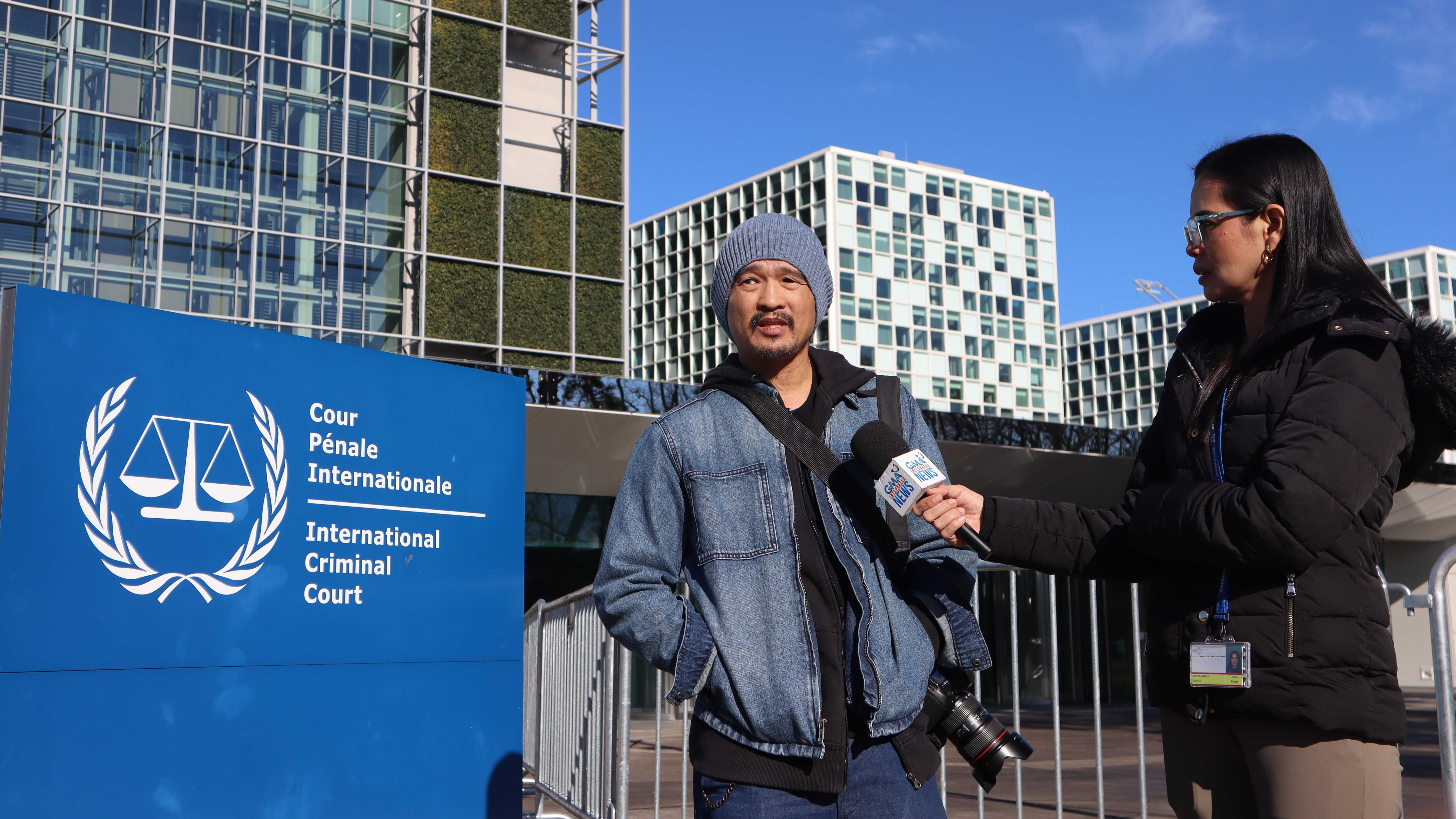
THE HAGUE – Veteran photojournalist Raffy Lerma was caught off guard and emotionally shaken upon learning that an image linked to his documentation of the war on illegal drugs was shown during the confirmation of charges hearing against former President Rodrigo Duterte before the International Criminal Court (ICC).
In an interview with GMA Integrated News’ Marisol Abdurahman, Lerma clarified that the image presented during the hearing was not the exact photograph he took, although it depicted the same crime scene involving Michael Siaron, who was killed in July 2016.
“No. Actually, yung (the) first day, it was a different version from yung photograph ko. But it was the same crime scene,” Lerma said.
The original photograph, which Lerma shot while working for the Philippine Daily Inquirer, was first published in July 2016.
“To be honest, medyo naging emotional din ako for seeing that (I was a bit emotional for seeing that),” Lerma said.
“It remains still an image that remembers ‘yung drug war and ‘yung killings. But also napapakita din dito ‘yung grief ng families (It remains still an image that remembers the drug war and the killings. But is also shows the grief of the families),” he said.
‘One photograph is not enough’
While Lerma acknowledged the significance of the image, he stressed that a single photograph cannot fully capture the scale of the violence linked to the anti-drug campaign.
“But that photograph alone, for me, cannot explain the thousands of people who were killed in the span ng (of) six years ng drug war,” he said.
“One photograph alone… It’s a series of events, series of the whole six years.”
“’Yung mahalaga sana na makita ng mga tao (The important thing that people should see is), empathy,” he said.
‘Why blame the media?’
Lerma also expressed concern over narratives raised during the proceedings that appeared to question or blame the Philippine media’s coverage of drug war killings, including suggestions that crime scene photographs were staged.
“Medyo (Slightly), I was taken aback na parang biniblame pa tayong media (that we in the media are being blamed),” he said.
“Ibalik pa rin natin sa usapin, maraming namatay eh. At sana ‘yun ang masasagutan. Sino ba talaga nag-drawing? Sino ba talaga nag-stage?”
(Let’s still circle back to the issue, many were killed. And that is the question that should be answered. Who really staged it?)
He added that journalists documenting the killings had no control over crime scenes.
“When we reach the area, we just take photo and video,” Lerma said.
For Lerma, the central issue should remain accountability. “Sino ba ang pumatay? Sino ba ang nag-utos ng patayan? I think ‘yun ‘yung mas mahalaga sagutin (Who carried out the killing? Who ordered the killing? I think it’s more important to answer that),” he added.
Photos shown in Hague justice forum
Lerma said several of his photographs were shown during a closed event in The Hague titled “In Pursuit of Justice: The Philippines and the ICC,” attended by members of the international community, including civil society representatives.
The event was organized by Redress, the Coalition for the International Criminal Court, the International Federation for Human Rights (FIDH), and the Victims’ Rights Working Group (VRWG).
Lerma said the exhibit featured images taken over nearly a decade, showing not only killings but also the efforts of families, churches, civil society groups, and human rights advocates.
“Hindi lang patayan (Not just killings),” he said. “Nag-focus rin ako sa mga efforts ng mga groups, mga families, church, civil society, NGOs (I also focused on the efforts of the groups, families, church, civil society, NGOs).”
He said the exhibit sought to show how people have endured and resisted amid violence, even as he lamented that many continue to justify the killings.
“’Yung pinakamalungkot (What is saddest) for me still, that there are many Filipinos who believe, who justify the killings,” he said.
Never about awards
Reflecting on his work, the award-winning Lerma said covering the drug war was never something he took pride in, but something he felt compelled to do as a journalist.
“Hindi ko ginusto yung mag-cover ako (I never wanted this). I just had to do it,” he said.
“I don’t take pride sa ginawa (in what I did), but it had to be done.”
Recognition, he said, was never the goal. “It was never about awards,” Lerma said. “Kung tatanungin ako anong gusto ko, magka-hustisya (If you ask me what I want, that is for justice to be served). Definitely.”
“No amount of awards will ever give joy,” he added. “This is all about sa mga namatayan (those who lost a loved one). This is all about sa (the) mga victims’ families.” — JMA, GMA Integrated News

