

 GMA Brandtalk
 Tracking
 Archives

Kaufman: Prosecution witnesses said ‘neutralize’ meant to arrest, not kill
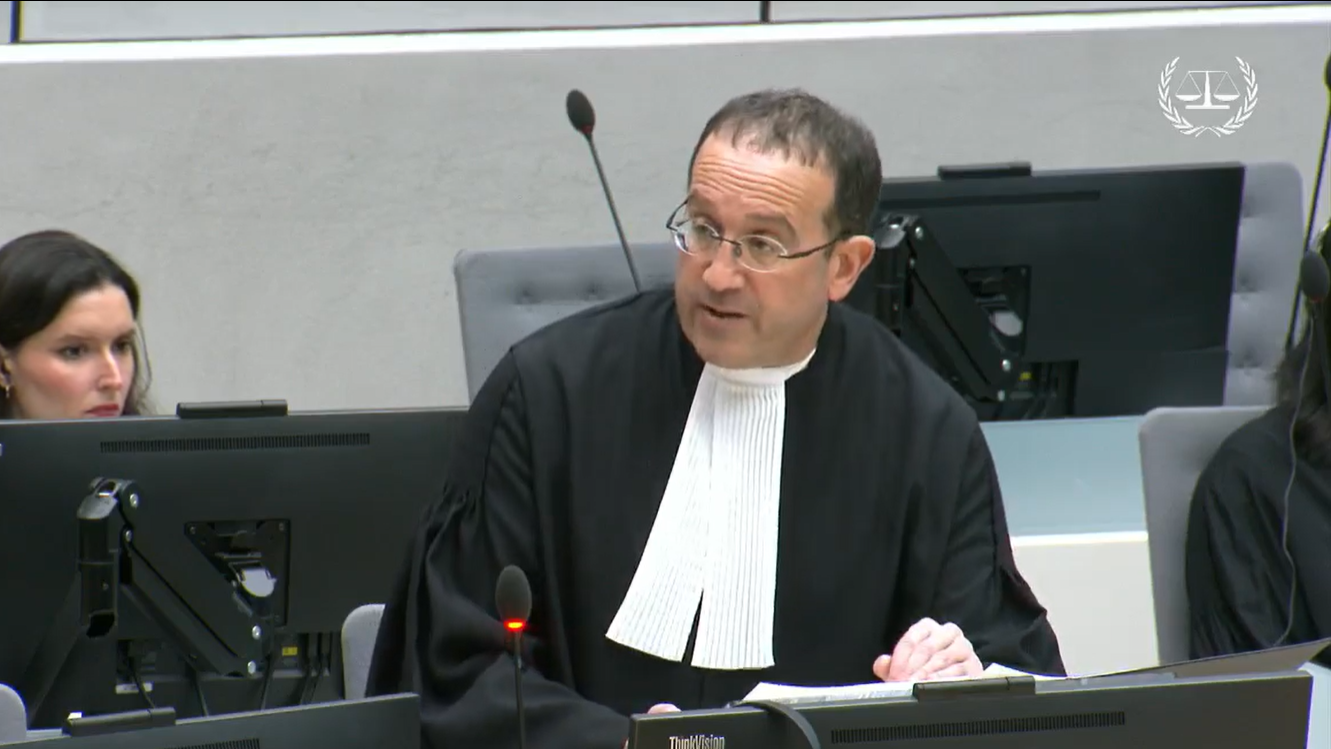
The International Criminal Court (ICC) prosecution’s own witnesses have explained that “neutralization” during police operations means to arrest, not to kill, the lawyer of ex-President Rodrigo Duterte said on Thursday.
During the continuation of the ICC Pre-Trial Chamber I’s confirmation of charges hearings, lawyer Nicholas Kaufman said they are submitting that “neutralization” denotes “lawful restraint.”
“Witnesses P1158 and P1170 explained that neutralize means to arrest or to incarcerate through legal means. It did not mean to kill,” he said.
“Witnesses P1050 and P1174 confirmed that lethal force arose only where a suspect’s resistance placed a officer’s life at risk, reflecting the ordinary doctrine of self-defense,” Kaufman added.
Kaufman noted that former Philippine National Police (PNP) chief and now Senator Ronald “Bato” Dela has also publicly clarified that “neutralization” means arrest.
“Dela Rosa, testifying before the Committee on Accountability of Public Offices and Investigation, testified that the term ‘neutralization’ was anchored in a PNP operational procedure manual, where it was specifically and strictly defined,” he said.
Citing the manual, Kaufman defined neutralization as a “police intervention in strict accord with the use of force continuum and/or principle of proportionality on the use of force to contain or stop the unlawful aggression of the offender.”
The ICC prosecution previously argued that Duterte was at the very heart of the “common plan” to neutralize alleged criminals in the Philippines amid his anti-narcotics campaign.
Kaufman also pointed out that the Supreme Court (SC) has declined to issue any ruling declaring the drug war as unconstitutional, declined to invalidate circulars, and declined to rule that to “neutralize” is to kill.
“The Supreme Court’s treatment of the issue is particularly instructive. The court observed that the wording was neither novel nor introduced during the Duterte administration,” Kaufman said.
To recall, the High Court in 2017 tackled a petition raising that a PNP circular may have given policemen the license to kill drug suspects.
Duterte’s lawyer noted that the High Court itself observed that the term has appeared in a 2014 PNP revised manual on anti-illegal drug operations and investigation, which means that the term is already part of the existing police vocabulary.
“The court further clarified that the mere inclusion of the term in a circular does not render that instrument unconstitutional, especially when the circular mandates compliance with internationally-accepted legal principles, public policy, and the full observance of human rights,” Kaufman said.
“No circular has been invalidated on this basis nor has it ever been established that the highest level of domestic judiciary that to neutralize means to kill,” he added.
READ: DAY IN COURT: ICC Hearings on the Charges vs. Duterte
The ICC Office of the Prosecutor has charged Duterte with three counts of crimes against humanity for alleged murder and attempted murder during his time as mayor and presidency.
Kaufman previously expressed hope that the ICC Pre-Trial Chamber I will dismiss the charges and to give back the Filipino people “their Tatay Digong.”
He also argued that the evidence against Duterte was “wholly insufficient.”
Meanwhile, the final hearing will be held on February 27, Friday. The defense, prosecution, and the representatives of the victims will make their closing statements. The ICC will also review the detention of the former President. — JMA, GMA Integrated News

