

 GMA Brandtalk
 Tracking
 Archives

DepEd showcases Filipino-led AI systems at global summit in India
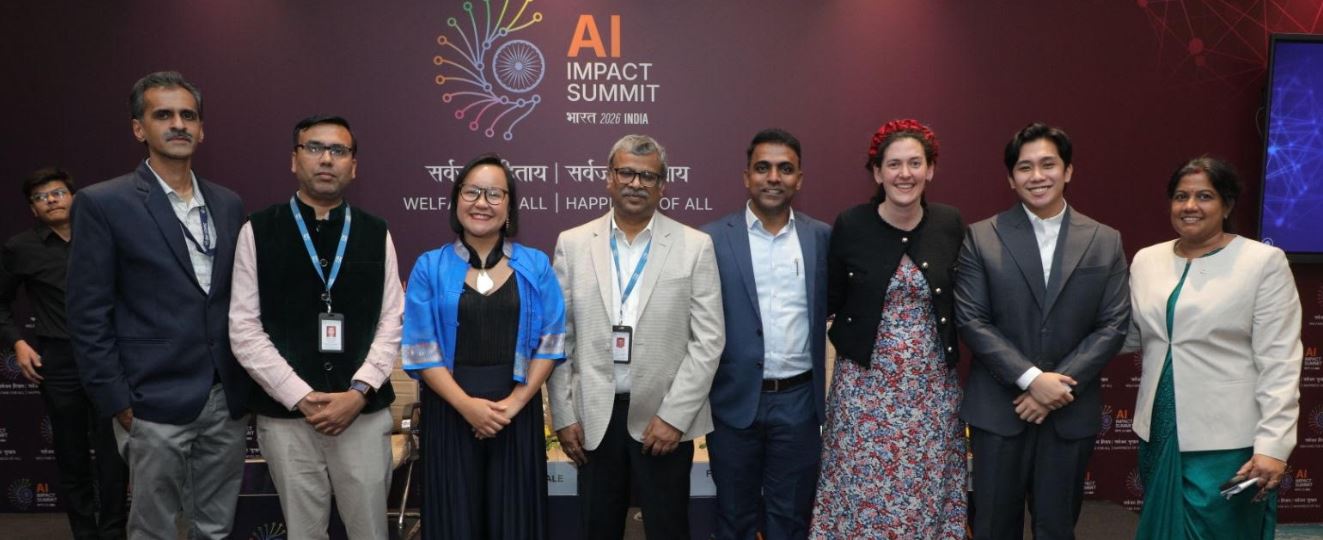
The Department of Education (DepEd) presented its national framework for scaling artificial intelligence (AI) in public schools at the AI Impact Summit in India, positioning a Filipino-led model of responsible AI deployment on the global stage.
The summit, held February 16 to 21 at the Bharat Mandapam Convention Centre in New Delhi, gathered policymakers, researchers, and education leaders to examine how AI can move beyond pilot projects and deliver system-wide transformation.
Through its Education Center for AI Research (ECAIR), DepEd outlined how it is embedding AI tools directly into institutional workflows across the country’s public school system, which serves more than 24 million learners.
Education Secretary Sonny Angara said the department is focused on scaling AI responsibly and with accountability.
“At DepEd, we are deliberate about building AI that strengthens public institutions, protects our learners, and delivers measurable results at scale. ECAIR reflects our commitment to move beyond experimentation and toward responsible transformation across our entire education system,” Angara said.
The session, titled “From Promising Pilots to System Shifts: What It Really Takes to Scale Responsible AI in Education,” was organized by EdTech Hub through its AI Observatory & Action Lab.
DepEd emphasized that even small efficiency gains can have large-scale effects in a system as vast as the Philippines’.
“In a system serving over 24 million learners, even a one percent gain in efficiency has a massive impact on our country’s education system. By integrating AI into DepEd’s operations, we are saving millions of hours of our teachers’ time so they can focus on teaching,” said ECAIR Governance and Delivery Lead Elmo Domino Jose.
Among the AI systems presented were:
- SIGLA, which automates school health monitoring and reporting, reducing administrative workload and saving an estimated 60,000 hours annually for around 34,000 teachers.
- SABAY, an AI-supported digital triage system aimed at extending specialist academic support to roughly 48,000 public schools, particularly benefiting early-grade learners.
Four pillars for scaling AI
DepEd detailed ECAIR’s four-part framework for scaling AI nationwide: ensuring technical readiness for large-scale deployment; institutional ownership within DepEd; governance mechanisms embedded in system design; and transparent implementation to sustain public trust.
ECAIR Managing Director Erika Fille Legara said global collaboration plays a key role in strengthening these efforts.
“Our partnership with EdTech Hub’s AI Observatory ensures we are not building in isolation. We co-design systems grounded in school realities while learning from global experience,” Legara said.
The Philippines is one of six countries selected for the AI Observatory’s Ministry of Education AI Challenge — and the only one in Southeast Asia. The initiative is supported by the UK Foreign, Commonwealth & Development Office (FCDO), reflecting ongoing education cooperation between the United Kingdom and the Philippines.
DepEd said its participation in the summit signals a shift from experimentation toward institutionalized, accountable AI systems designed to improve governance and service delivery across the public education sector.—Sherylin Untalan/LDF, GMA Integrated News

