

 GMA Brandtalk
 Tracking
 Archives

Middle East-bound OFWs stranded at NAIA amid crisis
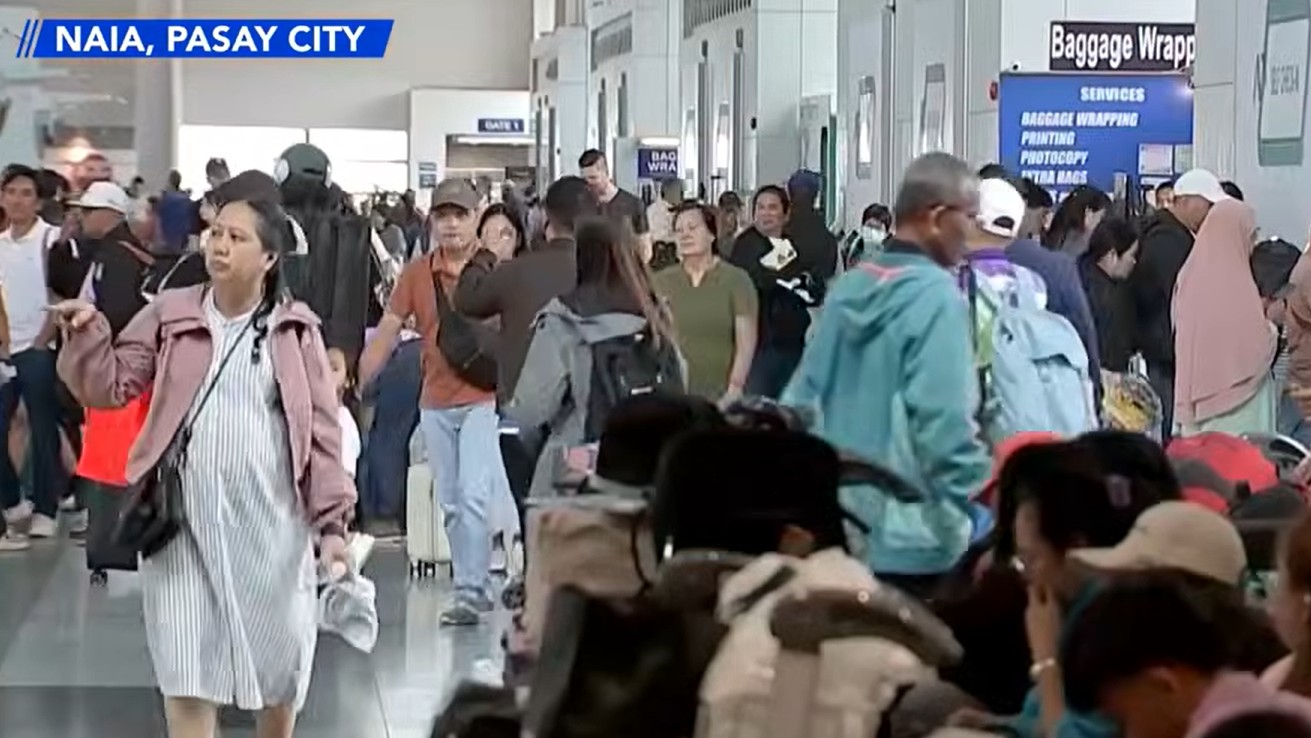
Several overseas Filipino workers (OFWs) were stranded at the Ninoy Aquino International Airport (NAIA) after flights going to countries in the Middle East were cancelled amid the ongoing conflict in the region.
According to Oscar Oida’s report in “24 Oras” on Monday, stranded OFWs are left in limbo on when they could finally travel.
Monica Salamanca, who hails from Davao del Norte, was excited to work as a domestic helper in Qatar. But when she arrived at NAIA, she found that her flight was among those cancelled.
“This is for my family and to provide financial assistance for them here in the Philippines. I want to live a comfortable life and save for a house,” she said.
Meanwhile, Jen Escalaña, who came from Bacolod, was also supposedly bound for Qatar. But she decided to look at her situation in a positive way.
“It’s better that I haven’t arrived there yet,” she said.
Jun Corderro, on the other hand, can’t help but worry about his Filipino friends in the Middle East.
“They were traumatized. I know some people in Bahrain and in UAE, and I heard some parts there were attacked. So they were really traumatized,” he said.
Corderro will avail of the travel fare provided by the Overseas Workers Welfare Administration to go back to Cebu.
Aside from NAIA, there were also flights from Clark International Airport going to Dubai and Qatar that were cancelled.
The Civil Aviation Authority of the Philippines (CAAP) said 45 flights from the Philippines were affected by the tension in the Middle East.
The most affected flights are those flights going to and from UAE (Dubai, Abu Dhabi); Riyadh, Saudi Arabia; Bahrain; and Doha, Qatar.
Further, a portion of Dubai International Airport, which caters to over 90 million passengers, was also damaged by an aerial attack from Iran. Hence, the backlog in flights is expected to affect flights going to other destinations.
CAAP is coordinating with airlines, airports, and international aviation partners.
“As we all know, some countries have temporarily closed their airspace. That’s why our flights can’t fly there. So, we are monitoring what their next move will be so we can align our own actions accordingly,” said CAAP public information officer Bea Bernardo.
CAAP also advised passengers to monitor announcements of their airlines. —Vince Angelo Ferreras/RF, GMA Integrated News

