

 GMA Brandtalk
 Tracking
 Archives

House panel-approved anti-dynasty bill won't make a difference —Bag-ao
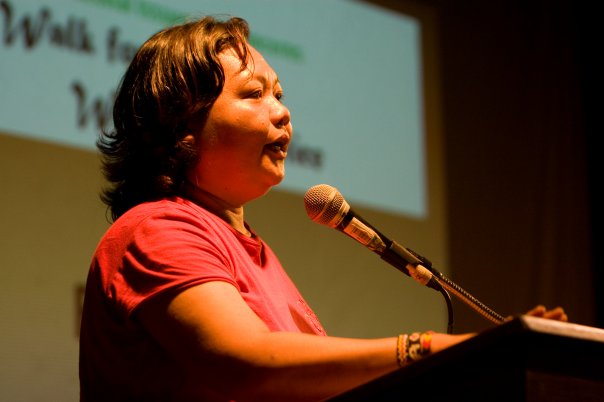
The anti-political dynasty bill approved by the House committee on suffrage and electoral reforms will not make any difference to stop the practice of political families, opposition lawmaker and Dinagat Representative Kaka Bag-ao said Thursday.
Bag-ao, in a Super Radyo dzBB interview, was referring to the unnumbered substitute bill banning relatives up to second degree of consanguinity or affinity from running for or occupying elective posts at the same time within the same area of jurisdiction.
She said that the qualifier “within the same area of jurisdiction” renders the bill useless because relatives can wind up serving as mayors of different local government units within the same province.
“We all know for a fact that a lot of members of the House and the Senate belong to the same family, sharing the same surnames. Ang gusto naman natin ay maumpishan na magkaroon ng first major step. Pero huwag namang ganong klase ng step na halos wala rin namang pinagbago,” Bag-ao said.
The lawmaker said that while the ideal version bans relatives up to the fourth degree of consanguinity or affinity from running or occupying elected office at the same time, lowering the ban to up to second degree, regardless of the area of jurisdiction, is already a significant improvement.
“They say the ban up to the fourth degree is extreme. So we are amendable to ban up to the second degree, which allows your cousins, uncles et al to run, because the second degree only bans direct descendants: children, parents, grandparents, wife, and in-laws,” pointed out Bag-ao, who is one of the authors of the anti-political dynasty bill banning up to the fourth degree of consaguinity.
“The second degree ban has a very limited scope, but it still [covers] very influential move in terms of putting across a message that political power should not be concentrated in one family,” Bag-ao added, referring to the version approved at the committee level in the Senate.
Under the Senate panel version, a political dynasty is defined as the concentration, consolidation, or perpetuation of public office and political power by spouses or relatives in national or local elective offices, party-list representation, and any other elective positions created by law.
Senator Risa Hontiveros, chairperson of the Senate committee on electoral reforms and people’s participation, said the committee report limits the prohibition to relationships of up to the second degree of consanguinity or affinity, instead of extending to the fourth degree.
House suffrage and electoral reforms panel chairperson Zia Adiong earlier said that the committee-approved anti-political dynasty bill is sufficient to break the control of political families in one locality or constituency.
“This is a big step forward. We need a balanced, enforceable anti-political dynasty bill. This ensures that an Anti-Political Dynasty law will be in place before the next elections in May 2028,” Adiong told reporters.
House Deputy Minority Leader Edgar Erice of Caloocan City opposed the approved version, arguing that it still allows close relatives to run for and occupy public office at the same time, as long as they do so in different localities. —AOL, GMA Integrated News

