

 GMA Brandtalk
 Tracking
 Archives

Game Over: Navy uncovers espionage plot hidden in “Tetris” game app
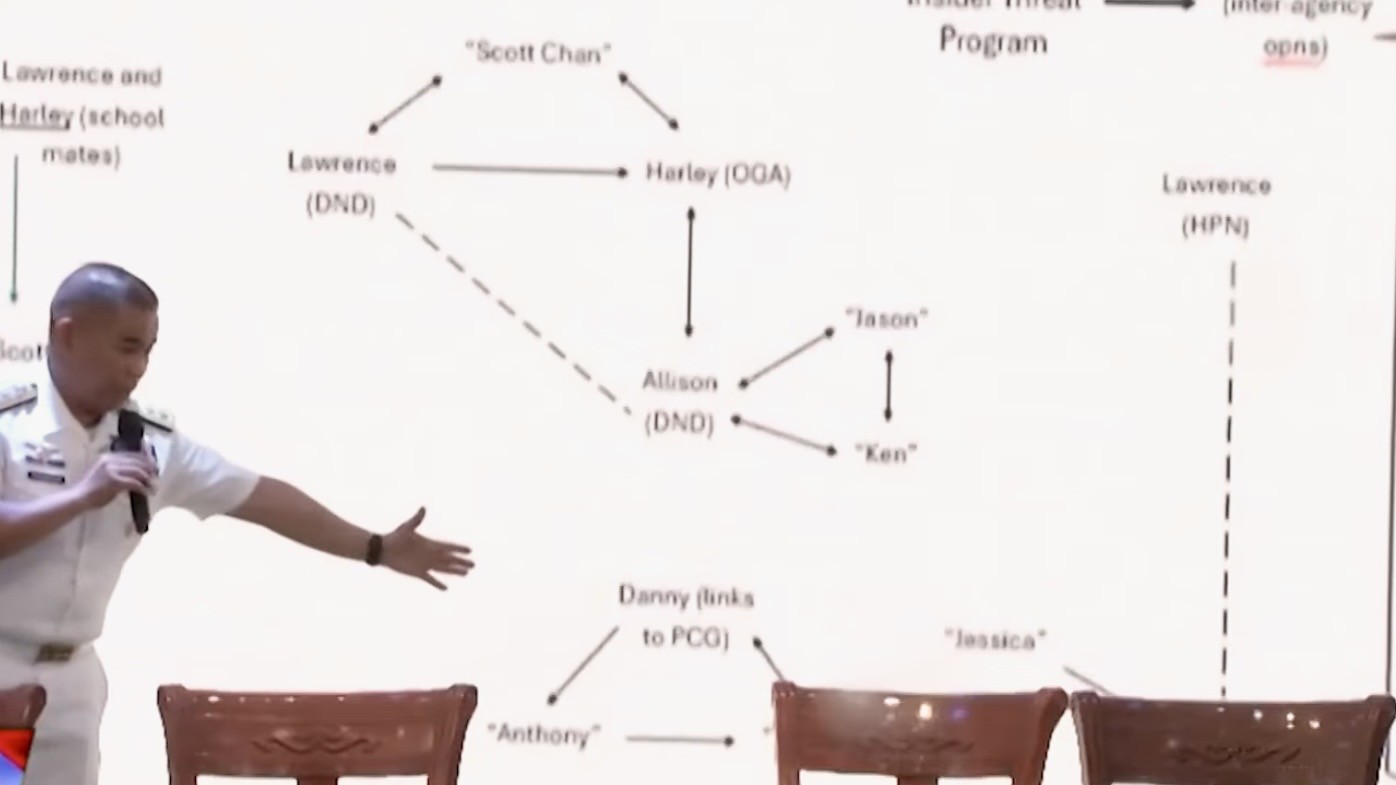
What looked like an ordinary mobile game turned out to be a covert communication tool used in an alleged espionage network recruiting Filipinos to pass sensitive information to foreign handlers believed to be linked to China.
In a briefing, Rear Admiral Roy Vincent Trinidad, Inspector General of the Philippine Navy presented a diagram showing how three Filipinos were recruited to transmit classified information to their contacts abroad.
In response to a followup question asked by GMA Integrated News, Trinidad revealed that their means of communication was concealed inside a specially modified gaming application.
“They were given communication gadgets. One had a special gaming app — Tetris — where the communication was embedded. Once you enter a password prompt, it becomes a communication app,” Trinidad explained.
Authorities said the recruited individuals used the disguised application to communicate with foreign handlers who allegedly attempted to conceal their real identities and nationalities.
Some spoke fluent English with foreign accents, according to the Navy official.
“Some had British or Australian accents, while one had an obvious Chinese accent,” Trinidad said.
The suspects were identified only by aliases:”Lawrence”, a former employee of the defense department who later worked with the Navy; “Allyson”, a security sector analyst; and “Danny”, a Manila-based contact with links to the Philippine Coast Guard.
Investigators said the operation revolved largely around financial incentives.
Payments reportedly ranged from four to six digits, delivered through digital wallets and even bundled with food delivery transactions to avoid suspicion. Large bonuses were also offered for valuable intelligence.
The three suspects allegedly produced reports and transmitted documents containing sensitive information accessible through their security clearances.
“These documents were sensitive and should not reach foreign entities,” Trinidad said. “Their level of access allowed them to handle classified, confidential, secret, and even top-secret information.”
One of the recruits, alias Danny, reportedly had deep regrets in providing the sensitive information to his handler after seeing the damage inflicted on a Philippine Coast Guard vessel that was rammed by a Chinese ship, resulting in the injuries of Filipino personnel.
Foreign spies
Meanwhile, another Navy officer, identified as Charles, immediately reported to authorities after a foreign woman attempted to recruit him and began requesting sensitive information.
Officials said the recruitment attempts emerged around the same time authorities were exposing alleged Chinese espionage activities in the Philippines.
Trinidad noted a shift in tactics compared to previous cases involving Chinese nationals arrested in recent years.
“If you connect the dots over the years, you will see a trend — attempts to infiltrate subtly to extract information that could endanger Filipino lives,” he said.
Authorities are also investigating reports of individuals posing as Filipinos to gain local access, including a man who allegedly donated an ambulance to a local government unit but was later discovered to be a Chinese citizen who was using a false identity.
For the National Security Council, the discovery highlights the growing threat of insider recruitment within the country’s security sector.
Assistant director general and spokesperson of the council Cornelio Valencia said the case demonstrates the effectiveness of the government’s counterintelligence efforts.
“This is part of the insider threat program. They were discovered, and this is a decisive result of our efforts to harden the security sector and government agencies,” Valencia said.
Authorities are continuing their investigation as they assess the full extent of the suspected espionage network and its potential links abroad. —RF, GMA Integrated News

