

 GMA Brandtalk
 Tracking
 Archives

SC: Judiciary to adopt 4-day onsite work set-up to conserve energy
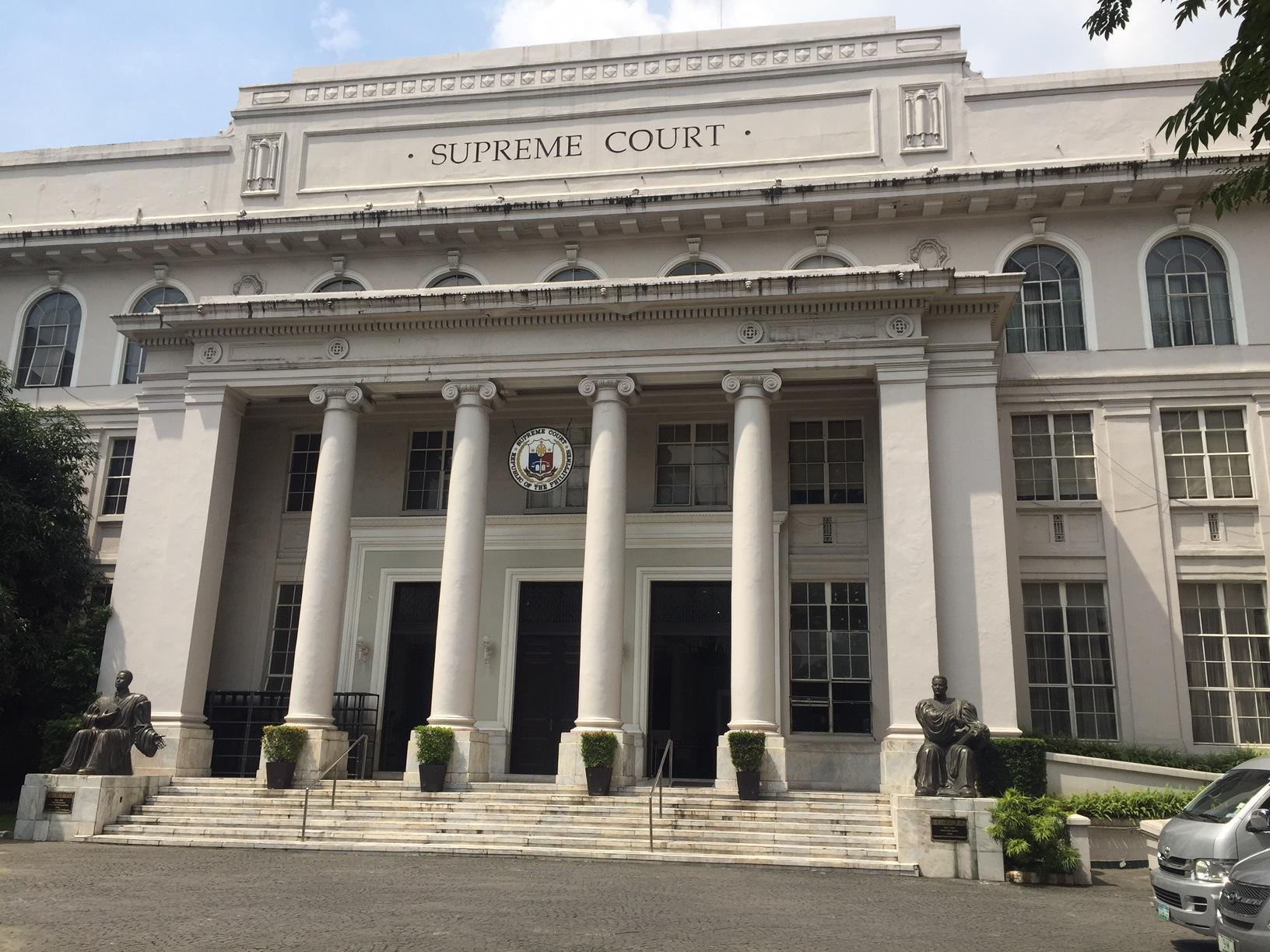
The judiciary will follow suit in implementing flexible work arrangements beginning Monday, March 9 to save energy resources amid the tensions in the Middle East, the Supreme Court (SC) said.
According to a memorandum circular dated March 8, SC employees will observe a four-day onsite work and one-day work-from-home (WFH) setup.
“Fridays shall generally be observed as a WFH day, provided that at least 25% of the employees in each office or division shall report onsite every Friday, as determined by the head of office or division, to ensure continuity of operations,” the memorandum said.
The Office of the Chief Justice, the Office of the Senior Associate Justice, the Offices of the Associate Justices, the Cash Collection and Disbursement Division of the Fiscal Management and Budget Office;
The Docket-Receiving Section of the Judicial Records Office, the Management Information Systems Office (MISO) with respect to its essential staff, and the Office of the Judiciary Marshals are excluded from this work arrangement and shall maintain the regular work arrangements.
The Court of Appeals (CA) shall also observe similar flexible work arrangements. This is provided that on Fridays, at least 25% of the employees in each office or division shall report on-site.
In addition, at least three justices comprising one division, on a rotation basis, shall be available to act on urgent matters such as petitions for extraordinary writs and petitions and motions in connection with the Anti-Money Laundering Act (AMLA).
First-and second-level courts shall also observe a four-day onsite and one-day WFH arrangement.
However, the Sandiganbayan and Court of Tax Appeals (CTA) shall continue to observe a full, five-day work on-site.
For multiple sala courts, the four-days on-site and one-day WFH arrangement shall be implemented alternately.
“Within the same week, odd-numbered branches shall initially report on-site from Monday to Thursday, with Friday designated as the WFH day, while even-numbered branches shall report on-site from Tuesday to Friday, with Monday designated as the WFH day,” the SC issuance read.
“In the following week, the schedules shall be reversed (i.e., the odd-numbered branches shall report on-site from Tuesday to Friday, with Monday as the WFH day, while the even-numbered branches shall report on-site from Monday to Thursday, with Friday as the WFH day.)”
The alternating schedule in multiple sala courts shall continue until the four-day work week is lifted, the SC memorandum circular said.
The High Court also urged on members and employees of the judiciary to implement energy conservation measures in their respective workplace.
Among the measures to be adopted include a standard thermostat setting of 24 degrees Celsius for air-conditioned facilities.
All office equipment should be turned off or placed in “sleep” mode when not in use.
Unless with special needs or pregnant, employees must minimize the use of elevators and are encouraged to use the stairs instead.
Earlier, President Ferdinand Marcos Jr. announced that starting March 9, 2026, a four-day work week will temporarily be implemented in offices under the executive branch.
Malacañang also released Memorandum Circular 114 which underscored the need to adopt strict energy conservation measures to further reduce the energy footprint of government operations and optimize the use of public resources. — JMA, GMA Integrated News

