

 GMA Brandtalk
 Tracking
 Archives

DepEd taps LGUs to help close 165,000-classroom gap
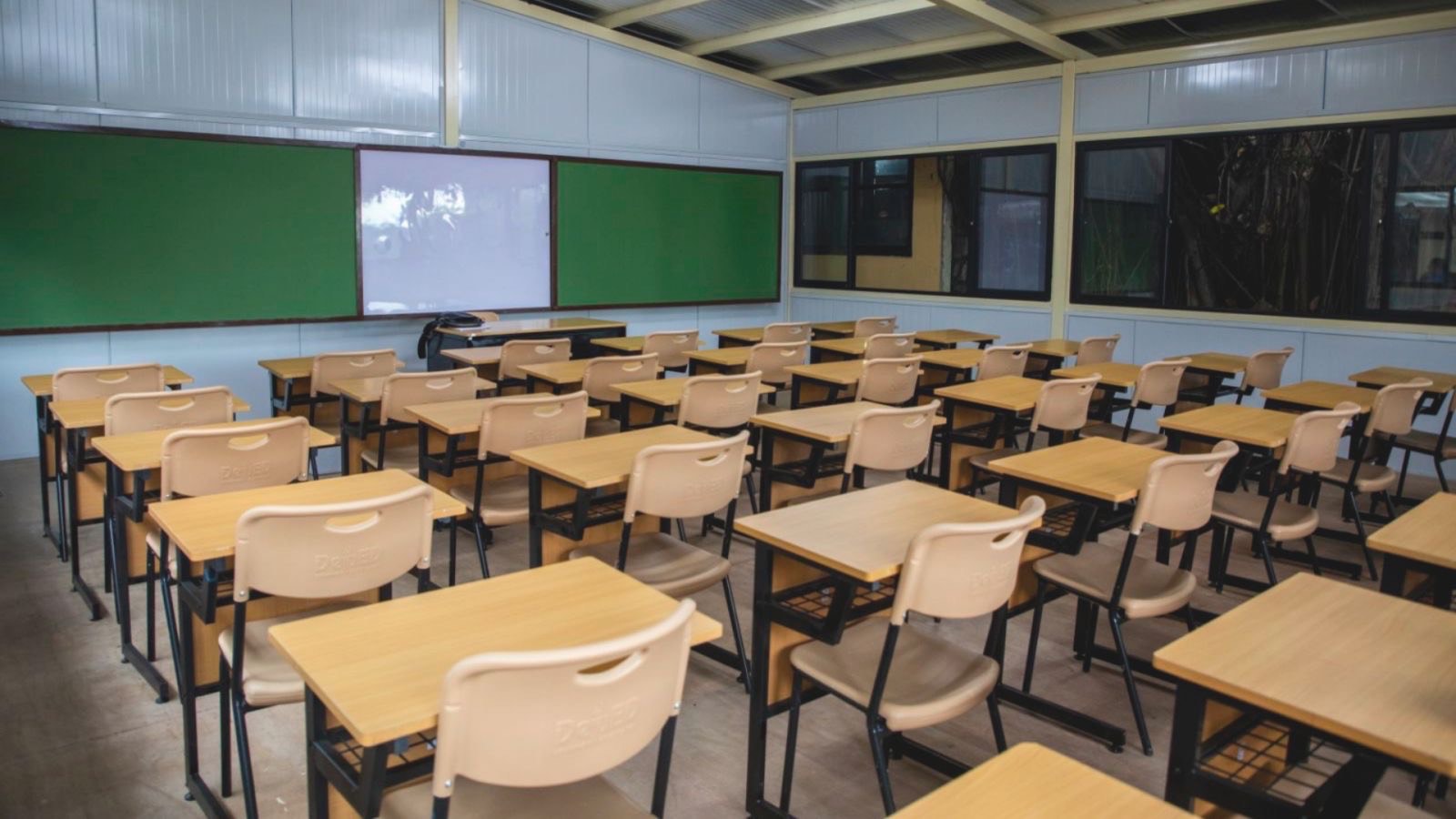
The Department of Education (DepEd) is seeking the help of local government units (LGUs) to address the country’s 165,000-classroom shortage as Education Secretary Sonny Angara urged more than 1,300 municipal mayors to accelerate school construction through faster and more flexible building programs.
Speaking at the 2026 General Assembly of the League of Municipalities of the Philippines (LMP) in Pasay City on Monday, Angara outlined a multi-pronged strategy aimed at easing classroom congestion nationwide.
“We are no longer content with the old system. We are changing the way we deliver to make it faster, more efficient, more effective, and more transparent,” Angara said.
He underscored the key role of LGUs in translating national funding into actual classrooms for students.
“Education is a shared responsibility, and our LGUs are the best-positioned partners to ensure these funds are translated into actual, usable classrooms for our learners,” he added.
Multiple construction pathways
DepEd said the strategy includes building 30,000 classrooms by 2028 through conventional procurement, while another 16,000 classrooms in high-congestion areas will be constructed through Public-Private Partnerships under the PPP for School Infrastructure Project Phase III.
To ease overcrowding in schools, the agency is also exploring the expansion of education vouchers to primary-level students and piloting a “4+1” blended learning model, which combines four days of in-person classes with one day of online learning.
DepEd is also studying the lease or acquisition of foreclosed private properties that could be converted into about 1,000 classrooms, while tapping private sector donations to establish 2,000 additional learning spaces.
Faster implementation
Under the 2026 General Appropriations Act (GAA), LGUs are now authorized to act as primary implementers of school building projects alongside the Department of Public Works and Highways (DPWH) and the Armed Forces of the Philippines (AFP) Corps of Engineers.
The setup allows mayors to identify priority sites for new classrooms or repairs to speed up project implementation.
DepEd is also promoting the use of pre-fabricated Learning Continuity Spaces, a faster and more cost-efficient alternative that was already piloted in Masbate and Davao del Norte.
It said 2,571 units are scheduled for installation this year across 1,017 municipalities.
Partnership with LGUs
During the assembly, DepEd and the LMP signed a memorandum of understanding (MOU) to formalize cooperation in accelerating classroom construction nationwide.
Angara also encouraged municipalities to pool their Special Education Funds (SEF) to finance larger initiatives such as centralized kitchens for school feeding programs.
“We are not just sharing resources – we are actualizing President Bongbong Marcos Jr.’s vision to modernize our classrooms through innovative funding,” Angara said. — JMA, GMA Integrated News

