

 GMA Brandtalk
 Tracking
 Archives

Cardinal David asks, Is PH tax system fair, serve human dignity?
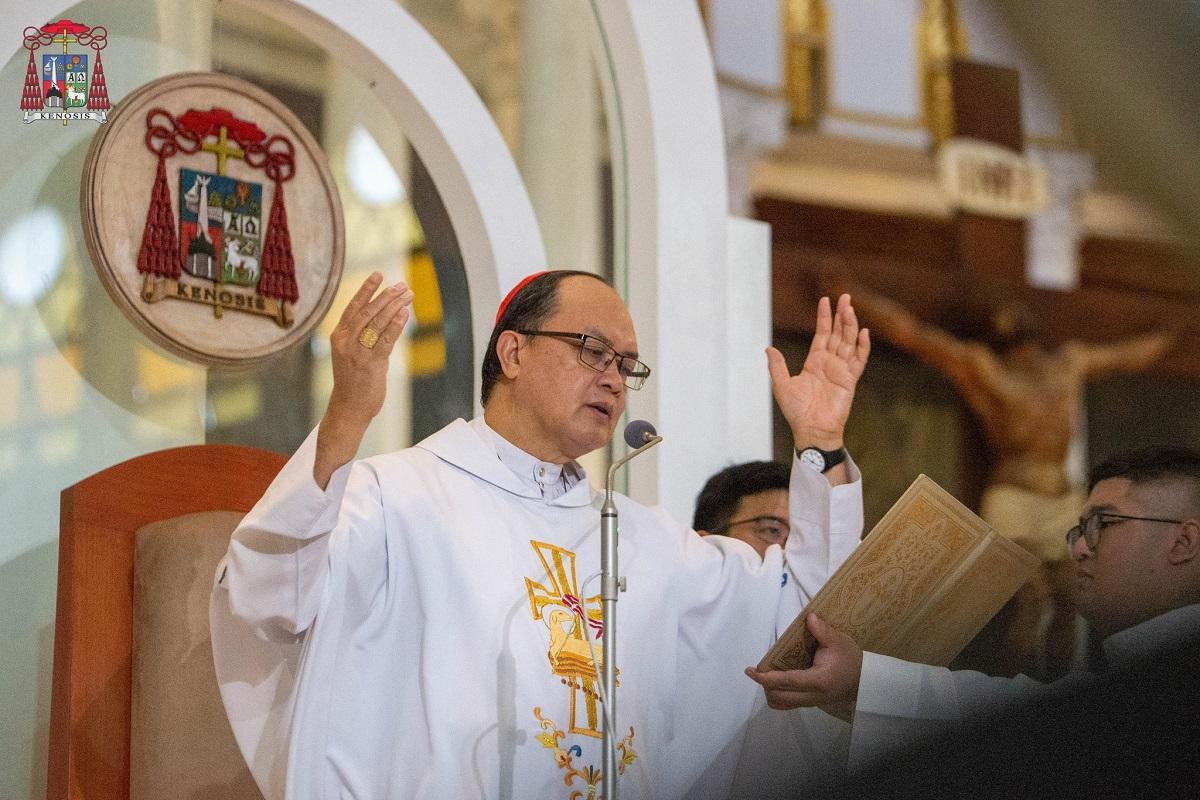
Kalookan Bishop Pablo Virgilio Cardinal David on Wednesday said the Philippine government should ensure that the burden of the country’s tax system is distributed fairly among taxpayers and used for the common good as the armed conflict in the Middle East affect the livelihood of thousands of overseas Filipino workers (OFWs).
"Many are caregivers, construction workers, domestic helpers, seafarers — people who left home precisely so their families could survive and their children could go to school," said Cardinal David in a social media post.
"If the conflict widens, jobs may be disrupted, contracts may end abruptly, and remittances—the lifeline of many Filipino families and a major pillar of our national economy—may suddenly shrink," he said, noting that prices of fuel and food are expected to increase.
Reflecting on Catholic Social Teaching, David notes that "the universal destination of goods reminds us that economic systems exist to serve the common good, not merely markets."
"Taxes are meant to pool resources so that society can provide education, health care, infrastructure, and protection for the vulnerable. But when vast public funds are lost to corruption, the moral foundation of taxation itself is shaken," he said.
On the "preferential option for the poor. A tax system must never end up disproportionately burdening those who have the least."
“When rising fuel costs, higher electricity prices, and everyday consumption taxes weigh heavily on families who are already struggling, we must pause and ask whether our fiscal policies truly reflect compassion and justice,” David said.
On solidarity, the prelate stated that “Those who have greater resources—large corporations, billionaires, and those who benefit most from the economy—have a greater capacity to contribute to the common good. In times of crisis, solidarity asks more from those who have more.
"A healthy society requires both a responsible government and an active citizenry," said David on "subsidiarity."
“The state has the responsibility to ensure fairness, regulate markets where necessary, and protect the vulnerable, while also allowing private initiative and entrepreneurship to flourish,” he added.
On global conflict, rising prices, the scandal of corruption, the OFWs and their families whose lives are disrupted by the Middle East conflict, David posts that there are several conditions to ensure the implementation of a just tax system that would benefit all Filipinos.
The cardinal pointed out that the government must be transparent in spending public funds and protect them from corruption and misuse; the burden of taxation does not fall disproportionately on the poor and middle class; those with greater economic power contribute fairly; and government resources are used transparently for social services, food security, and genuine development.
“Taxes are meant to pool resources so that society can provide education, health care, infrastructure, and protection for the vulnerable. But when vast public funds are lost to corruption, the moral foundation of taxation itself is shaken,” David said.
The cardinal reminded the public that taxes are not just about numbers and funds, but also about “trust, justice, and our shared responsibility for one another."
Conflict in the Middle East escalated after the United States and Israel launched attacks against Iran on February 28.
This prompted some overseas Filipino workers in the Middle East to return home, with the latest group of 63 Filipino repatriates arriving from Oman and Qatar on Wednesday.
The Middle East conflict has also led to a big time fuel price hike in the country, with staggered increases set for this week. — BAP, GMA Integrated News

