

 GMA Brandtalk
 Tracking
 Archives

DBM denies delaying fund releases on infra projects amid NUP concerns
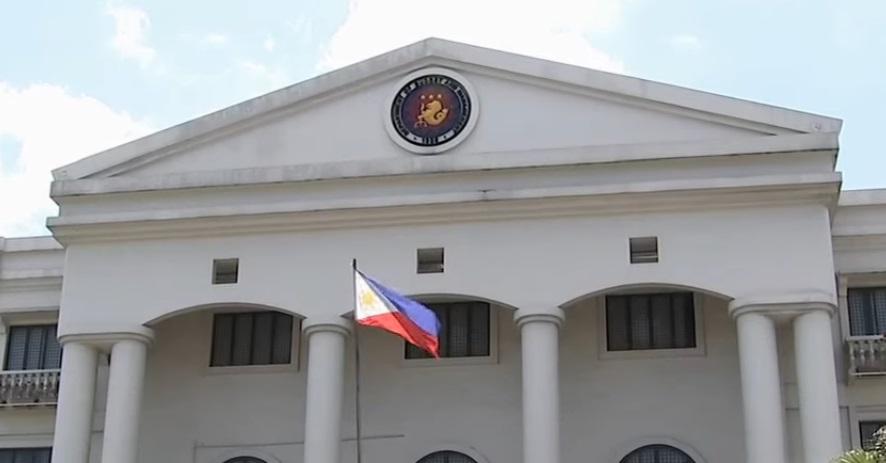
The Department of Budget and Management (DBM) on Tuesday issued a clarification on the release of funds for infrastructure projects in the respective districts of lawmakers amid National Union Party’s dissatisfaction with Speaker Faustino “Bojie” Dy III due to alleged delay on release of local budgets.
In a statement, the DBM said that while it respects the oversight role of Congress, “it is important to clarify several factual and legal points to ensure that the public is properly informed on how the national budget is implemented.”
The Budget Department made the statement after NUP chairman Deputy Speaker Ronaldo Puno of Antipolo City said the party is considering leaving the over 200-strong majority bloc in the House of Representatives as Dy is yet to act on the non-release of infrastructure and social protection funds for their respective districts under the national budget, saying all of such releases are tagged for later release.
Puno, in particular, said that lawmakers were told that “projects should be bid out first and if there is a winning bid, then that is the time for the DBM to issue a SARO (Special Allotment Release Order) to the corresponding district and the regional director [of the Department of Public Works and Highways].”
With this, the DBM said that it does not arbitrarily delay the release of funds, nor does it create policies outside the law.
“All budget releases are governed strictly by the 2026 General Appropriations Act (GAA)—a law passed by Congress itself and approved by the President,” it said.
“For several locally funded infrastructure (LFI) projects under the Department of Public Works and Highways (DPWH), Congress introduced amendments—including adjustments in project descriptions, station limits, and geographic coordinates—which resulted in modifications to projects originally proposed in the National Expenditure Program (NEP) submitted by the Executive,” it added.
The Budget Department stressed that Congress Introduced Changes and Adjustments (CICA) require additional validation and clearance from the Office of the President (OP) prior to the release of funds as provided in the President’s Veto Message for the Fiscal Year 2026 General Appropriations Act (GAA).
Article VI of the President’s Veto Message states that “the increases in appropriations and new budgetary items introduced by the Congress in this Budget shall be subject to the national government’s cash programming, observance of prudent fiscal management, applicable budget execution rules and procedures, and approval by the President based on the programmed priorities of the government…. Considering that such increases in appropriations and new budgetary items will have corresponding effects on the outputs and outcomes of the agencies concerned, the DBM shall… require the submission of their revised performance targets.”
The DBM explained that without the Congress-introduced amendments, the appropriations could have been covered under the GAA as the Allotment Order (AO), which allows the comprehensive release of allotments at the start of the fiscal year.
“But since the projects were modified during the legislative process, the appropriations were placed under For Issuance of SARO (FISARO) or conditional release, consistent with the President’s Veto Message and established budget execution safeguards,” it said.
“Under this arrangement, the implementing agency must first submit a formal request to DBM for the release of funds, supported by the required documentation and project prioritization. Only after these conditions are satisfied—and where applicable, subject to the approval of the Office of the President—may the DBM issue a Special Allotment Release Order (SARO),” it added.
The DBM said that it is “inaccurate” to say that it requires projects to be bid out first before deciding whether funds will be released.
“What the DBM advises agencies is to undertake early procurement activities short of award for programs, activities, and projects included in the NEP,” the Budget Department said.
“This allows implementing agencies to prepare procurement processes in advance and accelerate project implementation, bit is undertaken short of award because the NEP remains subject to the legislative process, during which project parameters may still be adjusted,: it added.
The DBM further said that it cannot release funds for a project that has not been requested by the implementing agency.
“Budget releases are triggered by official requests from implementing agencies, not by unilateral action on the part of DBM,” it said.
“The DBM does not delay projects. It only ensures that public funds are released lawfully and in accordance with the budget approved by Congress and signed by the President,” it added.
The Budget Department emphasized that its “mandate is not political but institutional.”
The DBM said its responsibility is to protect the integrity of the national budget, safeguard taxpayer funds, and ensure that government programs are implemented strictly within the parameters authorized by law.
“The DBM remains committed to working with Congress and implementing agencies to ensure the timely, lawful, and responsible implementation of infrastructure programs for the benefit of the Filipino people,” it said. —AOL, GMA Integrated News

