

 GMA Brandtalk
 Tracking
 Archives

Surging oil prices: What the gov't has done so far?
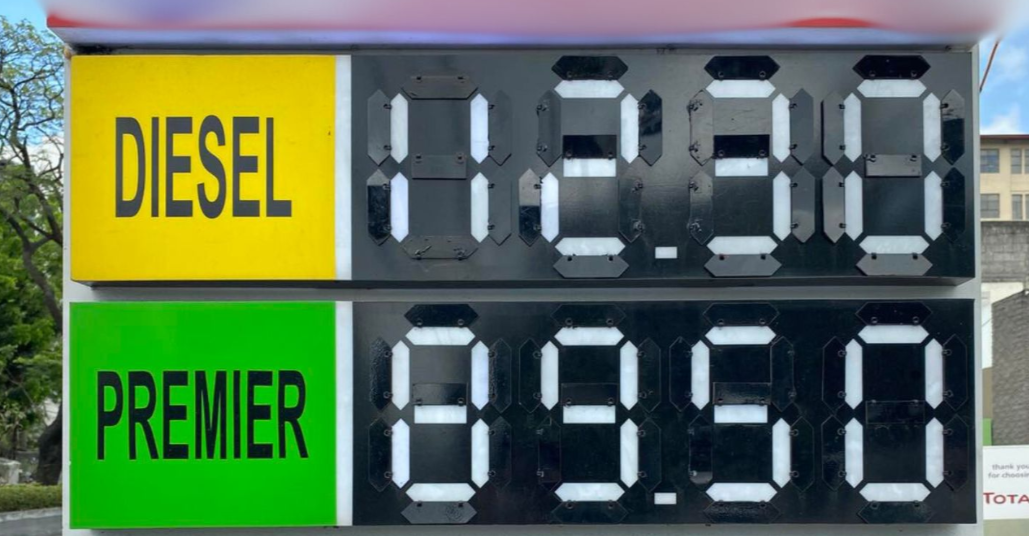
The entire world is gearing up to mitigate the impact of the ongoing conflict in the Middle East to the oil supply.
Recently, Iran's military command warned that oil prices may reach as high as USD$200 per barrel. It has effectively shut Strait of Hormuz, through which 20% of the world's oil and liquefied natural gas pass.
In the Philippines, fuel prices continue to increase, some as high as P100 per liter, as oil companies implement staggered adjustments.
Cash assistance
First to feel the effect of fuel price hikes is the transportation sector.
To ease the burden, President Ferdinand ''Bongbong'' Marcos Jr. ordered the immediate distribution of P5,000 fuel subsidy for public transport drivers.
The Department of Transportation and the Department of Social Welfare and Development started the cash payout Tuesday with the over 139,000 tricycle drivers in Metro Manila as the first recipients.
Following the initial release of the subsidy, Marcos also announced that cash and fuel subsidies will be provided to other PUV drivers, farmers, and fisherfolk.
The President said P3,000 in fuel subsidy will be released to 26,000 farmers. On Thursday, March 19, P3,000 in fuel subsidy will be distributed to 26,000 fisherfolk.
He further said the Department of Agriculture will do its best to distribute P2,000 to farmers and fishers from the Presidential Assistance for farmers and Fisherfolk Program which can be used for their livelihood.
Fare increase
The Land Transportation Franchising and Regulatory Board also approved fare hikes of P1 to as much as P40 in all public utility vehicles, except regular taxis and motorcycle taxis, effective March 19.
The approved rates adjustments are as follows:
- Tradition PUJ - P1 increase on base fare for the first four kilometers, bringing the minimum to P14 from P13, plus 20 centavos hike per succeeding kilometer to a rate of P2 from P1.80 per kilometer charge
- Modern PUJ - P2 hike on minimum base fare to P17 from P15, plus 20 centavos increase for succeeding kilometers to a rate of P2.40 from P2.20 per kilometer travel charge
- Metro/City bus (ordinary) - P2 hike for first five kilometers to base fare of P15 from P13; plus 24 centavos increase in per succeeding kilometer charge to P2.49 from P2.25
- Metro/City bus (aircon) - P3 increase on base fare to P18 from P15; plus 33 centavos hike in per succeeding kilometer charge to P2.98 from P2.65
- Provincial bus (ordinary) - P1 hike on minimum fare to P12 from P11; plus 30 centavos increase in succeeding per kilometer charge to P2.20 from P1.90
- Provincial bus (aircon) - 35 centavos increase in succeeding per kilometer charge to P2.45 from P2.10
- Provincial bus (deluxe) - 35 centavos hike in per kilometer charge to P2.60 from P2.25
- Provincial bus (super deluxe) - 35 centavos increase in per kilometer charge to P2.70 from P2.35
- Provincial bus (luxury) - 45 increase centavos per kilometer charge to P3.35 from P2.90
- Airport taxi - P40 increase on flagdown rate to P115 from P75
- TNVS - (Sedan) - P20 hike on base fare to P65 from P45
- TNVS (AUV/SUV) - P20 increase on base fare to P55 from P35
- TNVS (Premium) - P20 increase on base fare to P165 from P145
- P2P - 15% increase based on existing fare on the existing fare on the route
LTFRB chairman Assistant Secretary Vigor Mendoza II said increasing the fare was a “balancing act” that put premium on the sustainability of public utility vehicles amid increase in the prices of fuel, particularly diesel, while protecting the interest of the general commuting public
Other measuresTo save on the use of fuel, different government agencies implemented a four-day work week.
Marcos also said the Civil Aviation Authority of the Philippines (CAAP) would cut its passenger service charge, landing, parking, and other fees to help bring down the expenses of airlines
He added the Civil Aeronautics Board will shorten its review of fuel surcharge from one month to 15 days. He said this was to ensure the quick adjustment of fares whenever the cost of jet fuel changes.
The President also instructed government agencies to review their regulations in giving licenses, permits, clearances, and certifications.
Fuel excise tax
Marcos has certified as urgent the bill granting him emergency powers to suspend or cut excise tax on fuel
The House of Representatives approved the bill third and final reading with 248 yes votes, three no votes and zero abstentions.
Should it be signed into law, House Bill 8418 will allow Marcos emergency powers for six months at a maximum as long as the price of crude oil is at a minimum of USD$80 per barrel.
Such powers will be effective until December 31, 2028.
The President also certified as urgent a measure seeking to amend the Biofuels Act of 2006 which mandates the use of locally sourced bioethanol in fuel blends to reduce the country’s dependence on imported fuel products.
Marcos had also called on local government units (LGUs) to stop collecting “pass-through” fees on vehicles delivering goods through their areas. He said the requirement of such fees only added to the increasing cost of goods in the country.
Meanwhile, in anticipation of the travel exodus during the Holy Week, the DOTr said that they have began discussions with airlines on how to avoid extremely high prices for tickets.
Among discussed moves were to lower other airport fees, such as landing or take-off fees, to offset the increased fuel price.
The Department of Foreign Affairs also said that it is now in discussion with the Association of Southeast Asian Nations (ASEAN) regarding possible fuel-sharing mechanisms or an energy-sharing system.
DFA said that ASEAN can trigger emergency measures to extend assistance if any member states’ stockpile reaches 10% or less.
Oil Deregulation
Amid the ongoing crisis, the Philippine government is unable to impose caps on oil and fuel due to the existence of the Oil Deregulation Law.
Under Republic Act No. 8479 or the Downstream Oil Industry Deregulation Act of 1998, oil firms were legally allowed to set their own prices for oil according to the global market.
Energy Secretary Sharon Garin said that there was no way for them to implement a ceiling on the prices unless they would be granted emergency powers or be granted an amendment on the law allowing such changes.
She also noted that an amendment would be helpful at a long run.
Malacañang said it is up to Congress to decide whether there is a need to repeal the Oil Deregulation Law. —AOL, GMA Integrated News

