

 GMA Brandtalk
 Tracking
 Archives

How dates for Easter Sunday and Holy Week are determined each year
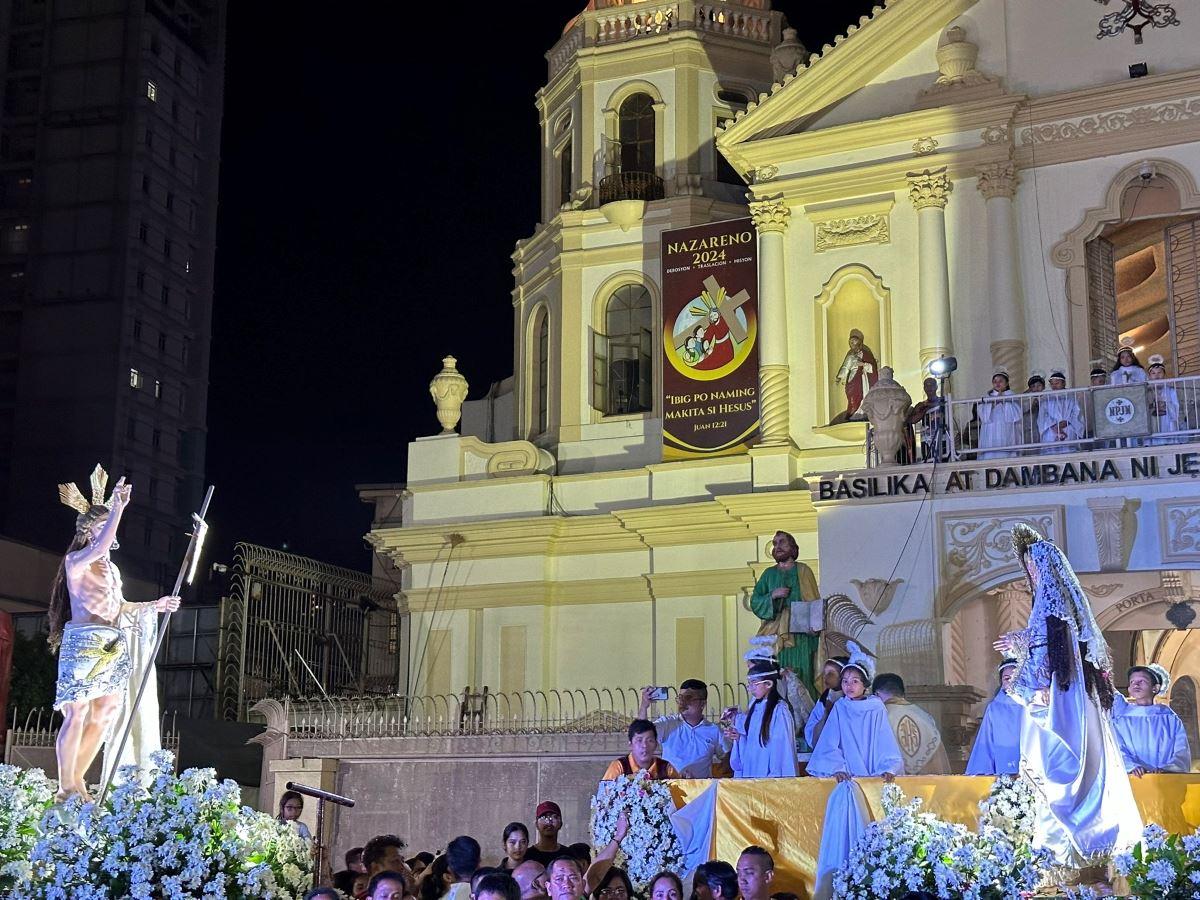
The Holy Week is a sacred time for Christians to remember and reflect on the life, death, and resurrection of Jesus Christ.
In the Philippines, schools and Congress schedule their respective breaks on holidays, marked by prayers and church activities, as well as reconnecting with loved ones.
For a meaningful Holy Week, Fr. Earl Gabriel Tan, a priest collaborator at Imus's Diocesan Lay Formation Office, urged the faithful to take advantage of the declaration of holidays to connect with God by attending Eucharistic celebrations.
“It's a wonderful time for us to renew our faith. So, it's not the time to go to beaches. It's not the time to party because there's no work,” said Tan, who is studying the Dogmatic Sacramental Theology Licentiate program in Rome.
“The purpose of declaring these days holidays is because we need to go to church to renew our lives. We're fortunate that it's a holiday in the Philippines. In other places, it's not a holiday,” he added.
But with no fixed dates like Christmas, how are the dates of the Holy Week and Easter Sunday–the day Christ's resurrection is celebrated–determined every year?
The celebration of Easter begins on the first Sunday after the Paschal Full Moon.
It is the first full moon on or after the vernal equinox, the astronomical start of spring when the sun crosses the celestial equator. It usually falls on March 19, 20, or 21.
Tan said this phenomenon causes Easter to start between March 21 and April 25.
The vernal equinox or spring equinox in 2026 was on March 20. And the Paschal Full Moon will be seen on April 2, a Thursday. Thus, Easter Sunday this year is on April 5.
“Yung theological significance kasi ng spring. 'Di ba sa spring, diyan nagkakaroon ulit lahat ng buhay (the theological significance of spring is that it is a time when life is renewed),” Tan told GMA News Online.
The beginning of Easter is also tied to Passover, the festival commemorating the Israelites’ liberation from Egypt, which falls on the full moon in the constellation Aries.
“Tying it to Jesus' resurrection after the Passover's full moon, it's always on a Sunday,” Tan said.
The date of Easter Sunday determines the dates of the Holy Week, from Palm Sunday to Black Saturday.
“Nakadepende ang Lent sa celebration ng Easter. Ang Lent ay preparation for Easter. So nakadepende 'yung preparation mo doon sa pinaghahandaan mo,” Tan said.
(The days of Lent depend on the celebration of Easter. Lent is a preparation for Easter, so your preparation depends on what you are preparing for.)
Tan said the Church’s movable feasts, like Pentecost, the Ascension, and Corpus Christi, also depend on the date of Easter Sunday.
About 1,700 years ago, the celebration of Easter was standardized during the First Council of Nicaea, or the council of Christian bishops.
The Easter Season in the Catholic Church concludes after 50 days and is marked by Pentecost Sunday.
Pentecost Sunday commemorates the descent of the Holy Spirit upon the Apostles, and is often considered the birth of the Catholic Church.
This year, Palm Sunday will be on March 29 and Black Saturday will be on April 4.
Under Proclamation No. 1006, which sets the holidays in 2026, Maundy Thursday on April 2, and Good Friday on April 3 are declared regular holidays.
Aside from prayer and fasting, Catholics are also called to practice abstinence.
However, Tan explained, it is not limited to abstaining from meat but also includes refraining from indulgences like expensive food, so the money saved can be used for almsgiving.
“So you don't just abstain from doing things or from eating things. Pero 'yung masi-save mo, ay, 'yung naka-save ako, at least may pambili ako ng bagong bag or may panggala ako sa Boracay. Hindi, yung masi-save mo, hindi siya maiiwan sa'yo," Tan said.
(So it’s not just about abstaining from doing or eating things. But whatever you save—like money you might have spent on a new bag or a trip to Boracay—shouldn’t stay with you; it’s meant to be shared.)
As Lent is a season in which Catholics are called to renew their faith through prayer, fasting, and almsgiving, Tan said it is also inviting the faithful to reflect on their actions.
“Those things that we practice externally invite us to really internalize. So more than the traditions like the procession, the palms, the other festivities inserted, it's really to look at ourselves with the love of God offered to us in the person of Jesus Christ,” Tan said.
“And to renew us, to really renew us despite our faults, our sinfulness, to renew us and really fall in love with Jesus who loved us first,” he added. —NB/RF, GMA Integrated News

