

 GMA Brandtalk
 Tracking
 Archives

Recto: Crisis panel boosts gov’t response to oil price shocks
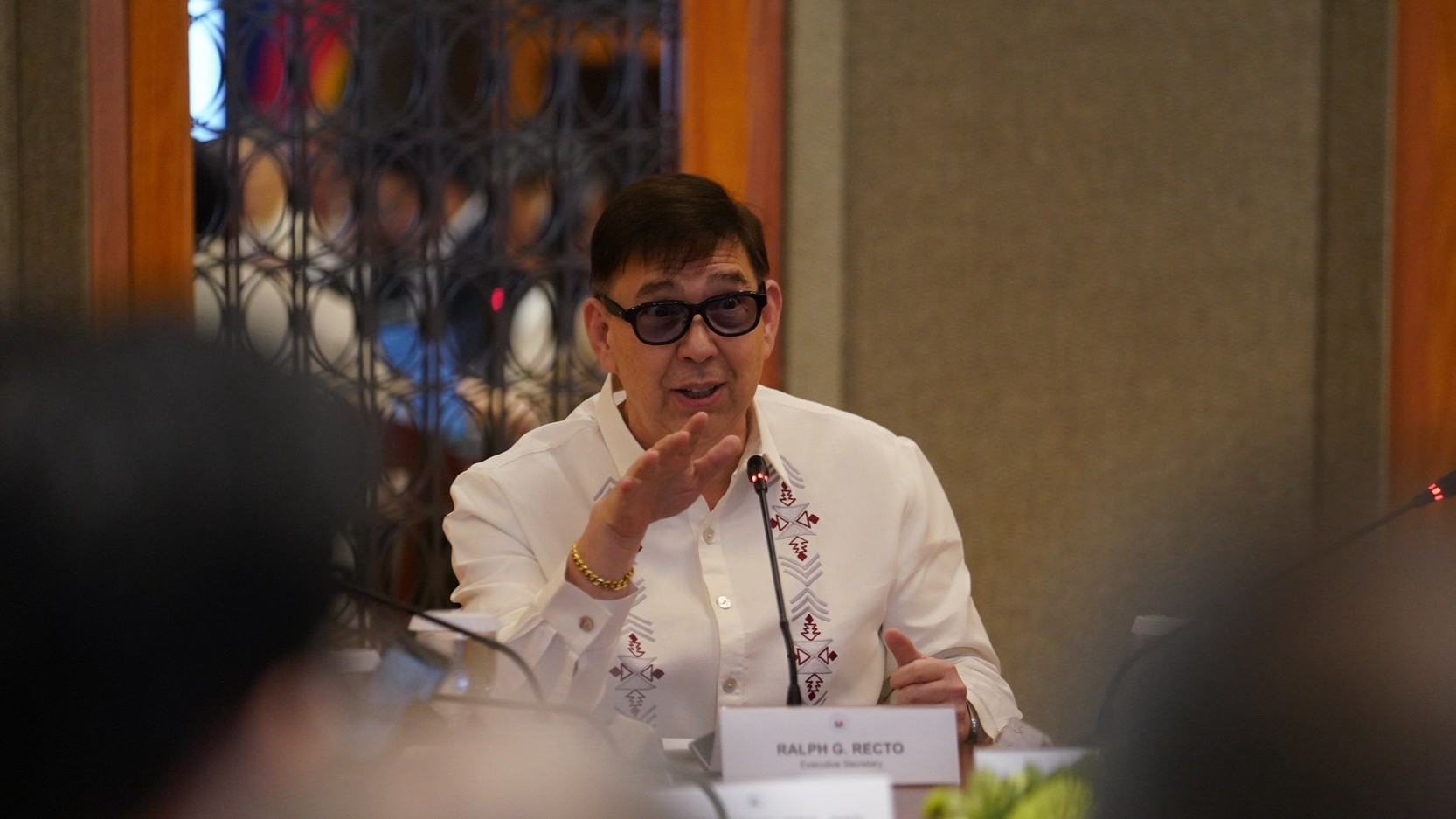
The crisis committee created by President Ferdinand Marcos, Jr. is meant to sustain the well-documented government response to the rising oil prices amid the conflict in the Middle East, Executive Secretary Ralph Recto said on Tuesday.
In a statement, Recto was referring to the inter-agency committee to be created by a presidential order “to institute a division of labor which scales up work to agencies with clear assignments.”
A key part of the response, Recto said, is making available tens of billions of pesos for aid that will cushion the impact of rising oil prices on vulnerable groups.
“The crisis committee President Marcos ordered created does not start, but sustains and strengthens the multiple mitigation measures launched by the administration since Day One of the Middle East conflict,” he said.
“The government immediately scrambled all resources to shield the nation from the immediate fallout. At may resibo ang aming tugon (And our response has receipts). Financial aid was and continues to be given. Fuel subsidy being distributed to tens of thousands of drivers. OFWs have been flown out of harm’s way aboard chartered flights. Energy conservation measures have been put in place,” Recto added.
He added that these government responses, such as finding and firming up fuel supply agreements, were conducted without publicity.
“Pati toll fee binawasan. At ang airport passenger fee at plane landing fees tinapyasan (Even toll fees were reduced, the airport passenger fee and plane landing fees were slashed). And we are farming out to the countryside soon to help farmers and fishermen with the gas bill of their tractors and boats,” Recto said.
“We acted at once, instead of defaulting to the old bureaucratic script of loudly convening a committee. So the government response commenced hours after the bombing in Iran began. The formation of the committee merely consolidates all the efforts that have been undertaken,” he added.
The next logical option, he said, is to create the administrative structure to better handle a possible long-drawn-out crisis concerning the war in the Middle East, making the creation of the crisis committee crucial.
“Even if the war ends tomorrow, even if the actors come to their senses that their missile duel should stop, normalization will not instantaneously follow. The damage has to be repaired. The road to normalcy will still be challenging. Oil and gas facilities destroyed will leave a gaping hole in global supply that will keep fuel prices elevated,” Recto said.
“This is the same sense of urgency that justifies the creation of a committee that will address a still evolving situation,” he added.
On Monday, Presidential Communications Office Undersecretary and Palace press officer Claire Castro said Marcos already ordered the creation of a crisis committee amid the recent spikes in fuel prices due to the Middle East conflict.
The announcement came after Castro said there was no oil crisis, in the sense that the Philippines has sufficient supplies for now, but there may be a price disruption amid recent oil price surges. — JMA, GMA Integrated News

