

 GMA Brandtalk
 Tracking
 Archives

EXPLAINER: What is an effusive eruption?
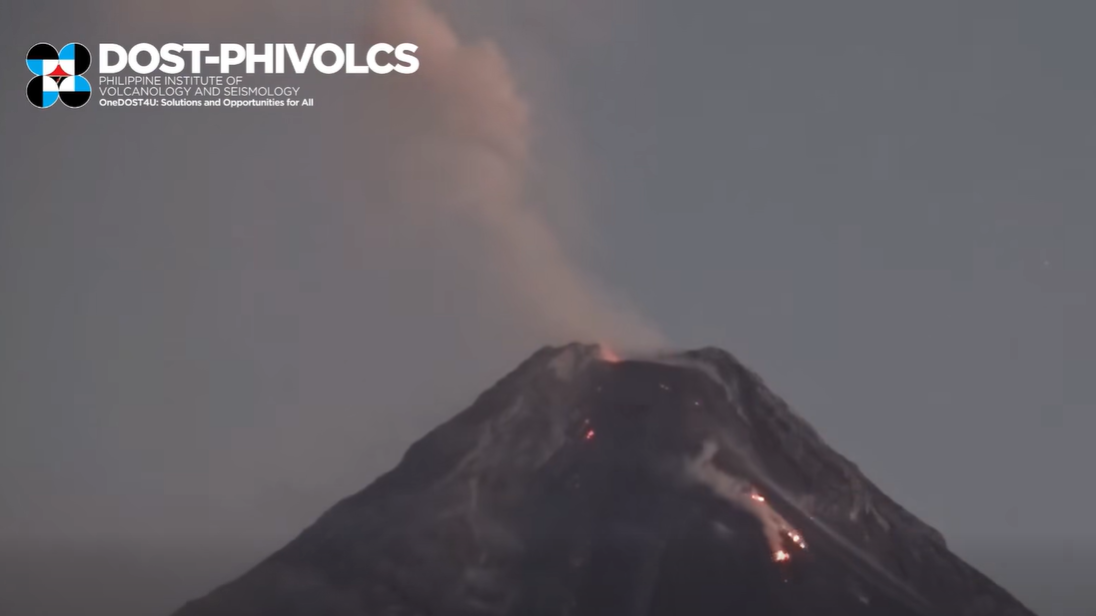
The ongoing activity at Mayon Volcano, such as lava fountains and sustained flows, has been classified by state volcanologists as an effusive eruption.
But what does that mean?
According to the Philippine Institute of Volcanology and Seismology (PHIVOLCS), an effusive eruption occurs when magma reaches the surface and flows out of the volcano as lava, rather than being blasted violently into the air.
In its simplest form, PHIVOLCS describes it as the outpouring of lava from a crater or fissure.
Unlike explosive eruptions, where ash columns, gases, and volcanic rocks are ejected forcefully, effusive eruptions are "generally less violent but more sustained."
These are typically characterized by lava flows moving down the slopes, lava fountains near the crater, as well as rockfalls and glowing debris.
This has been evident in recent observations of Mayon Volcano, including footage of lava fountaining and incandescent flows on its 79th day of activity.
PHIVOLCS has said Mayon’s current unrest is magmatic in nature, meaning molten rock has risen from beneath the volcano and reached the surface.
This results in continuous or intermittent lava effusion, which feeds the ongoing flows and occasional lava fountaining events.
Such activity is typical of stratovolcanoes like Mayon, whose relatively viscous magma can produce both effusive and explosive eruptions depending on pressure buildup.
Despite being less explosive, PHIVOLCS warns that effusive eruptions remain hazardous.
Lava flows may appear slow-moving, but they can:
- Trigger pyroclastic density currents (PDCs) when lava collapses
- Generate rockfalls and volcanic debris
- Emit harmful volcanic gases
Authorities also caution that conditions can change, and an effusive eruption may escalate into a more explosive phase.
How long can it last?
Effusive eruptions can last for weeks or even months, depending on the supply of magma beneath the volcano.
This explains the prolonged activity at Mayon, which has persisted for several weeks with sustained lava emission.
PHIVOLCS continues to closely monitor Mayon under an elevated alert status, indicating that magma is present and eruptive activity is ongoing.
Residents within danger zones are advised to remain vigilant as hazards such as PDCs and lava flows can occur without warning. —VAL, GMA Integrated News

