

 GMA Brandtalk
 Tracking
 Archives

Marcos declares state of national energy emergency
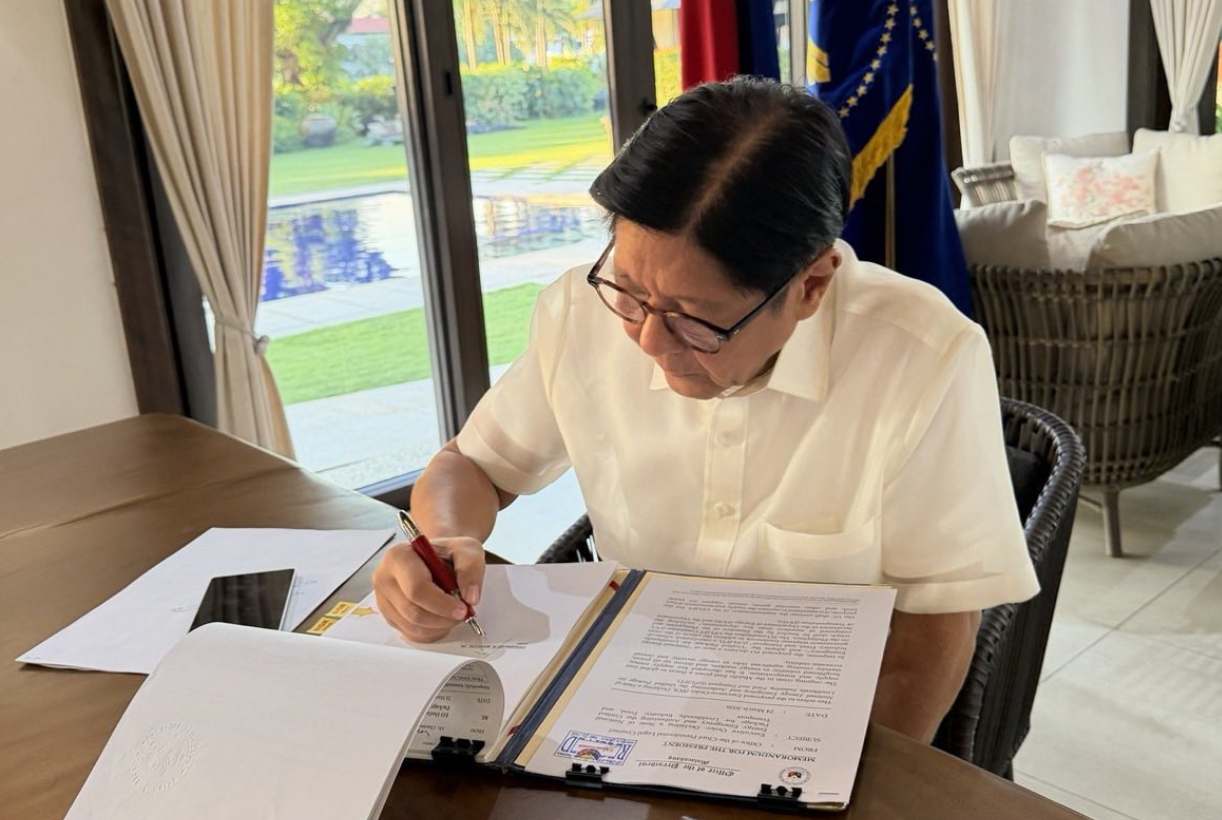
President Ferdinand R. Marcos Jr. on Tuesday declared a state of national energy emergency and ordered the adoption of a Unified Package for Livelihoods, Industry, Food, and Transport (UPLIFT) for affected sectors.
Marcos signed Executive Order No. 110, declaring a state of national energy emergency and adopting UPLIFT, thereby activating a whole-of-government response to ensure energy supply stability, support key sectors such as transport, agriculture, and MSMEs, and protect Filipinos amid global oil supply disruptions caused by the Middle East conflict.
"A state of national energy emergency is hereby declared in light of the ongoing conflict in the Middle East, and the resulting imminent danger posed upon the availability and stability of the country's energy supply," Marcos said in his executive order.
Marcos signed the EO as diesel prices are expected to spike to more than P130 per liter, while gasoline may rise above P100 per liter this week as the series of mega oil price hikes due to the Middle East conflict enters its third week.
Socioeconomic Planning Secretary Arsenio Balisacan also told a Senate committee that the inflation rate could shoot up to double-digit levels with diesel prices seen rising by 176% to P162.50 per liter in May under the “most severe scenario” of crude hitting $200 per barrel.
UPLIFT Committee
The EO said UPLIFT provides for the government's coordinated, whole-of-government response framework, consisting of energy supply management measures to be implemented by the Department of Energy and its attached agencies, and complementary measures to support consumers and affected sectors to be implemented by concerned agencies.
The UPLIFT Committee, which will oversee its implementation, is made up of the following:
- President of the Philippines
- Executive Secretary
- Secretary, Department of Energy (DOE)
- Secretary, Department of Transportation (DOTr)
- Secretary, Department of Social Welfare and Development (DSWD)
- Secretary, Department of Agriculture (DA)
- Secretary, Department of Finance (DOF)
- Secretary, Department of Economy, Planning, and Development (DEPDev)
- Secretary, Department of Budget and Management (DBM)
The DEPDev shall serve as the Secretariat of the Committee and provide the necessary technical and administrative support.
Committee duties
The UPLIFT Committee shall perform the following functions:
- Monitor and ensure the continued and orderly movement, supply, distribution, and availability of fuel, food, medicines, agricultural products, and other essential goods;
- Ensure the continuity of the operation of public transportation, public services, public utilities, healthcare facilities, and other critical establishments and infrastructure;
- Safeguard economic stability, while protecting vulnerable sectors from adverse impacts and severe disruptions caused by the ongoing crisis in the Middle East;
- Ensure the timely, efficient, unhampered delivery of public services, including accelerating and streamlining all processes for new and pending applications or renewals of permits, licenses, clearances, certifications, or authorizations;
- Formulate longer-term demand-side solutions and strategies to decrease consumption of petroleum products across residential, commercial, industrial, and public utility sectors, including accelerating the transition to renewable energy through the use of electric vehicles in mass transport, integration of renewable energy in agriculture, logistics, and manufacturing, development of active transport infrastructure, and supporting behavioral change through public awareness campaigns;
- Constitute sub-committees as may be necessary, and invite other departments, agencies, government-owned or -controlled corporations (GOCCs), government financial institutions, and relevant stakeholders to support the effective implementation of this Order;
- Convene as may be necessary to monitor developments and coordinate implementation of UPLIFT;
- Obtain such reports from concerned agencies as may be necessary, and submit consolidated reports to the President, to facilitate effective monitoring, coordination, and oversight of the implementation of UPLIFT; and
- Perform such other functions as may be necessary or incidental to its purpose, or as may be directed by the President.
Read: Crude Reality: How Middle East tensions drove up fuel prices in PH gas stations
Read: What is the Oil Deregulation Law?
Oil supply stability
EO 110 directed and authorized the DOE "to take appropriate measures to safeguard the stability and adequacy of the country's energy supply and mitigate the adverse effects of disruptions in global energy supply markets."
The DOTr is instructed to provide measures to mitigate the impact on the transport sector and the commuting public. These include:
- Support for the public transport sector through complementary transport assistance programs, such as, but not limited to, fuel subsidy allocations and commuter fare subsidies;
- Expand and improve public transport services, including through the implementation of the Libreng Sakay Program, the extension of operating hours of the Light Rail Transit and Metro Rail Transit systems, the establishment of priority transport lanes in coordination with relevant local government units (LGUs) and
- agencies, and the adoption of such measures to reduce dependence on petroleum products; and
- Review and implement appropriate measures to reduce transport costs, such as the temporary reduction, suspension, or deferral of toll charges, aviation charges, landing fees, and other similar assessments, in coordination with the Land Transportation Franchising and Regulatory Board, Civil Aviation Authority of the Philippines, toll operators, and other relevant government agencies or private entities.
AICS, support for MSMEs
Marcos ordered the DSWD to expedite the release of assistance under the Assistance to Individuals in Crisis Situations (AICS) and provide appropriate social welfare and livelihood support to affected sectors, including but not limited to transport workers, farmers, fisherfolk, displaced workers, repatriated Overseas Filipino Workers (OFWs), and other vulnerable groups through the sustainable livelihood program.
The Department of Trade and Industry (DTI) is told to monitor and, when warranted, implement remedies to address excessive or unreasonable price increases on necessities and prime commodities.
"It shall likewise implement support programs for micro, small, and medium enterprises (MSMEs) and promote the adoption and use of electric vehicles, renewable energy, and other energy-efficient solutions in the transportation, logistics, and manufacturing sectors to reduce dependence on petroleum products," the EO said.
The DA is directed to monitor and ensure the adequate supply of agricultural inputs and food products and undertake the necessary measures to maintain their availability at the lowest possible cost.
"When warranted, the DA may procure fertilizer and other essential agricultural inputs from available sources to support food security and protect agricultural livelihoods," the EO said.
"The DA shall likewise implement assistance programs for farmers and fisherfolk, including the release of funds under the Presidential Assistance for Farmers and Fisherfolk (PAFF) program and the utilization of the Quick Response Fund to provide appropriate support to affected beneficiaries," it added. –NB, GMA Integrated News

