

 GMA Brandtalk
 Tracking
 Archives

PH says talks with China for joint oil, gas exploration 'may be forthcoming'
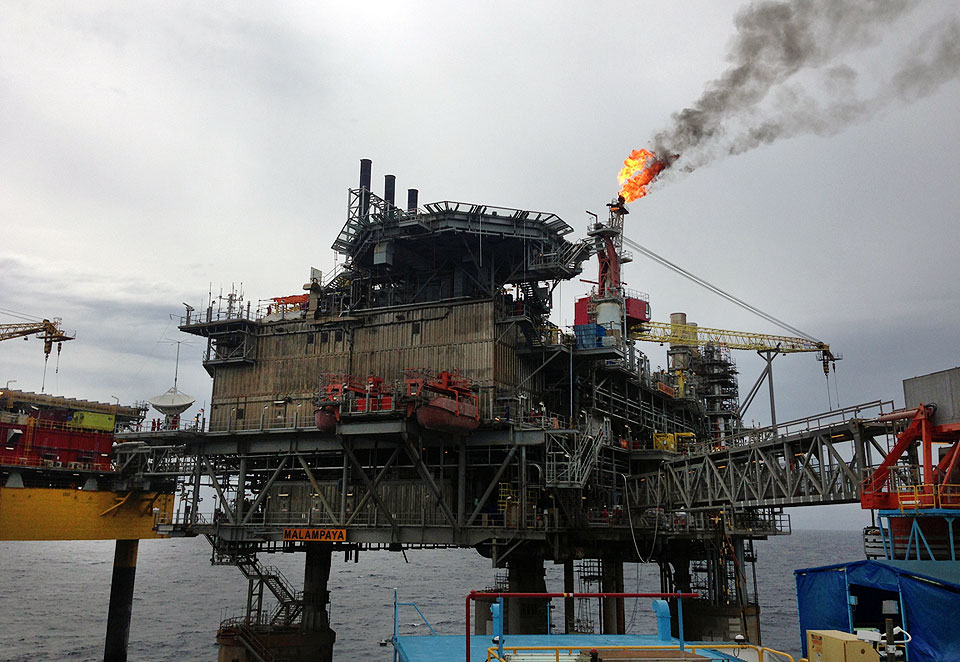
The Philippines is not currently engaged in joint oil and gas exploration with China, although such an arrangement is possible in the future to ensure energy security amid supply concerns due to the Middle East conflict, Manila's top diplomat said Tuesday.
This developed after President Ferdinand "Bongbong" Marcos Jr. said in an interview with Bloomberg this week that he was open to restarting discussions with Beijing on a joint energy project in the South China Sea.
"Not at this point in time, but it may be forthcoming," Department of Foreign Affairs (DFA) Secretary Maria Theresa Lazaro said.
Talks about a potential agreement on joint energy exploration in the South China Sea, however, remain highly sensitive due to issues of sovereignty, constitutional boundaries, and competing claims in disputed waters.
In January 2023, the Supreme Court nullified the Joint Marine Seismic Undertaking (JMSU) involving China, the Philippines, and Vietnam for the exploration of over 142,000 sq. kms. of the South China Sea.
Ruling that the deal violated the Constitution as it allowed wholly owned foreign companies to explore the Philippines' natural resources, the Supreme Court affirmed its decision months later.
The joint exploration issue is crucial for Manila because the contested West Philippine Sea—most of which overlaps with Beijing's expansive claims in the South China Sea—is believed to have several areas teeming with natural gas and oil.
A 2016 arbitral ruling determined that there was no legal basis for China's historic rights claim over much of the South China Sea. Beijing has refused to recognize the ruling.
Delivery commitments
While no joint exploration project is currently underway, Lazaro said the DFA continues to coordinate with the Philippines' traditional petroleum suppliers so that existing fuel delivery commitments are met and to assess how much additional supply they can provide.
"To ensure that the delivery that has been committed in the past should continue and made-deliver and, second, ano pa ang maibibigay nila, how many more how much, ano pang volume ang maibibigay nila sa atin?" says Lazaro.
(To ensure that the delivery that has been committed in the past should continue and be deliverable, and, second, what else can they provide, how much more, and what volume can they provide us?)
The country declared a state of national energy emergency on March 24. The Marcos administration has about 45 days of fuel supply as of March 20, and is procuring an additional 1 million barrels of oil for buffer stock.
Lazaro was also asked about reports that the Philippines was coordinating with the United States to secure waivers or exemptions to source oil from US-sanctioned countries, including Russia.
She confirmed some movement on the issue but referred GMA Integrated News to the Department of Energy for further details.
"There has been some kind of move; it's not a waiver, it's a request to lift the sanction on possible importation from Russia, 'yun ang pagkakaalam ko (that is my understanding)," Lazaro said.
Reuters reported that the Philippines is working with Washington to obtain waivers or exemptions for oil from US-sanctioned countries.
Also on Wednesday, Marcos said the Philippines is exploring the possibility of securing fuel from Russia amid the current energy challenges. — VDV, GMA Integrated News

