

 GMA Brandtalk
 Tracking
 Archives

Justice panel chair: Impeachment proceedings vs. VP Sara constitutional
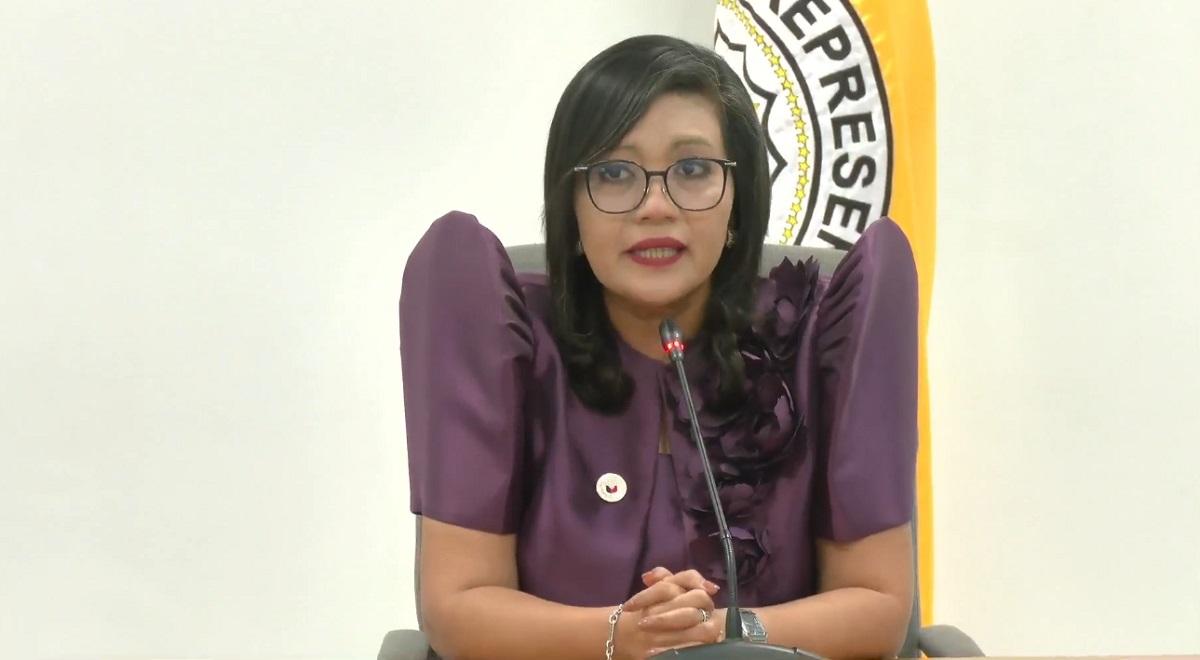
The ongoing impeachment proceedings against Vice President Sara Duterte are in accordance with the Constitution, House justice panel chairperson and Batangas Second District Representative Gerville Luistro said.
Luistro was responding to Duterte's letter to the House justice committee wherein the Vice President justified her absence in the proceedings for the determination of probable cause to impeach her by claiming it was unconstitutional and that the Luistro-led committee wanted to construct a "media narrative" about the “mini trial.”
“Definitely, the committee of justice has jurisdiction over this impeachment complaints. This is not a trial. The use of phrase mini-trial is only to guide the public in distinguishing the proceeding before the [House] justice committee with the impeachment trial which will happen in the Senate,” Luistro said in a press conference on Wednesday.
“And to further distinguish the same, let us remember that this clarificatory hearing is intended only to guide the House justice [panel] members in determining probable cause, unlike in the trial before the Senate where the objective is to determine the guilt or innocence of the respondent,” she added, referring to the Senate acting as the impeachment court in the event that the House impeaches the Vice President once more.
Luistro then said that aside from being provided for under the existing House rules, the impeachment hearing for determining probable cause is also explicitly required by the previous two Supreme Court decision in 2025 and 2026 that declared the 2025 impeachment case against the Vice President illegal due to technicalities, not merits.
“Try to imagine, without clarificatory hearing, how are we going to decide on the existence of probable cause? We should remember that in the decision of the Supreme Court in Duterte v. House of Representatives, we were repeatedly reminded to go over the evidence, to weigh the same, and to make sure even that the House members or the Justice members understand and know the evidence,” Luistro said.
She compared the impeachment hearing proper for determining probable cause to impeach the Vice President, which started on Wednesday, to a preliminary investigation in a criminal case.
However, she added, the threshold for evidence in an impeachment proceeding is lower than in a criminal case which requires “proof beyond reasonable doubt” to secure a conviction.
“We are very much aware that the trial will happen only in the Senate. And that is very clear as well in the Constitution. What is happening before the Justice Committee is a preliminary investigation where there is clarificatory hearing to aid the justice members in the determination of the existence of probable cause. And let us be clear: This is not the probable cause of criminal procedure. Impeachment is not a criminal trial. It is a constitutional and policy exercise—entrusted not to the courts, but to the House of Representatives,” Luistro said.
“As we have seen in previous proceedings against Ombudsman Merceditas Gutierrez, the classical legal definition of probable cause was not applied. And for good reason. Impeachment calls for judgment, not mere calculation. It asks not only what can be proven— but what can be justified before the people,” she added.
Luistro said that one of the grounds for impeachment, the betrayal of public trust, which is not really quantifiable but can be offensive to the core.
“What does it mean? Can it be reduced to a single act? A measurable threshold? Or is it something more—something felt as much as it is proven? We are confronted with serious allegations— threats against the President, accumulation of unexplained wealth, SALN violations, misuse of confidential funds, disregard of safeguards for transparency, and defiance of constitutional processes. They go to the very heart of public trust,” Luistro said.
“May mga kasalanang hindi kailangang ipaliwanag—ramdam agad ng taumbayan [There are sins that need no profound explanation because its impact on the people is undeniable],” she added.
“The truth is: betrayal of public trust resists rigid definition. And if the standard is not mechanical, neither can the threshold to examine it be mechanical.” — BM, GMA Integrated News

