

 GMA Brandtalk
 Tracking
 Archives

PH-China oil exploration talks made 'positive progress,' embassy says
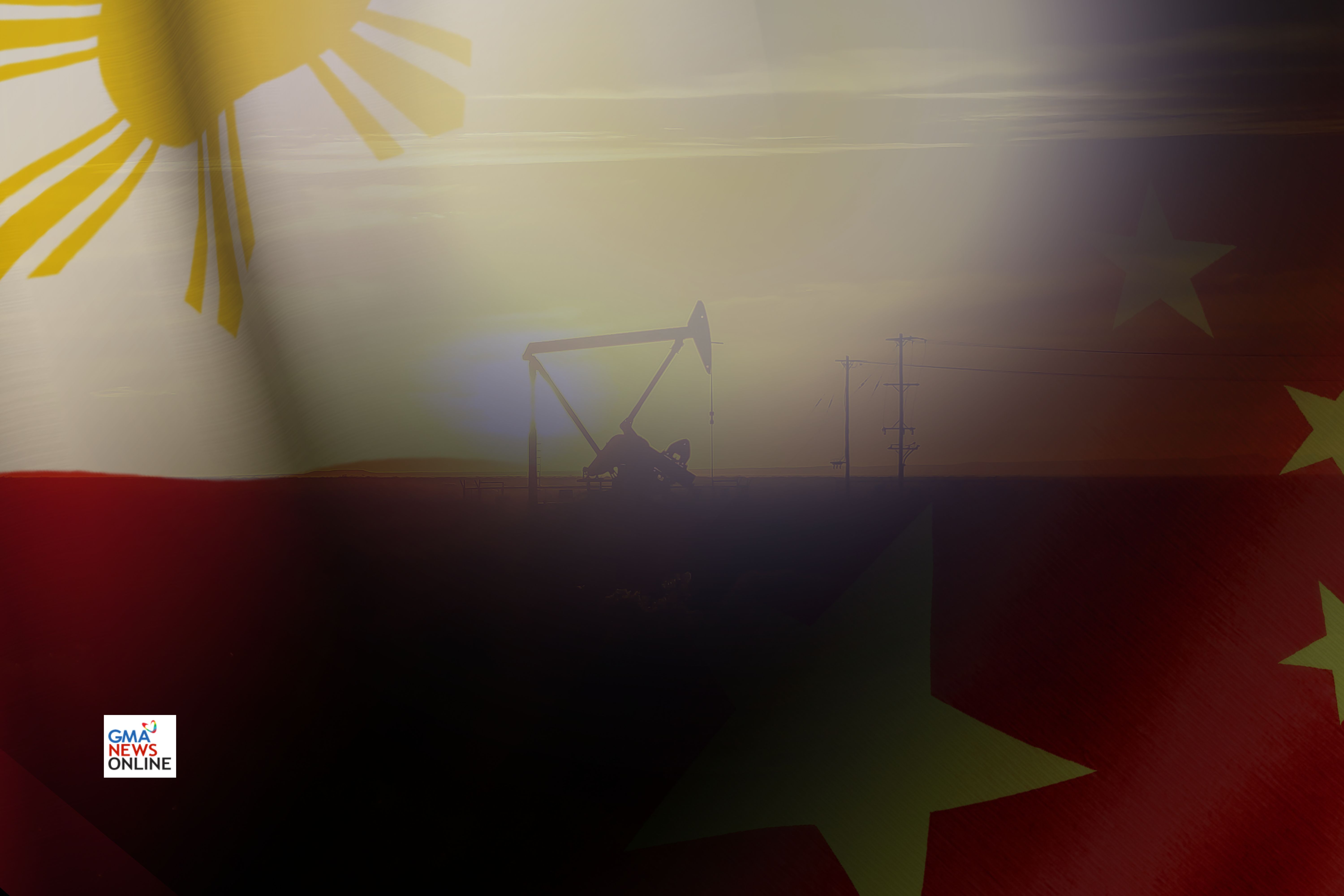
The Chinese Embassy in Manila on Thursday said discussions between the Philippines and China on possible joint oil and gas exploration in the South China Sea have made “positive progress.”
In a message to reporters, the embassy said the two countries held “in-depth discussions” on joint development in the disputed waters.
"Setting aside differences and pursuing joint development is the right path to uphold peace and stability in the South China Sea and deliver benefits to countries in the region and their peoples,” the Chinese embassy said.
“China and the Philippines have conducted in-depth discussions on joint oil and gas development in disputed waters in the South China Sea and have made positive progress. As long as the Philippine side demonstrates sincerity, China’s door to dialogue and cooperation will remain open,” it added.
The development comes as the Philippine government clarified that no joint exploration activity is currently underway, but it may be forthcoming.
“Not at this point in time, but it may be forthcoming,” Department of Foreign Affairs (DFA) Secretary Maria Theresa Lazaro earlier said.
At a press briefing, Palace Press Officer Undersecretary Atty. Claire Castro said the Philippines has been sincere in every negotiations, especially under the present administration.
''Unang-una po, hindi po kailanman naging hindi sincere ang bansang Pilipinas. Sa lahat ng pagkakataon, sa lahat ng okasyon, ang Pilipinas ay laging sincere sa pakikipag-usap, pakikipagnegosasyon lalung-lalo na sa pamumuno po ni Pangulong Marcos Jr.,'' Castro said.
(First of all, the Philippines has always been sincere. In every occasion, talk, or negotiation, the Philippines has always been sincere, particularly under the leadership of President Marcos Jr.)
''Wala po siyang secret deal. So, kung anuman po ang maaaring idulot ng anumang negosasyon, at ito ay magiging maganda para sa Pilipinas, iyan naman po ay hindi tututulan ng Pangulo,'' she added.
(He has no secret deal. If the negotiation would be good for the Philippines, the President will not object to that.)
President Ferdinand “Bongbong” Marcos Jr. expressed openness to restarting talks with Beijing on a joint energy project, according to a recent interview with Bloomberg.
However, any agreement remains highly sensitive due to longstanding issues surrounding sovereignty, constitutional limits, and overlapping territorial claims in the disputed waters, including areas within the West Philippine Sea.
In January 2023, the Supreme Court voided the Joint Marine Seismic Undertaking (JMSU) involving the Philippines, China, and Vietnam.
The Court ruled that the move violated the Constitution by allowing foreign-owned firms to explore the country’s natural resources. The high court later affirmed the decision.
Beijing claims almost all of the South China Sea, a conduit for more than $3 trillion of annual shipborne commerce, including parts claimed by the Philippines, Vietnam, Indonesia, Malaysia, and Brunei.
Parts of the South China Sea that fall within Philippine territory have been renamed by the government as West Philippine Sea to reinforce the country’s claim.
The West Philippine Sea refers to the maritime areas on the western side of the Philippine archipelago including Luzon Sea and the waters around, within and adjacent to the Kalayaan Island Group and Bajo de Masinloc.
In 2016, the Permanent Court of Arbitration in the Hague ruled in favor of the Philippines over China's claims in the South China Sea, saying that it had "no legal basis."
China has refused to recognize the decision. — with Anna Felicia Bajo/VAL/RSJ, GMA Integrated News

