

 GMA Brandtalk
 Tracking
 Archives

PH, Japan sign 2 loan agreements for infra projects in NCR, Mindanao
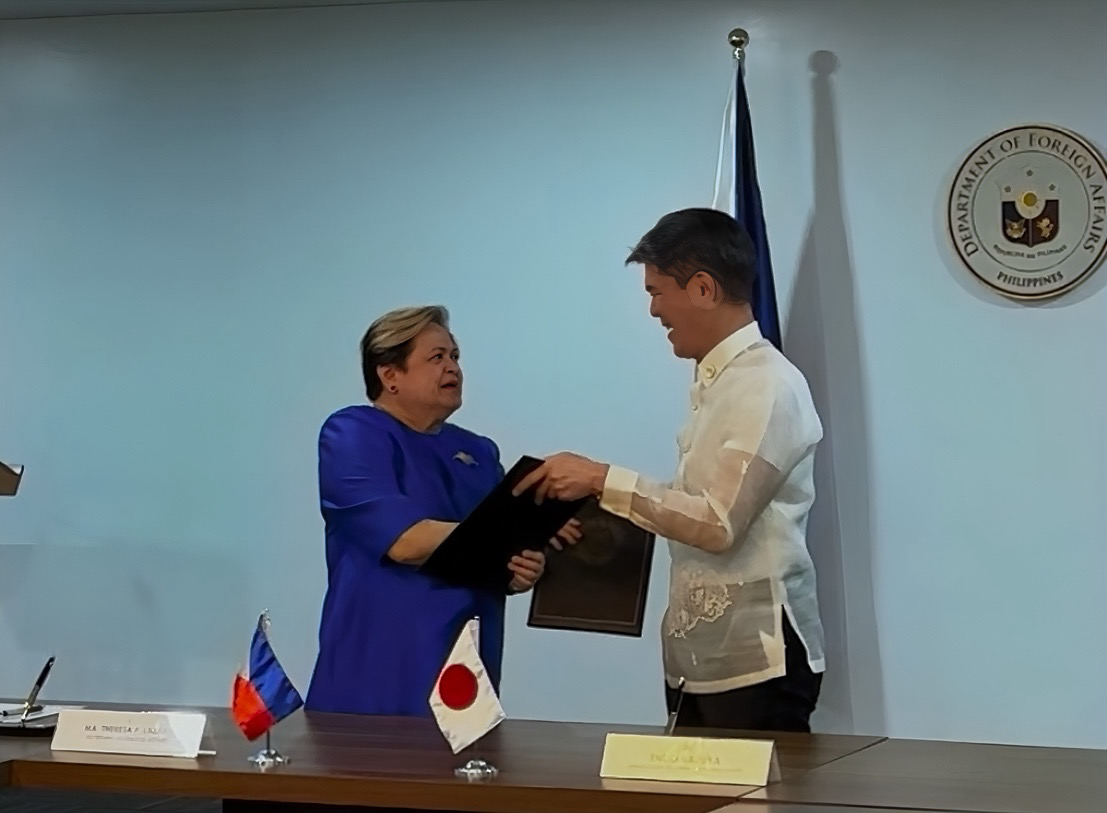
Amid continued concerns over rising petroleum prices and transport efficiency, the Philippines and Japan on Friday signed major loan agreements for two infrastructure projects aimed at improving connectivity in Metro Manila and Mindanao.
The Department of Foreign Affairs (DFA), Department of Transportation (DOTr), and the Embassy of Japan in the Philippines signed the Fourth Tranche Loan for Phase 1 of the Metro Manila Subway Project (MMSP 1), with funding from the Government of Japan through the Japan International Cooperation Agency (JICA).
The loan amounts to JPY 220 billion, or approximately P84.81 billion.
According to the DFA, the Metro Manila Subway Project Phase 1 seeks to address increasing transport demand, ease traffic congestion in Metro Manila, and help mitigate air pollution and climate variation through the construction of a 27.5-kilometer subway line from Valenzuela to Bicutan NAIA Terminal 3.
The project will also include the installation of a 33.1-kilometer electromechanical system, physical integration with the North-South Commuter Railway System, particularly the FTI to Bicutan segment, the construction of a depot and 17 stations — two of which will be built through a separate loan under the NCSR System — and the procurement of 30 train sets.
DFA Secretary Theresa Lazaro highlighted the project’s expected impact on mobility and access to economic centers.
“The line from Valenzuela to Bicutan will connect major residential areas in the north to key business districts such as Ortigas and Bonifacio Global City, bringing Filipinos closer to economic opportunities and facilitating more economic engagements,” she said.
“It will also link these areas to vital transport hubs, including NAIA and PITX, the North–South Commuter Railway and MRT-3. Seamless connectivity across modes and hubs ensures transportation efficiency,” she added.
Also signed was the loan agreement for the Central Mindanao High Standard Highway Construction Project covering the Cagayan de Oro–Malaybalay Section under the Department of Public Works and Highways (DPWH), also funded through JICA.
The loan amounts to JPY 1.672 billion, or around P644 million, and will cover the Engineering Services for Section 1 of the project.
The project is expected to cut travel time between Cagayan de Oro and Malaybalay from 6.5 hours to 3.5 hours, improving connectivity and trade competitiveness in the region.
Japanese Ambassador Endo Kazuya reaffirmed Tokyo’s support for the Philippines’ development and infrastructure goals, while also expressing hope for the proper rollout of the projects.
“I trust that we will see the steady and smooth implementation of the project,” he said.
The Central Mindanao High Standard Highway Construction Project is targeted for implementation over eight years, from 2026 to 2034.
While the Metro Manila Subway Project (MMSP 1) is expected to be completed by 2031, according to the DOTr.
Following the signing ceremony, Lazaro and Kazuya also held a bilateral meeting, where they, according to Kazuya, discussed ways for Japan and the Philippines to help ensure the security of adequate petroleum supply for both countries. —AOL, GMA Integrated News

